Chimney leak repair is one of the most commonly overlooked home maintenance tasks in Pittsburgh, and letting a small leak persist through even one wet season can lead to thousands of dollars in interior water damage, mold, and structural repair costs. The chimney is one of the most vulnerable water infiltration points on any roof because it involves multiple materials (brick, mortar, metal flashing, and roofing) meeting at a critical joint that expands, contracts, and weathers differently over time. This guide walks Pittsburgh homeowners through how to spot chimney leaks, the five most common causes, and how to stop the damage before it spreads.
- How to spot a leak: Interior and exterior warning signs that your chimney is letting water in.
- 5 common causes: Every major chimney leak source, from flashing failure to masonry damage.
- Repair and prevention: What repairs cost, when to call a specialist, and how to prevent future leaks.
How to Spot a Chimney Leak
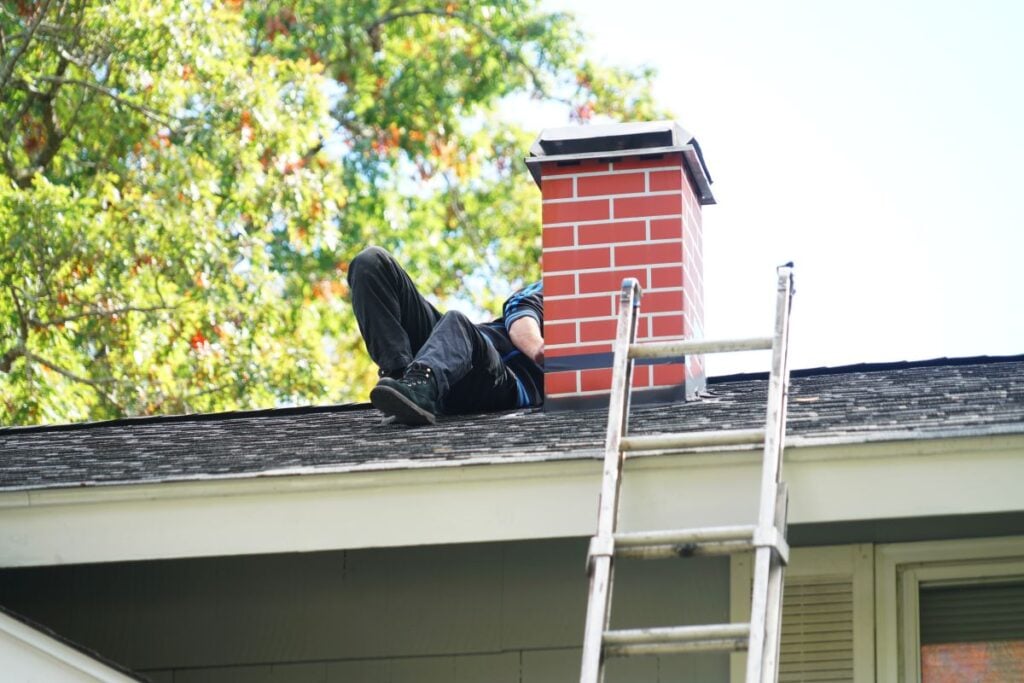
Chimney leaks often show up as subtle interior signs long before they become obvious dripping water. Catching leaks early through regular inspection saves significant money on repairs and prevents secondary damage.
- Water stains on interior walls near the chimney: Brownish or yellowish discoloration on ceilings, walls, or upper-floor rooms directly next to the chimney chase.
- Damp or discolored drywall: Softening or bulging drywall around the chimney breast or upper floors.
- Musty odors from the fireplace: Persistent damp or musty smell coming from the fireplace opening, especially after rain.
- Rust on the damper or firebox: Rust or corrosion on metal components inside the fireplace indicates water infiltration from above.
- White staining (efflorescence) on exterior brick: White powdery deposits on the exterior chimney indicate water is passing through the masonry.
- Water in the firebox: Standing water or drips in the firebox after rain confirms an active chimney leak.
5 Common Causes of Chimney Leaks
Chimney leaks come from five main sources, and knowing which one is behind your specific leak helps you prioritize the right repair. Some causes are roofing issues fixable by a general roofing contractor, while others require a chimney or masonry specialist.
1. Damaged or Missing Flashing
Flashing is the metal barrier where the chimney meets the roof surface, and it is the single most common source of chimney leaks in Pittsburgh homes. Flashing systems include step flashing along the sides, base flashing at the front, counter-flashing embedded into the chimney’s mortar joints, and a cricket or saddle behind wider chimneys. When any of these fails through age, storm damage, or poor original installation, water follows the chimney down into the attic and ceiling.
- Step flashing failure: Individual metal pieces that lift, corrode, or separate from the shingles.
- Counter-flashing pull-out: Counter-flashing that has pulled away from mortar joints where it embeds into the chimney.
- Missing cricket: Wider chimneys on the up-slope side need a cricket (saddle) to divert water; missing crickets cause persistent leaks.
- Sealant failure: Old caulk or roofing cement around flashing that has cracked or shrunk.
2. Cracked or Missing Chimney Crown
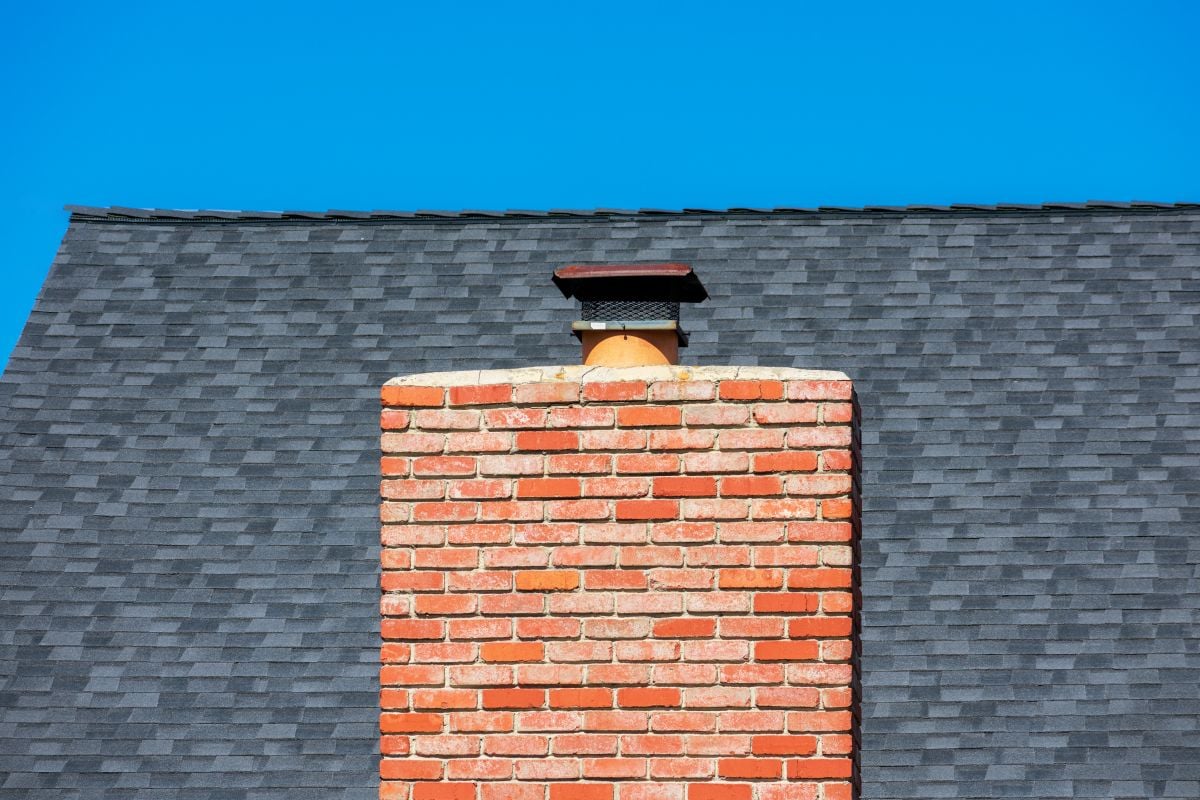
The chimney crown is the concrete or masonry cap that covers the top of the chimney structure around the flue openings. A properly built crown sheds water outward to keep it off the chimney’s masonry sides. Crowns crack from freeze-thaw cycles, thermal expansion, and simple aging, and once cracked, water pours directly down into the chimney structure and through the top of the masonry.
- Visible cracks: Cracks radiating from the flue opening across the crown surface.
- Missing or chipped edges: Broken corners or missing sections that expose the top of the chimney walls.
- Improper original construction: Some crowns were built too thin or without proper overhang and drip edge.
- Repair vs. rebuild: Small cracks can be sealed; extensive damage requires crown rebuilding.
3. Damaged or Missing Chimney Cap
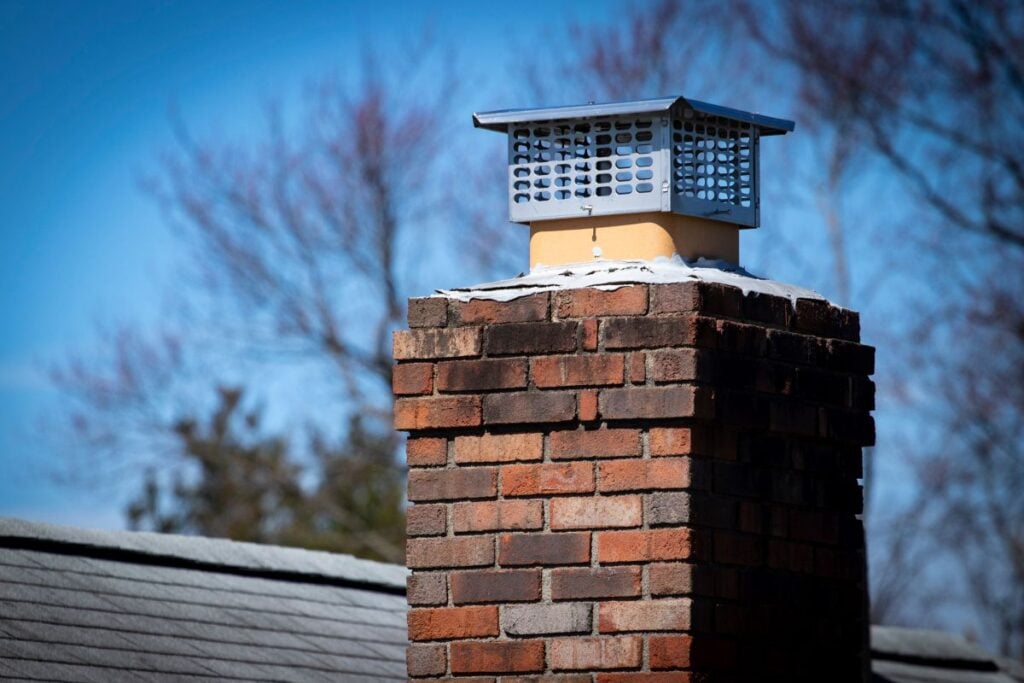
The chimney cap is the metal cover that sits over the flue opening at the very top, protecting the flue from rain, snow, debris, and animals. Chimney caps often go missing entirely on older homes, corrode through, or blow off in high wind storms. Without a functional cap, rain falls directly down the flue and into the firebox and smoke chamber.
- Missing cap entirely: Many older Pittsburgh homes never had a chimney cap installed.
- Blown-off cap: Wind storms occasionally dislodge caps that were not securely fastened.
- Corroded or damaged cap: Rust holes or bent sections allow water past the barrier.
- Undersized cap: A cap that does not fully cover the flue opening lets rain enter the sides.
4. Deteriorating Mortar Joints
Mortar joints between chimney bricks deteriorate over time from weather exposure, and once mortar cracks or falls out (a process called spalling), water enters directly into the chimney structure. Deteriorated mortar is one of the most common chimney leak sources in older Pittsburgh homes, particularly those built before 1980 with softer mortar formulations that hold up poorly to freeze-thaw cycles.
- Visible cracks: Cracks in mortar joints visible from ground level with binoculars.
- Missing mortar: Sections where mortar has completely fallen out between bricks.
- Spalling bricks: Brick faces that flake or crumble due to trapped moisture.
- Repair method: Tuckpointing (removing and replacing damaged mortar) is the standard fix.
5. Absorbent Brick and Missing Waterproofing
Chimney brick itself is naturally porous and absorbs water like a sponge unless treated with a masonry waterproofing sealant. Even with intact flashing, crown, cap, and mortar, an unsealed chimney can allow enough water absorption to cause interior leaks and freeze-thaw damage to the masonry over time. Chimney waterproofing is often overlooked but plays a major protective role.
- Water absorption: Untreated brick absorbs water and holds it against the internal structure.
- Freeze-thaw damage: Absorbed water expands when it freezes, cracking bricks from the inside.
- Interior moisture: Absorbed water can eventually pass through the masonry into the interior.
- Solution: Vapor-permeable masonry sealant applied every 5 to 10 years prevents absorption while allowing the chimney to breathe.
How to Stop Chimney Leak Damage
Once you spot a chimney leak, taking prompt action prevents the damage from spreading and reduces the total repair cost significantly. According to the Chimney Safety Institute of America, following NFPA Standard 211, chimneys should be inspected at least once a year for soundness and correct clearances, and any suspected leak warrants prompt professional evaluation.
- Contain interior water: Place buckets or towels under active leaks and move belongings out of the drip zone.
- Photograph the damage: Dated photos of interior stains and exterior signs support insurance claims and contractor estimates.
- Cover the chimney if severe: For active leaks during heavy rain, a temporary tarp over the chimney can slow water infiltration until repair.
- Call the right specialist: Roofers handle flashing and roof-adjacent issues; masonry chimney specialists handle crown, cap, and brick repairs.
- Do not use the fireplace: Suspend fireplace use until the leak source is identified and repaired.
Cost of Chimney Leak Repair in Pittsburgh
Chimney leak repair costs vary significantly based on the leak source and how much damage has developed before repair begins. Here are typical Pittsburgh-area 2026 costs.
- Chimney flashing repair or replacement: $300 to $1,500 depending on complexity and roof access.
- Chimney cap installation: $150 to $500 for standard single-flue caps; more for multi-flue or custom.
- Chimney crown repair: $300 to $1,000 for repair; $1,500 to $3,000 for full crown rebuild.
- Tuckpointing (mortar joint repair): $10 to $30 per linear foot depending on scope and access.
- Waterproofing sealant application: $300 to $800 for a standard residential chimney.
If multiple issues are present, a full chimney restoration can run $2,500 to $8,000 or more.
How to Prevent Future Chimney Leaks
Once your current chimney leak is repaired, consistent preventive maintenance keeps future problems from developing. Follow these practices to protect your investment.
- Annual inspection: Schedule a Level 1 chimney inspection every year per CSIA guidelines.
- Cap maintenance: Verify the chimney cap is secure and intact after every major storm.
- Waterproof every 5 to 10 years: Apply vapor-permeable masonry sealant on a regular schedule.
- Watch mortar joints: Address small mortar cracks before they become large ones.
- Address flashing during roofing work: Have chimney flashing inspected and replaced during any roof repair or replacement.
- Trim overhanging branches: Reduce debris accumulation and impact risk from falling limbs.
Frequently Asked Questions
How can I tell if my chimney is leaking?
Common signs of a chimney leak include water stains on interior walls or ceilings near the chimney, musty odors from the fireplace, rust on the damper or firebox, damp drywall around the chimney breast, and water pooling in the firebox after rain. Any one of these signs warrants a professional inspection.
Who should I call for chimney leak repair in Pittsburgh?
The right contractor depends on the leak source. Roofing contractors handle flashing repairs where the chimney meets the roof, while chimney specialists (typically CSIA-certified) handle crown, cap, mortar, and masonry work. A thorough inspection identifies which contractor type is needed.
How much does chimney flashing repair cost?
Chimney flashing repair in Pittsburgh typically runs $300 to $1,500 depending on the chimney size, roof pitch, and extent of damage. Complete flashing replacement during a roof replacement often costs less because the labor is shared with the larger roofing job.
Does homeowners insurance cover chimney leak repair?
Homeowners insurance typically covers sudden chimney damage from wind, fallen trees, lightning, or other covered events, but excludes damage from age-related wear, poor maintenance, or gradual deterioration. Leaks resulting from a specific storm event may be covered subject to your deductible.
How often should I have my chimney inspected?
The CSIA and NFPA Standard 211 recommend annual chimney inspections regardless of how much you use the fireplace. Annual inspections catch developing problems early and are typically required by insurance carriers for coverage.
Can I repair a chimney leak myself?
Minor exterior sealant applications and cap installations may be within reach for handy homeowners comfortable working at height. Flashing repair, tuckpointing, crown work, and any repair requiring roof access is best handled by professionals due to safety and warranty considerations.
Get Trusted Chimney Leak Repair Help
Chimney leaks rarely fix themselves, and the cost of professional repair is almost always dramatically lower than the cost of interior water damage that develops when leaks are left untreated. Whether your leak stems from failing flashing on the roof side or from deteriorated masonry on the chimney itself, identifying the source and addressing it promptly protects your home and your budget.
McCormick Renovations serves Pittsburgh and surrounding areas with residential roofing, and our team regularly addresses chimney flashing repairs as part of roof repair and roof replacement work. For chimney leaks caused by damaged flashing or roof-chimney intersection issues, contact McCormick Renovations for a free inspection. For chimney masonry, crown, cap, or waterproofing work, we recommend consulting a CSIA-certified chimney specialist to address the structural components of the chimney itself.