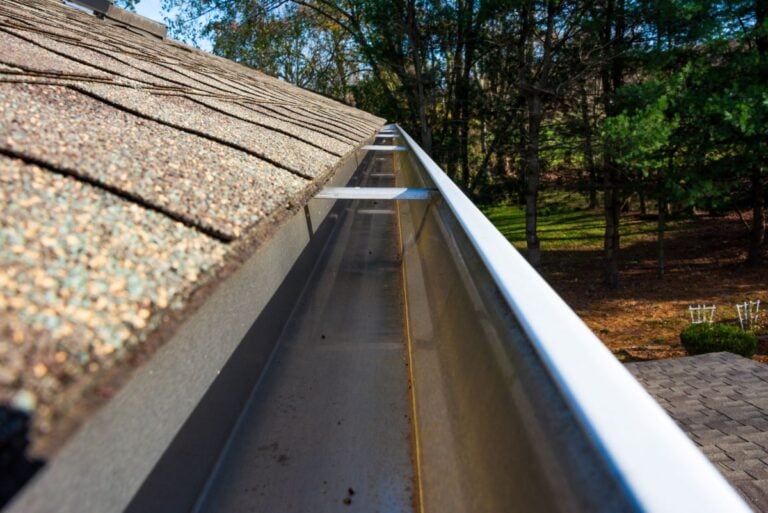
Clogged gutters are one of the most common yet most damaging home maintenance problems, and every homeowner should understand what causes them and how to stop the damage before it starts. Left unchecked, a blocked gutter system pushes rainwater in every direction except where it should go, saturating foundations, rotting fascia, staining siding, and driving up repair costs across every part of the home. This guide walks Pittsburgh homeowners through the real-world causes of clogged gutters, the damage they create, and the practical prevention steps that keep water flowing away from your home year-round.
- Root causes: The six most common reasons gutters clog in Pittsburgh and surrounding areas.
- Damage risks: How clogged gutters affect the foundation, roof, siding, and interior.
- Prevention framework: Practical steps homeowners can take to keep gutters flowing freely.
Why Clogged Gutters Are a Serious Problem for Pittsburgh Homes
Clogged gutters are not just an aesthetic nuisance. They are a direct threat to the structural health of your home and the value of the property beneath your roof.
Water Damage to the Foundation and Basement
When gutters overflow, rainwater pours down the exterior walls and pools directly against the foundation. Over time, that pooled water saturates the surrounding soil, increases hydrostatic pressure against basement walls, and eventually forces its way through cracks and seams into the interior of the home. The Federal Emergency Management Agency reports that just one inch of water inside a home can cause $25,000 in damages, and clogged gutters are one of the most preventable pathways to that kind of loss. Pittsburgh’s freeze-thaw climate makes the risk worse because saturated soil expands and contracts through winter, cracking foundation walls that were previously sound.
- Foundation saturation: Overflowing gutters drive water directly into the soil against exterior walls.
- Hydrostatic pressure: Saturated soil pushes water through basement cracks and joints.
- Interior damage: One inch of interior water can trigger $25,000 in repair costs per FEMA.
- Freeze-thaw stress: Pittsburgh winters worsen the cycle of soil saturation and expansion.
Roof and Siding Deterioration
Clogged gutters back water up onto the roof deck, where it can seep under shingles, saturate the underlayment, and rot the fascia and soffit boards holding the gutter system in place. On the siding side, overflowing water leaves streaks and stains, encourages mold and algae growth, and eventually works its way behind panels to damage the sheathing underneath. Homes with vinyl or fiber cement siding still suffer despite the material’s water resistance because the water finds seams, penetrations, and edges the manufacturer never intended to hold back a steady flow. The result is premature siding failure, roof leaks, and expensive fascia and soffit replacement.
- Roof deck damage: Backed-up water seeps under shingles and rots the underlayment.
- Fascia and soffit rot: Constant water contact destroys the wood holding the gutters up.
- Siding staining: Streaks and mold grow on exterior walls exposed to overflow.
- Sheathing damage: Water finds its way behind siding to the structural sheathing.
Ice Dams and Winter Damage
Pittsburgh winters make clogged gutters especially dangerous because water trapped in a blocked gutter freezes, expands, and creates ice dams that push water back under the shingles. Once inside, the water refreezes overnight and thaws during the day, working its way through the roof assembly and eventually appearing as stains on interior ceilings. Ice dams also add enormous weight to the gutter system itself, pulling hangers loose and sometimes tearing entire runs of gutter off the fascia. Homes in Pittsburgh and surrounding areas with heavy tree cover face the highest risk because clogs typically peak right before the first hard freeze.
- Ice dam formation: Frozen debris blocks proper drainage during winter thaws.
- Roof leaks: Water forced under shingles finds its way into attics and ceilings.
- Gutter detachment: Ice weight can rip entire gutter sections off the home.
- Interior staining: Ceiling stains often trace back to ice dam damage.
6 Common Causes of Clogged Gutters
Understanding what causes gutters to clog is the first step toward preventing the problem. The six causes below account for nearly every gutter blockage that Pittsburgh contractors see across residential service calls.
1. Fallen Leaves and Organic Debris
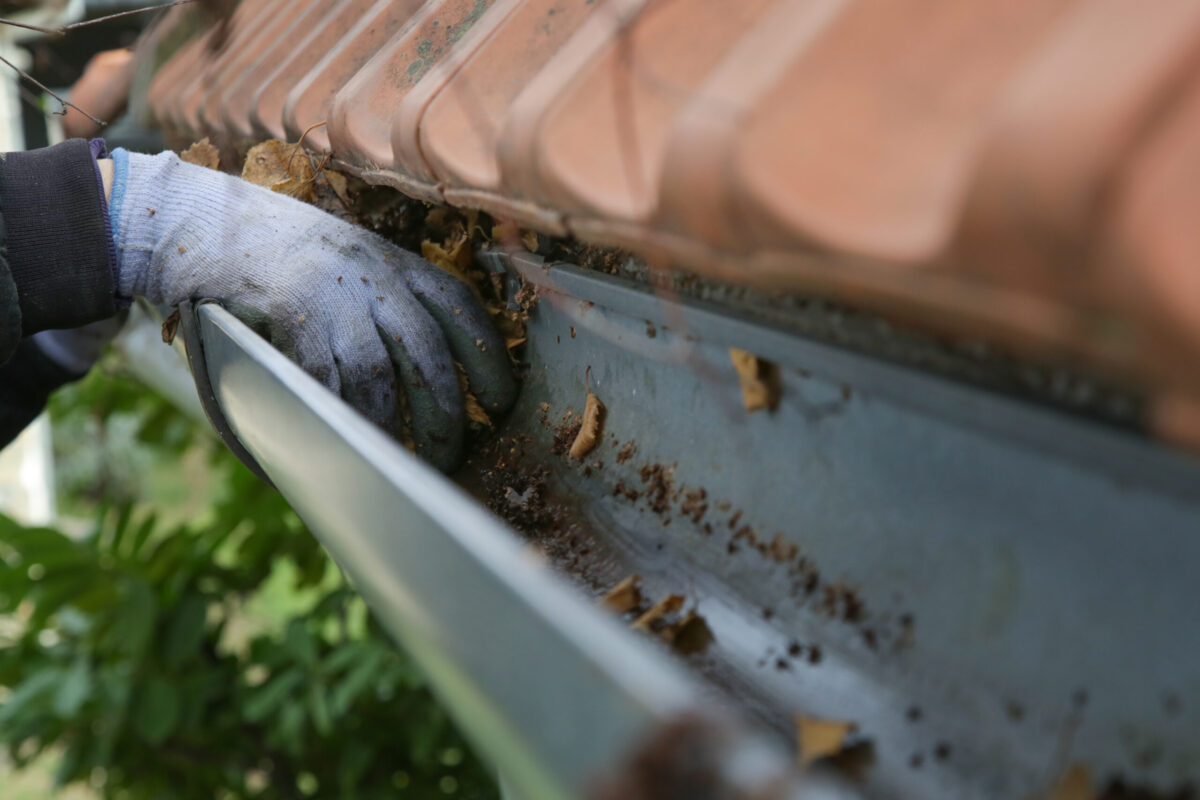
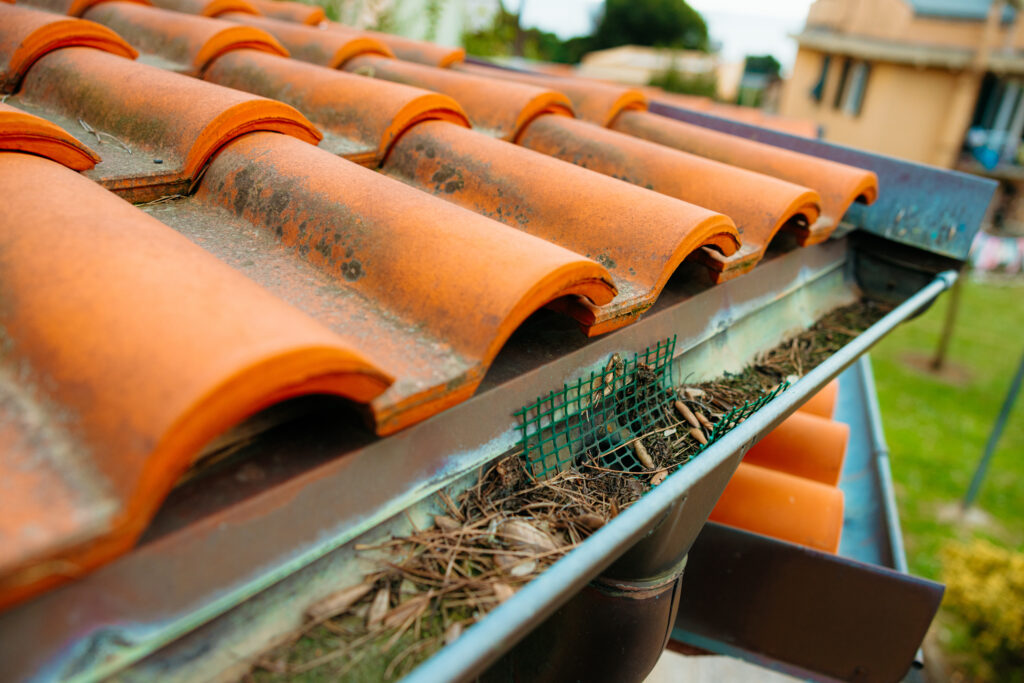
Leaves are the number one cause of gutter clogs, especially in the fall when maple, oak, and other deciduous trees drop their entire canopy in a matter of weeks. Wet leaves compact quickly, form a solid mat that blocks water flow, and continue to break down into a mud-like sludge that clings to the interior of the gutter. Add pine needles, seed pods, and small twigs to the mix and the gutter can go from clear to completely blocked in a single storm.
- Peak season: Late October through mid-November across most of Pittsburgh.
- Compaction rate: Wet leaves compact within 24 hours of accumulation.
- Sludge formation: Decomposed leaf matter creates thick residue that resists rinsing.
- Pine needle risk: Needles bypass many mesh guards and accumulate faster than leaves.
2. Overhanging Trees and Branches
Trees that hang directly over a roofline deliver a nonstop supply of debris to the gutters below. Beyond leaves, they drop small branches, bark, acorns, and helicopter seeds that fall directly into the gutter system with every gust of wind. Trees within 20 feet of the home also drop debris onto the roof, which then washes into the gutter during rainstorms.
- Direct drop: Overhanging branches deposit debris straight into the gutter.
- Windborne debris: Nearby trees contribute during storms and windy days.
- Seed pods: Maple helicopters and acorns are especially problematic.
- Bark shedding: Older trees shed bark that quickly blocks downspout openings.
3. Bird Nests and Small Animal Activity

Gutters make attractive nesting sites for birds, squirrels, and other small animals looking for a sheltered spot with easy access to food and water. A single bird nest can block an entire gutter run, and the accumulated nesting material combined with droppings creates a stubborn blockage that resists water pressure and simple debris removal. Downspout openings are the most common problem area because they collect nesting material that has washed down from the horizontal gutter runs above.
- Common nesters: House sparrows, starlings, and occasionally chipmunks.
- Downspout blockage: Nests migrate to downspout openings and cause complete backups.
- Health concerns: Droppings and decomposing material create air quality issues.
- Peak activity: Spring and early summer see the most nesting behavior.
4. Roof Granule Buildup
Asphalt shingles shed protective granules throughout their service life, and those granules wash into gutters with every rainstorm. Over time, granules accumulate at low points and near downspout openings, creating a sandy sludge that impedes water flow and eventually blocks the gutter completely. Older roofs shed granules faster than newer ones, and a sudden increase in granules visible in the gutter is often the first sign that the roof itself is nearing the end of its service life.
- Accumulation zones: Downspout openings and low points collect granules first.
- Age indicator: Increased granule loss signals aging shingles.
- Sludge consistency: Wet granules form a stubborn sandy paste in the gutter.
- Cleaning difficulty: Granule buildup resists simple flushing and requires manual removal.
5. Improper Gutter Slope or Sagging
Gutters are designed with a slight slope toward the downspout, typically one quarter inch per 10 feet, so that water flows naturally to the drainage point. When hangers loosen, fasteners pull free from the fascia, or the gutter run sags under debris weight, water pools in low spots rather than draining. Those low spots then collect additional debris and compound the clog until the whole system fails.
- Correct slope: One quarter inch per 10 feet toward the downspout.
- Sagging causes: Loose hangers, damaged fascia, and heavy debris loads.
- Pooling risk: Standing water accelerates debris accumulation.
- Compound failure: Sagging leads to more clogs, which leads to more sagging.
6. Missing or Damaged Gutter Guards
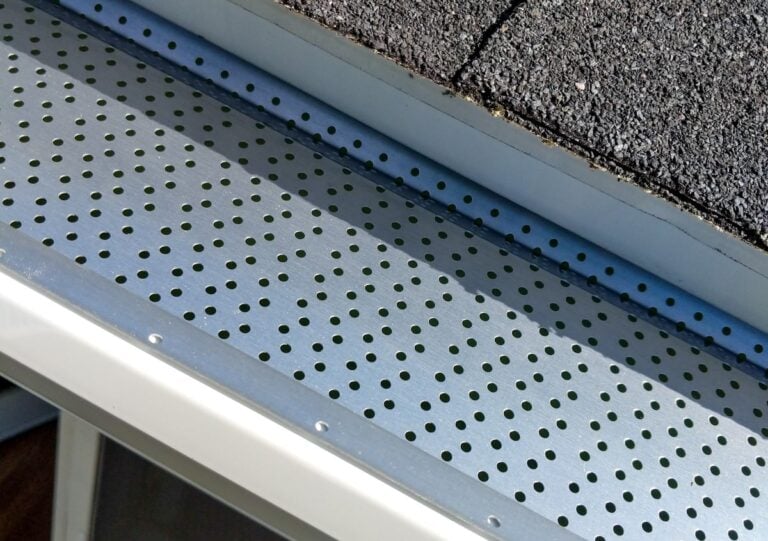
Gutter guards prevent most debris from entering the gutter in the first place, but only when they are intact and properly installed. Missing sections, dented panels, or improperly sized mesh allow debris to slip past and accumulate in the gutter below. Even quality guards eventually collect debris on their surface, which needs to be brushed or blown off periodically to maintain effectiveness.
- Missing sections: Gaps allow direct debris entry into the gutter.
- Wrong mesh size: Coarse mesh lets pine needles and small debris through.
- Surface debris: Guards themselves need occasional cleaning to work properly.
- Installation errors: Improperly fitted guards can push debris underneath instead of blocking it.
How to Prevent Clogged Gutters
Prevention is dramatically cheaper and easier than repairing the damage clogged gutters cause. A combination of regular attention, smart landscaping, and quality equipment keeps most Pittsburgh gutter systems flowing freely year-round.
Establish a Regular Cleaning Schedule
The most effective prevention strategy is a consistent cleaning schedule matched to your home’s exposure. Homes with heavy tree cover in Pittsburgh and surrounding areas benefit from three to four cleanings per year, while homes with minimal tree exposure can typically get by with two seasonal cleanings in the spring and after fall leaf drop. Cleaning should happen from a stable ladder with proper safety equipment or by a professional service.
- Standard schedule: Twice yearly in spring and after fall leaf drop.
- Heavy tree cover: Three to four cleanings per year for homes surrounded by trees.
- Storm follow-up: Additional cleaning after major wind or hail events.
- Safety first: Never work above 10 feet without proper harnessing and stable ladders.
Install Quality Gutter Guards
Gutter guards are a strong long-term investment that reduces cleaning frequency and blocks the majority of debris from entering the gutter. Mesh guards work well for most Pittsburgh homes because they block leaves and small debris while allowing water to pass freely, while reverse-curve and foam options each have specific use cases. Quality installation matters as much as the product itself.
- Mesh guards: Best all-around option for typical Pittsburgh residential exposure.
- Reverse-curve guards: Effective but more expensive and prone to overshoot in heavy rain.
- Foam inserts: Cheapest option but shortest service life and highest clogging risk.
- Installation quality: Poorly installed guards can worsen clogs rather than prevent them.
Trim Overhanging Branches
Keeping tree branches at least six feet away from the roofline dramatically reduces the volume of debris landing in gutters year-round. Regular pruning also improves airflow around the roof, reduces moisture that encourages moss and algae growth, and lowers the risk of storm damage from falling limbs. Homeowners should hire a certified arborist for large branches or trees close to power lines.
- Six-foot clearance: Minimum distance between branches and the roofline.
- Annual pruning: Best performed in late winter before spring growth.
- Storm risk reduction: Trimmed trees drop fewer branches during high winds.
- Professional help: Large branches and power line proximity require certified arborists.
Frequently Asked Questions

How Often Should I Clean My Gutters in Pittsburgh?
Most Pittsburgh homes need gutter cleaning twice per year, in the late spring and after fall leaf drop. Homes with heavy tree cover benefit from three to four cleanings per year to prevent buildup between seasonal cleanings.
What Are the Warning Signs of Clogged Gutters?
Common warning signs include water overflowing during rainstorms, visible plant growth in the gutter, water stains on siding, sagging gutter sections, and water pooling around the foundation. Any single sign warrants immediate cleaning and inspection.
Can I Clean My Own Gutters or Should I Hire a Professional?
Single-story homes with straightforward access are reasonable candidates for DIY cleaning by handy homeowners with proper safety equipment. Two-story homes, steep terrain, and any homeowner uncomfortable on a ladder should hire a professional cleaning service to avoid the risk of falls.
Do Gutter Guards Eliminate the Need for Cleaning?
Gutter guards significantly reduce cleaning frequency but do not eliminate it entirely. Even the best guards collect surface debris that needs periodic clearing, and the gutter beneath still requires occasional inspection to ensure water is flowing properly.
How Much Does Gutter Cleaning Cost in Pittsburgh?
Professional gutter cleaning in Pittsburgh and surrounding areas typically costs $150 to $400 depending on home size, gutter linear footage, roof height, and access difficulty. Heavily clogged systems, two-story homes, and gutters with unusual configurations trend toward the higher end.
When Is It Time to Replace Instead of Clean My Gutters?
Full gutter replacement makes sense when the system is past its service life (25-plus years for aluminum), when damage spans more than 25 percent of the total linear footage, or when annual maintenance costs climb past 25 percent of the cost of new gutters. Persistent leaks, sagging, and separated seams are strong replacement signals.
Time for New Gutters? Contact McCormick Renovations
Clogged gutters cause real damage that no homeowner should ignore, and once a system is past its useful life, maintenance alone cannot restore its performance. McCormick Renovations specializes in seamless gutter replacement across Pittsburgh and surrounding areas, installing high-quality aluminum, steel, and copper systems with proper slope, secure hangers, and downspouts that discharge well away from the foundation. If your existing gutters are sagging, leaking, chronically clogged, or simply past their prime, reach out to McCormick Renovations today for a free estimate on a new gutter system that protects your home for decades.