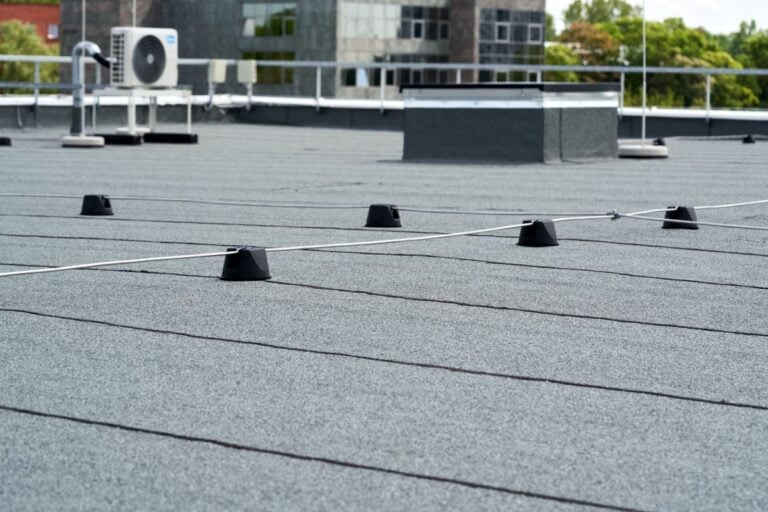
When managing a commercial property, the smallest oversight can lead to substantial expenses down the line. One area often taken for granted is your commercial roof. This critical structure protects everything beneath it—employees, assets, and the day-to-day operations of your business. Without proper care, your roof’s lifespan decreases, and repair costs can skyrocket.
This guide covers everything you need to know about:
- What makes a commercial roof different
- Commercial roof maintenance tips
- Ensuring it serves you reliably for years to come
Whether you’re a commercial property owner or a facility manager, these tips will help you avoid costly repairs, ensure tenant satisfaction, and maintain a safe working environment.
Why Is Commercial Roof Maintenance Important?

Your roof endures constant exposure to weather elements like sunlight, wind, rain, and snow. Over time, even the most durable roofing materials weaken, leading to leaks, insulation damage, and even structural problems if not addressed early. This is where regular maintenance comes in to protect your investment.
The Benefits of Commercial Roof Maintenance
- Extends Roof Lifespan: Routine maintenance prevents small issues like cracks or loose seams from turning into bigger problems. A well-maintained roof can last decades longer than one left unchecked.
- Saves Money in the Long Run: While maintenance involves some upfront cost, it pales compared to expensive repairs or a full roof replacement. Preventative care eliminates the need for emergency fixes.
- Enhances Energy Efficiency: Damaged roofing can compromise insulation, making your HVAC work harder to maintain a comfortable indoor environment. Proper care reduces energy losses and lowers utility bills.
- Minimizes Business Disruptions: A roof-related emergency, such as a severe leak, can halt operations and create chaos. Maintenance ensures your facility stays safe and operational.
- Maintains Property Value: A well-maintained roof increases the value of your property. Potential buyers or tenants will see your building as less risky and potentially worth more.
How Often Should a Commercial Roof Be Inspected?
A commercial roof should be inspected at least twice per year, with additional inspections after any severe weather event such as hail, high wind, or heavy snow. The National Roofing Contractors Association (NRCA) recommends building managers schedule these semi-annual inspections in the spring and fall, plus immediate checks after storms with sustained winds, hurricanes, or hailstorms (Source: NRCA – Professional Roofing: Roof System Maintenance). Spring inspections identify damage accumulated over winter from ice, freeze-thaw cycles, and snow loads, while fall inspections prepare the roof for the next winter season.
For most commercial properties, the twice-yearly schedule covers standard maintenance needs. Buildings with heavy rooftop equipment, frequent foot traffic from HVAC service contractors, or aging membrane systems older than 15 years often benefit from quarterly inspections. Documentation matters too: every inspection should produce a written report with photos that protect warranty coverage and support insurance claims when storm damage does occur.
- Spring inspection: Identifies winter damage from ice, freeze-thaw cycles, and snow loads.
- Fall inspection: Verifies drainage capacity and prepares the system for winter.
- Post-storm inspection: Required within 48 hours of any major weather event.
- Quarterly schedule: Recommended for buildings with heavy rooftop equipment or membranes over 15 years old.
Signs Your Commercial Roof Needs Attention
Not all roof problems are visible with a simple glance. However, knowing what to look for can help catch issues early. Here are some signs that your roof may need professional attention:
- Discolored or Stained Ceilings: Water stains on ceilings or walls often signal a leak originating from your roof.
- Pooling Water: Flat roofs, common in commercial buildings, are prone to water pooling. Standing water can damage the roof structure or lead to leaks.
- Blistered or Cracked Membranes: Roofing membranes can sustain wear and tear from UV exposure and temperature changes. Any visible cracks, bubbles, or blisters should be addressed immediately.
- Flashing Damage: Flashing seals the roof edges, chimneys, or HVAC openings. Damaged or missing flashing lets water in during storms.
- Sagging or Soft Areas: If parts of your roof seem to sink or feel soft underfoot, this could indicate water damage or deterioration.
- Debris Accumulation in Drains: Clogged drains or gutters reduce water flow, causing backups that stress your roof.
7 Tips for Commercial Roof Maintenance

Staying ahead of damage starts with a solid maintenance routine. Here’s what a comprehensive commercial roof maintenance plan should include:
1. Regular Inspections
Schedule inspections at least twice a year—once in the spring and once in the fall. These seasonal checks identify issues caused by winter storms or summer heatwaves.
Pro tip: Always inspect your roof after severe weather events like hailstorms or hurricanes.
Inspections should focus on:
- Membranes and seams
- Drainage systems
- Flashing around vents and chimneys
- Condition of gutters and downspouts
- Surface coatings and sealants
2. Debris Removal
Leaves, twigs, dirt, and other debris can collect on your roof and block drainage systems. Water build-up not only damages the roofing material but can also seep into the building, causing costly repairs.
Make sure to:
- Clear drains and gutters
- Remove debris from the roof surface
- Check for moss or algae on shingles or membranes
3. Address Minor Repairs Immediately
Small issues like cracks, loose fasteners, or punctures should be repaired promptly. Overlooking these problems can lead to leaks and structural damage.
4. Clean the Roof
Cleaning prevents algae, mold, and dirt buildup that could compromise your roofing material. Use soft washing methods for delicate surfaces to avoid causing damage while cleaning.
5. Maintain Drainage Systems
Check that downspouts and gutters are functioning properly. An efficient drainage system avoids water pooling, a major cause of roof damage in flat commercial roofs.
6. Monitor Roof Accessories
HVAC systems, vents, skylights, and solar panels on your roof need routine checks. Ensure flashing and sealants are secure to prevent leaks.
7. Professional Assessment and Maintenance Plans
While you can handle basic upkeep, professional roofing companies like McCormick Renovations offer detailed maintenance programs tailored for commercial roofs. These proactive plans ensure small problems are caught before they escalate.
How Much Does Commercial Roof Maintenance Cost?
A commercial roof maintenance program typically costs $0.05 to $0.25 per square foot annually, which translates to $500 to $2,500 per year for a 10,000 square foot building. The variation depends on roof size, membrane type, number of penetrations and HVAC units, building height, and whether the contract includes emergency response coverage. A typical mid-size commercial building with a TPO or EPDM roof falls in the middle of that range, while complex roofs with many penetrations and rooftop equipment trend higher.
Comparing those numbers to the cost of reactive repairs illustrates the value of preventive maintenance. A single leak repair on a commercial roof commonly runs $500 to $3,000, while a major emergency repair after a storm can hit $10,000 or more once interior damage is factored in. Premature roof replacement costs $5 to $12 per square foot installed, which means a 10,000 square foot replacement that could have been delayed 5 years through proper maintenance represents $50,000 to $120,000 in deferred capital expense.
- Annual maintenance cost: $0.05 to $0.25 per square foot, varying by system and complexity.
- Single leak repair: $500 to $3,000 for typical interior damage.
- Emergency repair: $10,000-plus when interior contents and operations are affected.
- Deferred replacement: 5-plus years of additional service life on properly maintained systems.
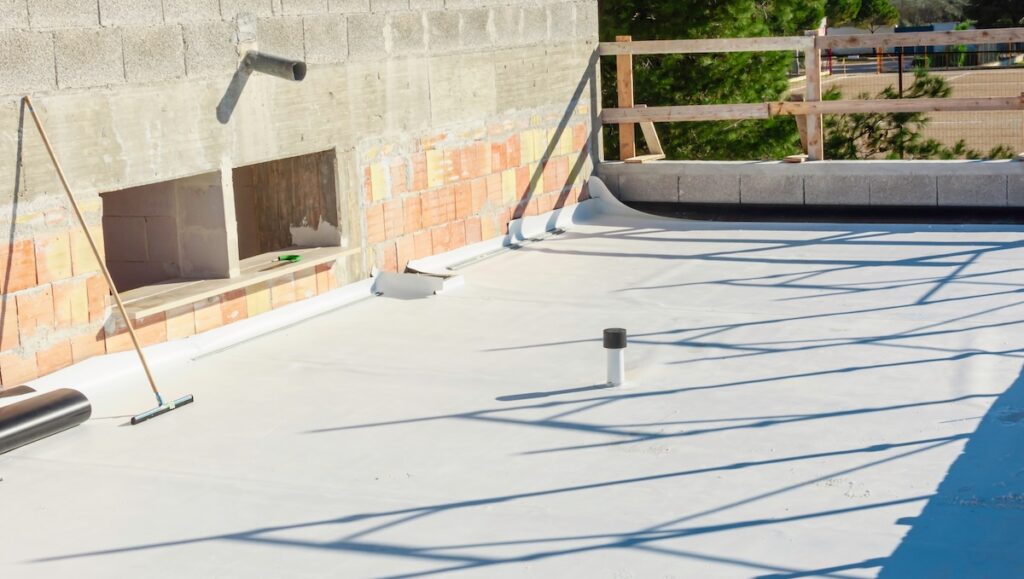
Types of Commercial Roofs and Their Maintenance Needs
Not all roofs are created equal. The type of roof on your building dictates its specific maintenance requirements.
Flat Roofs
Flat roofs, often covered with rubber (EPDM), thermoplastic (TPO), or modified bitumen, are cost-effective but prone to water pooling. Regular inspections and effective drainage are crucial.
Metal Roofs
Metal roofs are durable and long-lasting. Maintenance for these roofs includes checking for rust, tightening screws, and resealing fasteners.
Built-Up Roofs (BUR)
BUR systems consist of multiple layers of tar and gravel, offering excellent durability. Maintenance involves sealing cracks and ensuring gravel is spread evenly to protect tar from UV damage.
Green Roofs
Eco-friendly and visually appealing, green roofs feature vegetation and require specialized care. Maintenance includes watering plants, ensuring proper drainage, and removing overgrowth.
Shingle Roofs
Though less common in commercial settings, shingle roofs still need regular attention. Check for missing, curled, or damaged shingles and replace them as needed.
What Does a Commercial Roof Maintenance Contract Include?
A comprehensive commercial roof maintenance contract includes semi-annual inspections, written documentation with photos, drainage clearing, minor repair allowances, and a defined emergency response commitment. The best contracts specify exactly what is and is not covered, with clear pricing for any work that falls outside the scope. Property owners should review every contract carefully and compare apples-to-apples across bidders rather than focusing only on annual price.
Quality maintenance contracts also include warranty compliance documentation, which protects the manufacturer warranty over the full membrane lifespan. Most commercial roof manufacturers require documented maintenance to keep extended warranties valid, and the inspection records produced under a maintenance contract serve as proof of compliance. Property owners who skip maintenance often find that warranty claims get denied later when failures occur.
- Semi-annual inspections: Spring and fall walk-throughs with written reports.
- Drainage clearing: Removal of debris from drains, scuppers, and downspouts.
- Minor repair allowance: Small fixes completed during the inspection visit.
- Warranty documentation: Records that satisfy manufacturer warranty requirements.
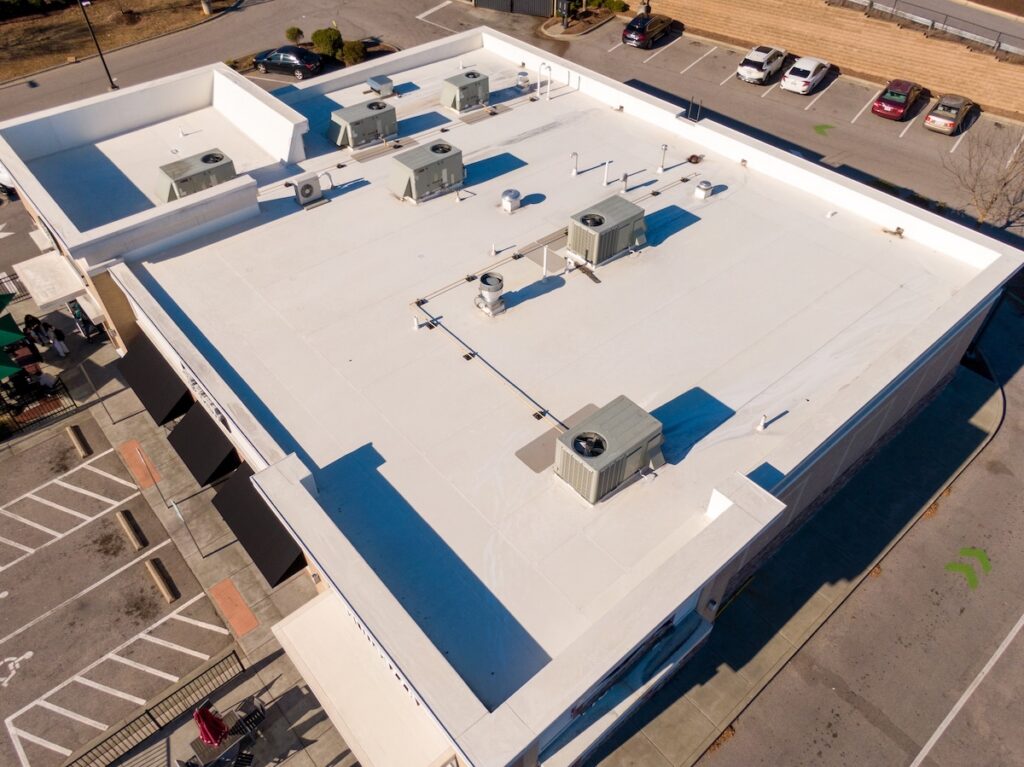
When Maintenance Isn’t Enough: Knowing It’s Time for Replacement
Commercial roof replacement makes sense when annual repair costs climb past 25 percent of replacement cost, when leaks recur in multiple locations despite repairs, or when the membrane shows widespread degradation across the roof field. The decision is rarely about a single failure point and almost always about a pattern of deterioration that maintenance can no longer keep up with. Property owners who track maintenance costs year over year often see the inflection point clearly: a flat trend line over five years suddenly bends upward, and within two or three more years the math favors replacement.
Other clear replacement signals include widespread shrinkage on EPDM membranes, deep crazing or chalking on TPO membranes, ponding water that persists 48 hours after rain across multiple roof areas, and visible interior damage that traces back to multiple leak sources. Commercial replacement typically runs $5 to $12 per square foot installed, depending on membrane type, insulation upgrades, and tear-off requirements.
- Annual repair threshold: Costs exceeding 25 percent of replacement cost.
- Recurring leaks: Multiple new leak locations despite previous repairs.
- Membrane condition: Widespread shrinkage, crazing, or chalking across the roof.
- Persistent ponding: Standing water lasting 48-plus hours across multiple areas.
Partner with McCormick Renovations for Expert Commercial Roof Maintenance
Maintaining a commercial roof takes time, effort, and expertise, but partnering with professionals can ease the burden. At McCormick Renovations, we specialize in providing tailored commercial roof maintenance services that ensure your roof remains in top condition throughout its lifespan. Here’s why clients trust us:
- Experienced Professionals: Our team brings years of experience working with all types of commercial roofs.
- Detailed Inspections: We offer thorough inspections to identify even the smallest issues quickly.
- Tailored Maintenance Plans: Every business is different, so we customize our services to meet your specific needs.
- Emergency Repair Services: Roof-related emergencies can disrupt operations—our team is on call to mitigate damage and restore functionality.
- Commitment to Quality: With McCormick Renovations, you can trust that we only use high-quality materials and proven techniques.
Our team is dedicated to providing long-term solutions that enhance the durability of your property. For those looking to further extend the life of their system and improve energy efficiency, we also offer specialized commercial roof coatings as a proactive way to protect your investment for years to come.
Frequently Asked Questions About Commercial Roof Maintenance
Q: How long does a commercial roof last with regular maintenance?
A properly maintained commercial roof typically lasts 20 to 30 years for TPO and EPDM, 30 to 50 years for modified bitumen, and 40 to 70 years for metal. Neglected systems often fail well before the lower end of those ranges, with documented industry data showing that proactive maintenance can extend service life by 30 to 100 percent.
Q: Does commercial property insurance cover roof damage?
Most commercial property policies cover sudden damage from storms, hail, fire, and falling objects, but exclude damage from age, wear, or chronic leaks. Documented maintenance records strengthen claims by demonstrating the damage came from a covered event rather than long-term neglect.
Q: What is the difference between roof maintenance and a roof inspection?
A roof inspection is a visual assessment that identifies current conditions and any developing problems, while maintenance includes both the inspection and any minor repairs, drainage clearing, and preventive work needed. Most quality maintenance programs combine the two into a single semi-annual visit.
Q: Can a commercial property manager perform roof maintenance in-house?
Property managers can handle quarterly visual walkthroughs from ground level or from a safe roof access point, looking for obvious debris accumulation and visible damage. Anything involving foot traffic on the membrane, work at heights, or technical evaluation should be left to licensed roofing contractors with proper safety equipment and training.
Q: How long does a commercial roof inspection take?
Most commercial roof inspections take 1 to 4 hours depending on building size, complexity, and the number of penetrations on the roof. Buildings over 50,000 square feet often require a full day for a thorough inspection that includes infrared moisture scanning and detailed flashing reviews.
Q: Does a maintenance contract void if I switch providers?
Maintenance contracts themselves typically transfer or terminate based on their own terms, but the manufacturer warranty on the roof system continues regardless of which contractor performs the work. The key requirement is that any approved contractor performs the maintenance and keeps proper documentation throughout the warranty period.
Book a Consultation Today

Commercial roof maintenance isn’t just about safeguarding your building—it’s about preserving your bottom line. Whether you need guidance on the best care practices, a tailored maintenance plan, or expert advice, McCormick Renovations is here to help.Have questions about your roof? Contact us today to schedule a free consultation. Together, we’ll ensure your commercial roof remains a strong, reliable shield for your business.