Choosing energy efficient roofing is one of the highest-leverage decisions a homeowner can make, because the roof handles direct sun, driving rain, and freeze-thaw cycles for decades while quietly shaping your monthly energy bill. The right material can cut cooling costs, extend the life of your HVAC equipment, and qualify you for federal tax credits, while the wrong one can lock you into higher utility costs for 20 years or more. This guide breaks down five of the best-performing roofing materials, what they cost, and how each one stacks up for homeowners weighing real-world savings.
- Material breakdown: A close look at metal, cool asphalt shingles, clay and concrete tile, slate, and green roofs.
- Performance data: Reflectivity, lifespan, price ranges, and the climates where each option earns its keep.
- Selection guidance: How to match the right energy-saving roof to your home, climate, and budget.
What Makes a Roof Energy Efficient?
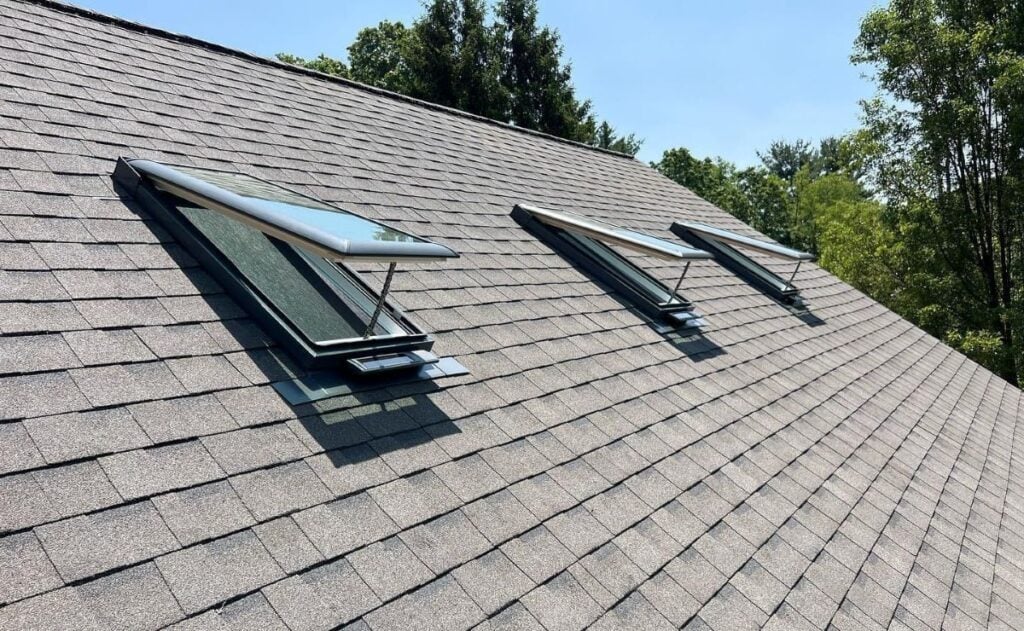
An energy efficient roof reduces the amount of heat transferred into the home, which directly lowers cooling loads in summer and helps stabilize indoor temperatures year round. The performance comes from a combination of solar reflectance, thermal emittance, insulation underneath, and proper ventilation working together as a system.
How Does Solar Reflectance Affect Energy Bills?
Solar reflectance is the fraction of sunlight that a roof bounces back into the atmosphere instead of absorbing it as heat. A conventional dark asphalt roof can hit 150°F on a sunny afternoon, while a reflective roof can stay 50°F to 70°F cooler under the same conditions. That temperature difference shows up in lower attic temperatures, less strain on the air conditioner, and fewer thermal cycles damaging the roof itself. Homeowners in Pittsburgh and surrounding areas should pay attention to this number because mid-Atlantic summers run hot and humid even though winters dominate the heating bill.
- Solar reflectance scale: Rated from 0 to 1, with white roofs typically reflecting 60% to 90% of sunlight.
- Thermal emittance: Measures how readily the roof releases absorbed heat back into the air rather than into the home.
- Cool Roof Rating Council (CRRC): An independent body that publishes verified reflectance and emittance values for thousands of products.
- ENERGY STAR labels: Identify roofing products that meet specific minimum reflectance thresholds.
Why Does Climate Zone Matter for Roofing Choices?
Climate zone determines whether you should prioritize reflectance, insulation, or a balance of both, because the right roof for Phoenix is rarely the right roof for Pittsburgh. Pittsburgh and surrounding areas sit in IECC Climate Zone 5, which is heating-dominated but still records meaningful summer cooling loads. That mixed profile means homeowners should weigh both winter heat retention and summer reflectance instead of optimizing for only one season.
- Heating-dominated zones: Reward higher attic insulation R-values and tighter air sealing.
- Cooling-dominated zones: Reward higher solar reflectance and thermal emittance.
- Mixed zones like Pittsburgh: Benefit from cool-colored materials that reflect heat without sacrificing cold-weather performance.
- Local building codes: Often set minimum insulation R-values tied directly to climate zone.
5 Energy Efficient Roofing Materials Worth Considering
Each of the five materials below performs differently on reflectance, lifespan, upfront cost, and long-term savings. Read each section with your home, climate, and budget in mind, then compare against the buying guidance later in the post. According to the U.S. Department of Energy, conventional roofs can reach 150°F on a sunny summer afternoon while a reflective roof can stay more than 50°F cooler under the same conditions, which illustrates how much difference reflectance and material choice make for cooling loads.
1. Metal Roofing
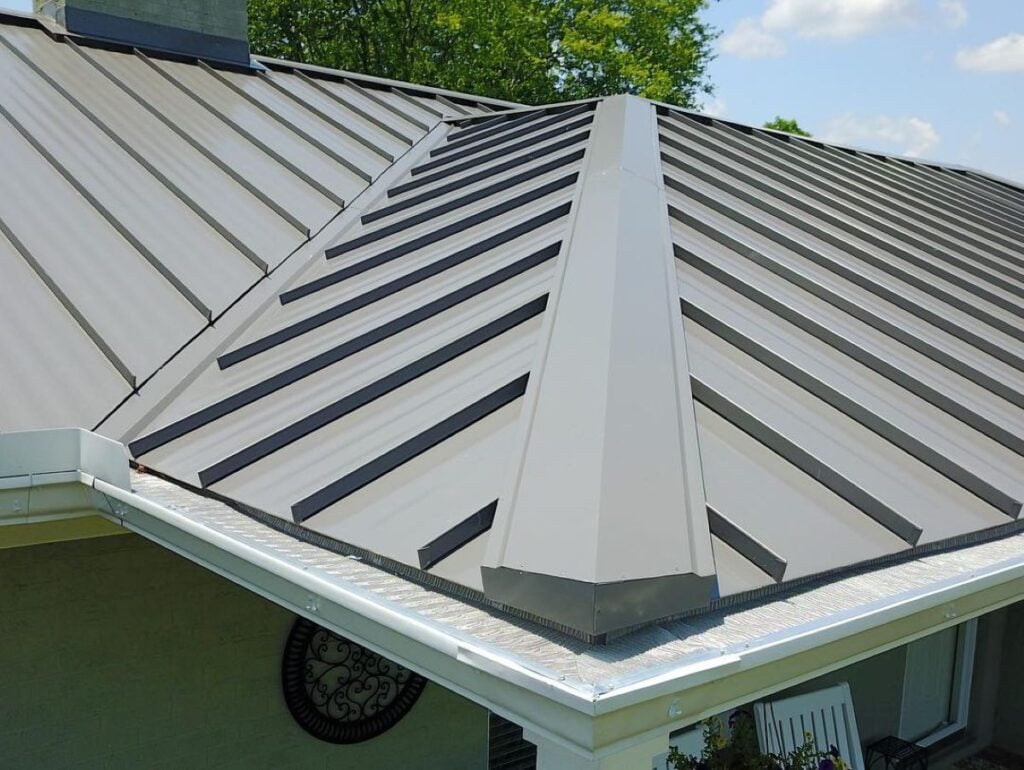
Metal roofing is one of the highest-performing energy efficient roofing options because reflective metal panels with cool pigment coatings can bounce a large share of solar radiation back into the sky while shedding absorbed heat quickly. Standing seam steel, aluminum, and stone-coated steel all hold up well in mixed climates and typically last 40 to 70 years, which is two to three times longer than asphalt. Installed costs generally run $9 to $16 per square foot, but the lifespan and lower lifetime cooling costs frequently make metal the cheaper choice over a 50-year horizon. Metal also handles snow load and ice dams better than most alternatives, which matters in Pittsburgh and surrounding areas.
- Lifespan: Roughly 40 to 70 years depending on coating and metal type.
- Energy benefit: Coated metal panels can reflect 30% to 70% of solar radiation.
- Installed cost: Approximately $9 to $16 per square foot.
- Considerations: Higher upfront cost than asphalt and requires installers experienced with standing seam systems.
2. Cool Asphalt Shingles
Cool asphalt shingles use specially engineered granules that reflect more sunlight than standard shingles while keeping the familiar look and price point homeowners expect. Brands such as GAF Timberline HD Cool Color Series and CertainTeed Landmark Solaris carry ENERGY STAR labels and meet Cool Roof Rating Council thresholds for steep-slope roofs. They typically cost only a small premium over standard architectural shingles, which makes them an easy upgrade for homeowners who want efficiency gains without changing the look of the home. The tradeoff is a shorter lifespan than metal or tile, generally 25 to 30 years for premium architectural products.
- Lifespan: Approximately 25 to 30 years for premium architectural lines.
- Energy benefit: Reflective granules can cut peak cooling demand by 10% to 15%.
- Installed cost: Roughly $4.50 to $8 per square foot.
- Considerations: Modest reflectance compared to metal or white membranes, and color choices are more limited in cool-rated lines.
3. Clay and Concrete Tile
Clay and concrete tile deliver outstanding energy performance because their thermal mass slows heat transfer and their natural air gaps under each tile create a built-in ventilation layer. Spanish clay tiles and concrete S-tiles are common across the southern U.S. for cooling reasons, but cool-colored concrete tiles also perform well in mixed climates like the mid-Atlantic. Lifespan often exceeds 50 years for concrete and 75 years or more for clay, which is among the longest of any roofing material. The main drawbacks are weight, often 600 to 1,100 pounds per 100 square feet, and a higher installed cost that typically lands between $10 and $20 per square foot.
- Lifespan: Roughly 50 years for concrete and 75-plus years for clay.
- Energy benefit: Thermal mass plus airflow under tiles reduces attic heat gain.
- Installed cost: Approximately $10 to $20 per square foot.
- Considerations: Heavy load may require additional framing, and replacement of broken tiles requires a skilled installer.
4. Slate Roofing
Slate is a natural stone roofing material with a lifespan that can exceed 100 years when properly installed, and its dense composition combined with light-colored options makes it a strong energy performer. Lighter gray and green slates reflect more solar radiation than darker varieties, and the material’s natural thermal mass helps moderate attic temperatures. Slate carries the highest upfront cost on this list at $15 to $30 per square foot installed, but spread across a century of service life, the per-year cost is competitive.
- Lifespan: Often 75 to 150 years depending on quarry source.
- Energy benefit: Dense thermal mass and light-colored options reduce heat gain.
- Installed cost: Approximately $15 to $30 per square foot.
- Considerations: Heavy weight and high installation skill requirement, plus higher upfront price than any other material here.
5. Green and Living Roofs
Green roofs replace conventional roofing materials with a layer of growing medium and vegetation, which insulates the home, manages stormwater, and reduces the urban heat island effect. They are most common on low-slope roofs and additions, where the structural support and waterproof membrane can be properly engineered. Studies consistently show meaningful reductions in cooling loads, often 15% to 25%, along with substantial benefits to local biodiversity and air quality. The upfront cost is high, generally $15 to $30 per square foot, but green roofs can extend the life of the underlying waterproof membrane by 40 years or more by shielding it from UV radiation and thermal cycling.
- Lifespan: Membrane below the planting layer often lasts 40 to 50 years.
- Energy benefit: Insulating soil layer can cut cooling loads by 15% to 25%.
- Installed cost: Approximately $15 to $30 per square foot.
- Considerations: Requires structural review, professional waterproofing, and ongoing maintenance of the planting layer.
How Do You Choose the Right Energy Efficient Roof?
The best energy efficient roofing depends on your climate zone, the slope of your roof, your budget, and how long you plan to stay in the home. Homeowners in Pittsburgh and surrounding areas should weigh winter performance alongside summer reflectance, because both seasons matter for total annual cost.
What Should You Look at First?
Start by checking your existing roof framing, attic insulation, and ventilation, because those three factors shape what new roofing material will actually deliver in real-world savings. A heavy material like clay tile or slate may require structural reinforcement, and inadequate attic insulation will undercut even the most reflective top layer. The 2021 IECC sets minimum attic insulation values around R-49 for Climate Zone 5, and ENERGY STAR-labeled products can qualify for federal tax credits of up to 30% of materials with an annual cap of $1,200.
- Structural capacity: Check rafter size and spacing before choosing a heavy material.
- Attic insulation level: Aim for R-49 or higher in Pittsburgh-area homes.
- Ventilation balance: Soffit and ridge vents work together to keep the attic dry and cool.
- Tax credits and rebates: Federal Energy Efficient Home Improvement Credit covers up to 30% of qualifying material costs.
How Long Will the Roof Last and What Will It Save?
Lifespan and annual savings together drive the real cost of ownership, and the cheapest roof per square foot is rarely the cheapest roof per year. A $14,000 metal roof lasting 60 years costs about $233 per year, while an $8,000 standard asphalt roof lasting 20 years costs about $400 per year before factoring in any energy savings. Add cooling cost reductions of 7% to 15% from a cool-rated product and the gap widens further. For homeowners planning to stay in the home long term, materials with higher upfront costs and longer lifespans usually deliver lower lifetime costs.
- Cooling cost reduction: Cool-rated roofs typically save 7% to 15% on annual cooling bills.
- Lifecycle cost: Calculate cost per year, not just upfront cost.
- HVAC longevity: Lower attic temperatures reduce strain on cooling equipment.
- Resale value: Long-life roofing materials often boost both appraised value and buyer interest.
Frequently Asked Questions
How Much Does an Energy Efficient Roof Cost in Pittsburgh?
Most homeowners in Pittsburgh and surrounding areas pay $4.50 to $8 per square foot for cool asphalt shingles, $9 to $16 for metal, and $10 to $30 for tile or slate. The total varies based on roof complexity, tear-off requirements, and the specific product line chosen.
Do Energy Efficient Roofs Qualify for Tax Credits?
Yes, qualifying ENERGY STAR-labeled roofing materials can be eligible for the federal Energy Efficient Home Improvement Credit, which covers up to 30% of material costs with an annual cap of $1,200. Labor costs are not included, and homeowners should consult a tax professional for current eligibility rules.
How Long Do Energy Efficient Roofs Last?
Lifespan depends on the material: cool asphalt shingles last 25 to 30 years, metal lasts 40 to 70 years, concrete tile lasts about 50 years, clay tile lasts 75 years or more, and slate can last over 100 years. Proper installation and ventilation directly affect how close a roof gets to its maximum lifespan.
Can I Install an Energy Efficient Roof Over My Existing Roof?
In some cases yes, but a full tear-off is usually the better choice because it allows inspection of the decking, replacement of damaged sheathing, and proper installation of underlayment and ice-and-water shield. Pennsylvania building codes generally limit roofs to two layers of shingles total, so many homes are not eligible for an overlay.
Will a Cool Roof Raise My Heating Bill in Winter?
A cool roof can produce a small heating penalty in cold climates, but in mixed-climate areas like Pittsburgh the cooling savings typically outweigh the winter increase. Choosing cool-colored products rather than bright white roofs further reduces any heating-season tradeoff.
Do I Need a Licensed Contractor for Roof Replacement?
Pennsylvania requires home improvement contractors performing work over $500 to be registered with the state Attorney General’s office. Hiring a registered, insured roofing company protects your investment and ensures the work meets local building codes and manufacturer warranty requirements.
Why McCormick Renovations Is the Right Partner for Your Energy Efficient Roof
McCormick Renovations brings deep product knowledge, careful installation practices, and a commitment to long-term value to every roof we build in Pittsburgh and surrounding areas. We help homeowners pick the right combination of metal, cool asphalt, tile, slate, or green roofing based on the actual condition of the home, the climate zone, and the long-term goals for comfort and savings. If you are weighing energy efficient roofing options and want a clear, no-pressure recommendation backed by real numbers, reach out to McCormick Renovations today for a free consultation. Our team will inspect your existing roof, walk you through the tradeoffs, and design a roofing system that pays you back for decades.