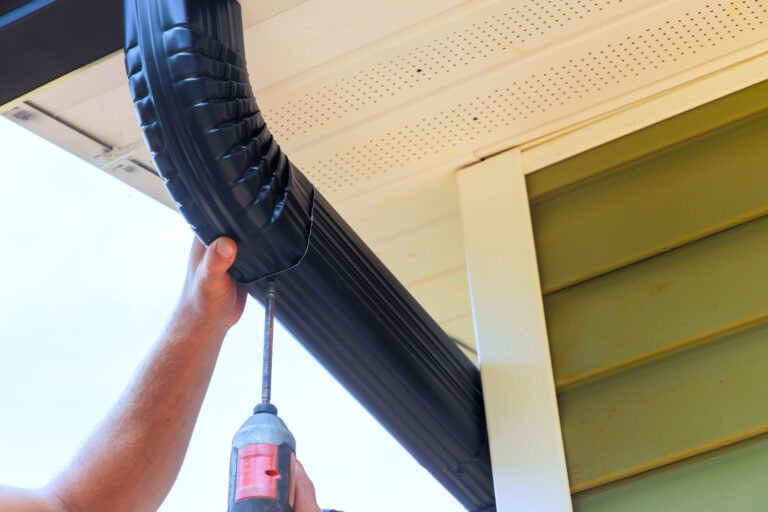
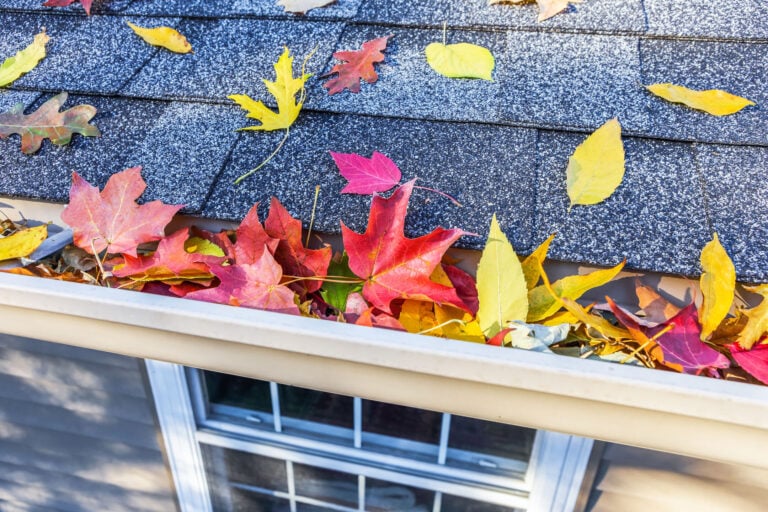
A gutter downspout is the vertical pipe that carries water from your gutters down to the ground and away from your foundation, and picking the right one makes a bigger difference to how well your home sheds water than most Pittsburgh homeowners realize. The right combination of material, size, and placement protects your foundation, siding, and landscaping for decades, while the wrong combination lets water pool near the house and causes problems that take years to show up. This guide walks Pittsburgh homeowners through the six main downspout types, how sizing really works, and the signs that it’s time to plan for replacement.
- 6 downspout types explained: From everyday aluminum to premium copper, with the real differences between them.
- Sizing basics without the jargon: How downspout size matches your gutter size and roof area.
- When replacement makes sense: The signs that tell you another repair isn’t going to cut it.
What a Gutter Downspout Actually Does
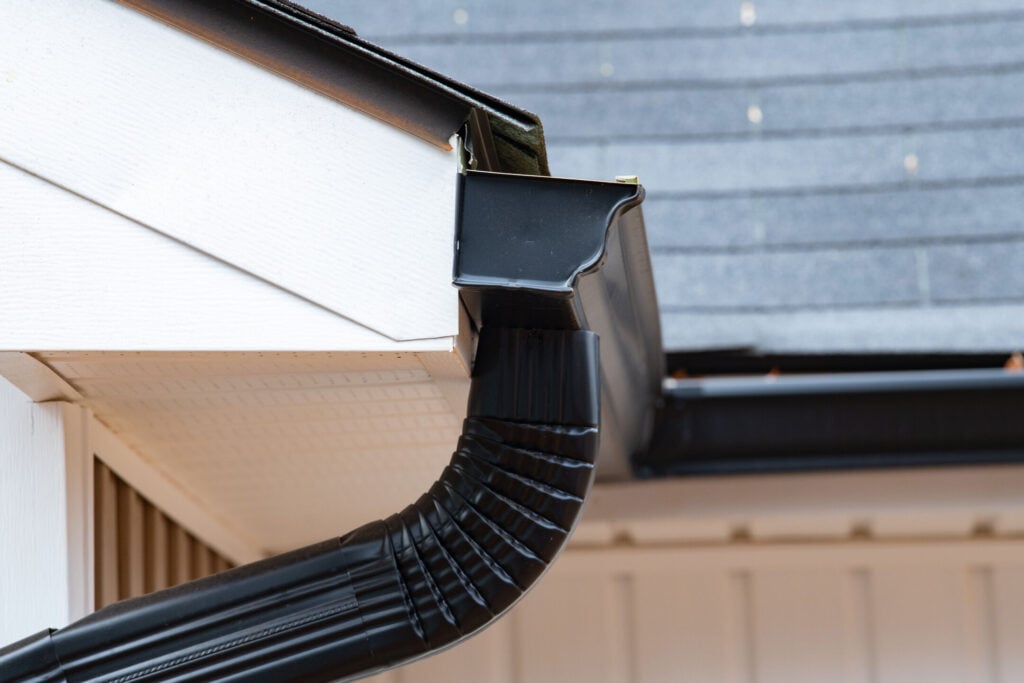
Your gutter downspout has one job: get water from the gutter all the way down to the ground and out away from your foundation without leaking, overflowing, or dumping water right next to the house. Done well, this is invisible work your home does every time it rains. Done poorly, it causes foundation cracks, basement moisture, siding damage, and landscape erosion.
Pittsburgh’s climate puts extra stress on downspouts because of the number of freeze-thaw cycles the region sees each winter. Water trapped in a damaged or clogged downspout freezes, expands, and can split seams or crush sections, so even a small issue can quickly become a bigger one. That’s why both material selection and proper sizing matter more here than in milder climates.
6 Types of Gutter Downspouts
Six main downspout types cover almost every residential installation. Each has specific strengths, lifespan, and price point, and knowing what sets them apart helps you pick the right one for your home.
1. Aluminum Rectangular (K-Style)
Aluminum rectangular downspouts are the most installed downspout type in American homes, matched with the K-style gutters that dominate residential construction. They’re affordable, lightweight, available in many colors, and won’t rust (though they can dent from falling branches or ladders). Rectangular aluminum downspouts come in two standard sizes: 2×3 inches (for 5-inch gutters) and 3×4 inches (for 6-inch gutters), and most Pittsburgh homes use one or the other.
- Lifespan: 20 to 30 years with proper installation and maintenance.
- Price: Entry-level pricing, among the most affordable options.
- Best for: Most residential homes in Pittsburgh, especially newer construction.
- Finish options: Available in dozens of baked-on colors to match siding.
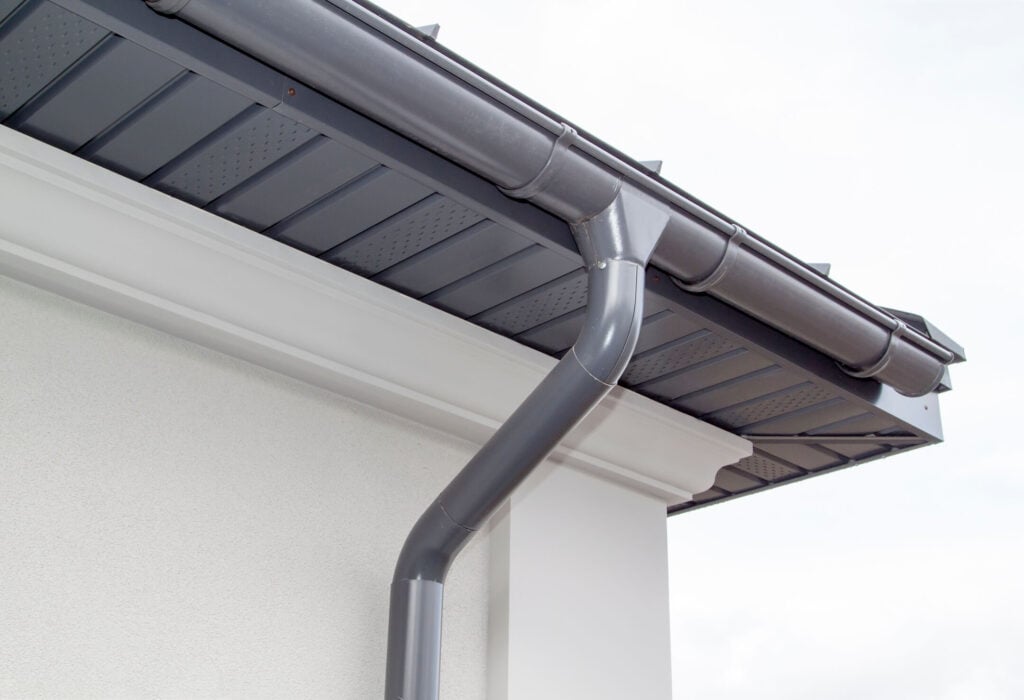
2. Aluminum Round
Round aluminum downspouts pair with half-round gutters, which are common on older homes, historic properties, and homes designed with a traditional architectural look. They move water efficiently and offer a cleaner, more decorative appearance than rectangular downspouts, but typically cost more and offer fewer size options. Round downspouts come in 3-inch or 4-inch diameters.
- Lifespan: 20 to 30 years similar to rectangular aluminum.
- Price: Slightly higher than rectangular aluminum.
- Best for: Half-round gutter systems, historic homes, and homes with traditional architecture.
- Visual appeal: Cleaner appearance that suits older homes better than rectangular profiles.
3. Copper
Copper downspouts are the top-of-the-market choice for Pittsburgh homes, delivering a distinctive appearance that develops a greenish patina over time and lasting 50 to 100 years or more. Copper is used primarily on high-end historic restorations, luxury homes, and architecturally significant properties where appearance and longevity justify the premium cost. Both rectangular K-style and round half-round profiles are available in copper.
- Lifespan: 50 to 100 years or more.
- Price: 4 to 6 times the cost of aluminum (premium pricing).
- Best for: Historic restorations, luxury homes, and distinctive architectural statements.
- Patina development: Changes from bright copper to brown to green over decades.
4. Galvanized Steel
Galvanized steel downspouts offer the strongest construction of any residential downspout material, resisting dents from falling branches and heavy snow slides much better than aluminum. The tradeoff is that steel eventually rusts (galvanized coating protects the steel but doesn’t last forever), and once rust starts, it progresses faster than most homeowners expect. Steel downspouts are more common on commercial buildings than residential properties.
- Lifespan: 15 to 25 years before rust becomes a significant problem.
- Price: Mid-range, more than aluminum but less than copper.
- Best for: Homes in heavy snow areas or where impact damage is a concern.
- Rust risk: Protective coating eventually fails and corrosion starts at seams and elbows.
5. Vinyl (PVC)
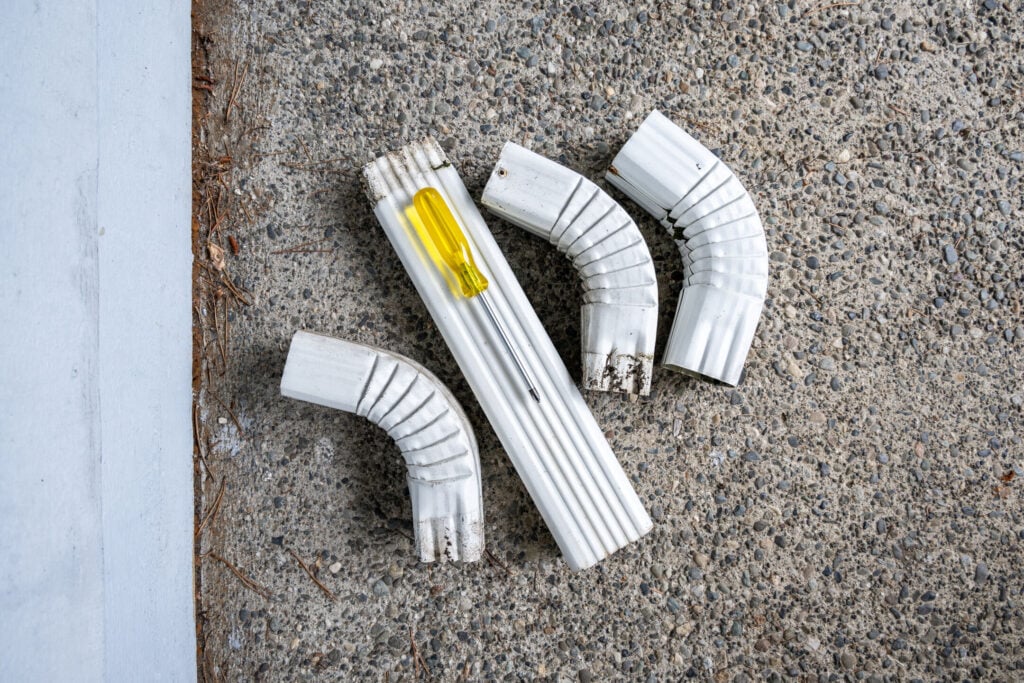
Vinyl downspouts are the budget option, popular for DIY installations and secondary structures like sheds and garages. They’re the cheapest material and the easiest for homeowners to work with (they cut with a hacksaw and snap together with simple connectors), but they’re not well-suited to Pittsburgh’s climate because they become brittle in cold weather and crack from thermal cycling over time.
- Lifespan: 10 to 15 years in Pittsburgh’s climate, often less.
- Price: Cheapest downspout material available.
- Best for: Sheds, garages, temporary structures, or very budget-focused installations.
- Climate concern: Not recommended for primary residential use in freeze-thaw climates.
6. Zinc
Zinc downspouts are a premium option that competes with copper for longevity and distinctive appearance. Zinc develops a self-healing patina that protects the metal from corrosion for 50 to 80 years or more, making it one of the longest-lasting downspout materials you can buy. Like copper, zinc is used primarily on high-end homes where distinctive architectural details matter.
- Lifespan: 50 to 80 years with self-healing patina protection.
- Price: Premium pricing, similar to copper.
- Best for: High-end residential, European-style architecture, long-term thinking.
- Patina development: Develops a soft gray patina that protects against further corrosion.
Sizing Your Gutter Downspout
Downspout sizing matters more than most homeowners realize because an undersized downspout causes the whole gutter system to back up and overflow during heavy rain. Here’s how proper sizing works for most Pittsburgh homes.
- 5-inch gutters pair with 2×3-inch rectangular downspouts: Standard residential setup, handles most Pittsburgh homes with typical rainfall.
- 6-inch gutters pair with 3×4-inch rectangular downspouts: Larger systems for homes with big roofs, steep pitches, or heavy tree coverage.
- Half-round systems: 3-inch or 4-inch round downspouts pair with half-round gutters.
- Downspout placement: Install one downspout for every 30 to 40 feet of gutter run.
- Corner placement: Downspouts work best at the corners of the house where they can run straight down.
According to Bob Vila, choosing the right gutter and downspout system involves matching gutter size, downspout size (both length and width or diameter), and material thickness to your home’s roof area and local rainfall, which is why Pittsburgh homes with larger roofs or heavy tree coverage often need 6-inch gutters with 3×4-inch downspouts rather than the standard 5-inch and 2×3 combination. Bigger downspouts also allow a gutter to handle more runoff without overflowing.
- Water flow capacity: A 3×4-inch downspout handles roughly twice the water volume of a 2×3-inch.
- Debris handling: Larger downspouts clog less often because debris has more room to pass through.
- Pittsburgh rule of thumb: When in doubt, go with the larger size for better long-term performance.
When to Replace Your Gutter Downspout
Not every downspout problem needs a full replacement, but several specific situations call for new rather than another repair. Here’s when to think about replacement.
- Rust or corrosion on steel downspouts: Once rust takes hold, it progresses faster than repair patches can keep up with.
- Multiple failing joints or seams: Several leaks across the downspout usually signal end of life for the whole piece.
- Crushed or heavily dented sections: Significant impact damage affects water flow and often can’t be fixed to original condition.
- Downspout older than 25 years (aluminum) or 15 years (steel): Aging downspouts fail more often and don’t take repairs well.
- Vinyl downspouts in Pittsburgh: Vinyl generally doesn’t belong on Pittsburgh homes long-term; upgrade to aluminum when replacement is needed.
- Full gutter replacement planned: Replace the whole system together rather than mixing old and new components.
- Material mismatch: If repairs would mix different metals that don’t play well together (steel next to aluminum, for example), replacement is the better call.
Cost of Gutter Downspout Replacement in Pittsburgh
Gutter downspout costs vary significantly by material, downspout length, and whether you’re replacing just the downspouts or the whole gutter system. Here are typical Pittsburgh-area 2026 ranges.
- Aluminum downspout installed: $4 to $12 per linear foot.
- Copper downspout installed: $20 to $40 per linear foot.
- Galvanized steel installed: $8 to $15 per linear foot.
- Vinyl downspout: $3 to $6 per linear foot (not recommended long-term in Pittsburgh).
- Zinc downspout installed: $15 to $30 per linear foot.
- Full gutter and downspout replacement: $1,600 to $4,500 for most Pittsburgh homes.
Frequently Asked Questions
How long do gutter downspouts last in Pittsburgh?
Aluminum downspouts typically last 20 to 30 years in Pittsburgh’s climate when properly installed and maintained. Copper and zinc last 50 to 100 years. Galvanized steel lasts 15 to 25 years before rust becomes problematic. Vinyl is the shortest-lived at 10 to 15 years, and often less in freeze-thaw climates.
What size downspout do I need?
For 5-inch gutters, use a 2×3-inch rectangular downspout. For 6-inch gutters, use a 3×4-inch rectangular downspout. Half-round gutters pair with 3-inch or 4-inch round downspouts. Install one downspout for every 30 to 40 feet of gutter run.
Can I mix downspout materials with existing gutters?
It’s possible but not recommended. Different metals expand at different rates and can cause joint failures over time, and galvanic corrosion can happen when dissimilar metals contact each other with moisture present. Replacing downspouts and gutters together as a system delivers much better long-term results.
How much does it cost to replace a single downspout?
Replacing a single aluminum downspout in Pittsburgh typically costs $100 to $400 depending on home height, downspout length, and whether it’s a straightforward replacement or involves damaged fascia or siding behind the downspout. Many contractors have $150 to $250 minimums.
Should downspouts be extended away from the foundation?
Yes. Downspouts should discharge water at least 4 to 6 feet away from the foundation to prevent basement moisture and foundation damage. Flexible extensions, rigid extensions, splash blocks, or underground drainage all work; the key is getting the water away from the house.
What’s the best downspout material for Pittsburgh?
Aluminum rectangular is the best overall choice for most Pittsburgh homes, offering a strong combination of durability, affordability, color options, and climate tolerance. Copper is the right choice for historic homes and long-term investment. Vinyl is not recommended for Pittsburgh’s freeze-thaw climate.
Thinking About New Gutters and Downspouts for Your Pittsburgh Home?
Picking the right gutter downspout material and size pays off for decades through better water management, less maintenance, and real foundation protection. Whether you’re planning a full gutter system replacement, upgrading from aging materials, or pairing new gutters with roofing or siding work, the right combination of material and sizing makes all the difference.
McCormick Renovations installs seamless aluminum gutters and downspouts across Pittsburgh and surrounding areas as part of our full-service exterior work. With more than 30 years of family-owned experience, our team walks every homeowner through the right size and configuration for their home, pairs the gutter and downspout system to the roof size, and backs the installation with our workmanship warranty. If you’re ready to plan a new gutter and downspout system, contact McCormick Renovations for a free estimate and honest guidance on the right fit for your home.