Gutter guard installation is one of the highest-return low-cost improvements a Pittsburgh homeowner can make, but doing it right requires understanding the installation process, matching the guard type to your roof, and knowing when to hire a professional versus tackle the work yourself. Skipping over key installation steps or hiring the wrong contractor can leave you with guards that clog faster than uncovered gutters, void your roof warranty, or fail entirely within a few years. This guide walks Pittsburgh homeowners through the six professional installation steps, DIY vs. professional considerations, current cost data, and the common mistakes that shorten the life of gutter guard systems.
- 6-step installation process: What happens on install day and why each step matters.
- DIY vs. professional: When homeowners can install guards themselves and when hiring a pro is worth the cost.
- Cost, mistakes, and warranty: Current Pittsburgh pricing, common installation errors to avoid, and how to protect your investment.
Should You Install Gutter Guards?
Gutter guards protect your home from the foundation, siding, and landscape damage that develops when clogged gutters overflow. The decision to install them depends on your home’s tree exposure, your willingness to clean gutters manually, and your long-term maintenance budget.
- Heavy tree coverage: If your home is surrounded by mature deciduous or coniferous trees, gutter guards are almost always worth it.
- Multi-story homes: Homeowners who cannot safely clean their own gutters benefit significantly from reduced maintenance.
- Foundation and landscape concerns: Homes with basement moisture issues or expensive landscaping benefit from guaranteed drainage.
- Long-term ownership: Gutter guards pay back their cost within 5 to 10 years through reduced cleaning and prevented damage.
6 Steps of Professional Gutter Guard Installation
A professional gutter guard installation follows a predictable sequence designed to maximize long-term performance and preserve manufacturer warranties. Understanding what happens on install day helps you set expectations and evaluate whether your contractor is doing the job right.
1. Initial Inspection and Estimate
The installation process begins with a detailed inspection of your existing gutters, downspouts, roof edge, and fascia to identify any repairs needed before guards can be installed. A qualified installer measures every gutter run, notes valley locations, identifies any sagging or damaged sections, and evaluates whether the gutters have proper slope toward downspouts. This inspection informs both the total cost estimate and the guard type recommendation.
- Full gutter measurement: Linear footage of gutters, downspouts, valleys, and detail work.
- Damage assessment: Sagging, corrosion, or damaged sections identified.
- Slope verification: Gutters must slope 1/4 inch per 10 feet toward downspouts.
- Written estimate: Itemized cost broken down by materials, labor, repairs, and any needed gutter replacement.
2. Gutter Cleaning and Preparation
Before guards can be installed, existing gutters must be thoroughly cleaned of all debris, sediment, and standing water. Any leaves, seed pods, roof grit, or organic material left in place will decompose under the new guards, creating a breeding ground for mold and eventually clogging the guard system from below. Professional installers include this cleaning as part of the installation scope.
- Full debris removal: Leaves, twigs, seed pods, and organic sediment.
- Downspout flushing: Verify downspouts are clear and draining properly.
- Gutter interior cleaning: Wash down with hose to remove residual grit.
- Preparation for guard attachment: Clean surface required for adhesive or fastener-based systems.
3. Gutter Repair Work (If Needed)
Any damaged, sagging, or corroded gutter sections must be repaired or replaced before guards go in, because installing guards on failing gutters simply masks the underlying problem. Common pre-installation repairs include re-hanging sagging sections, replacing corroded steel gutters, resealing seam leaks, and adjusting slope where drainage has become inadequate.
- Sagging repair: Re-hang gutters with additional or replacement hangers.
- Seam sealing: Re-seal leaking seams on sectional systems.
- Slope adjustment: Correct drainage slope where necessary.
- Full replacement: In some cases, gutter replacement is more cost-effective than repair.
4. Guard Measurement and Cutting
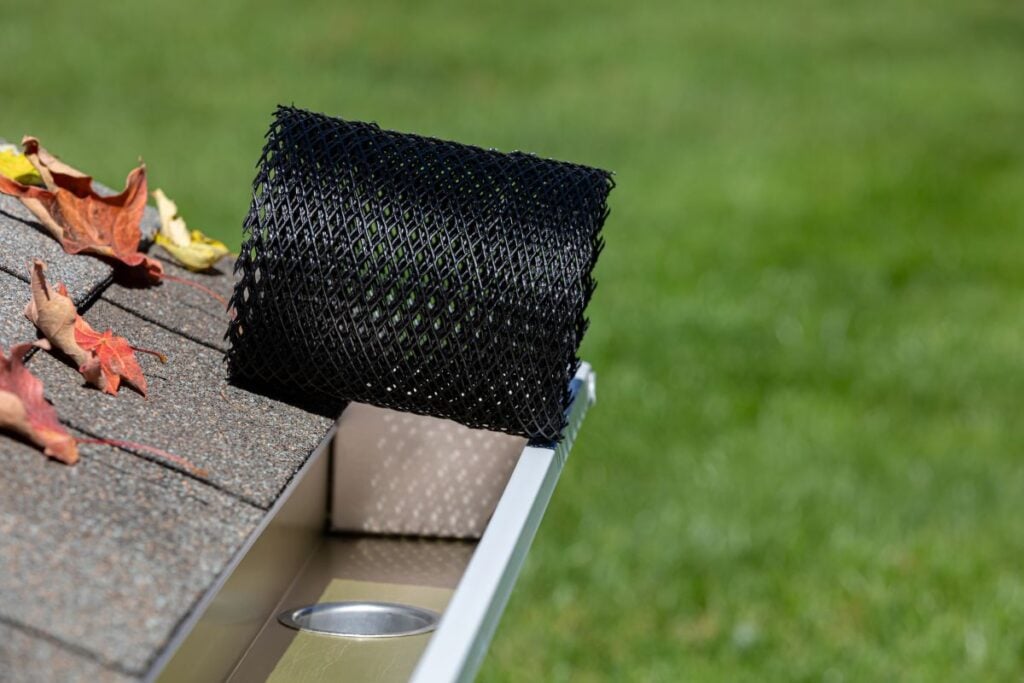
Once gutters are prepared, the installer measures and cuts guards to fit each specific gutter section, allowing for expansion, downspout locations, and corner details. Professional installers use appropriate cutting tools for each guard type (tin snips for aluminum mesh, specialty cutters for micro-mesh, saws for solid guards) to ensure clean edges that won’t lift or catch debris over time.
- Precise measurement: Cut to exact length for each gutter run.
- Corner and downspout allowances: Custom cuts around obstacles.
- Expansion allowance: Small gap allowed for thermal expansion in metal guards.
- Appropriate tools: Different guard types require different cutting equipment.
5. Guard Attachment and Sealing
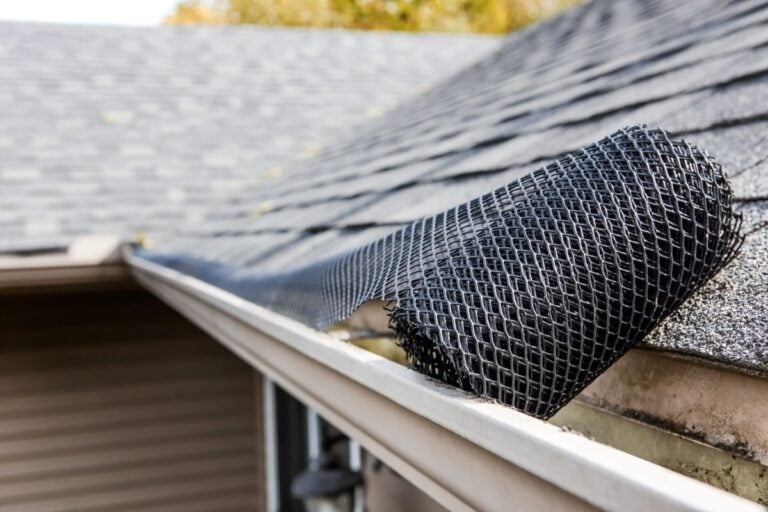
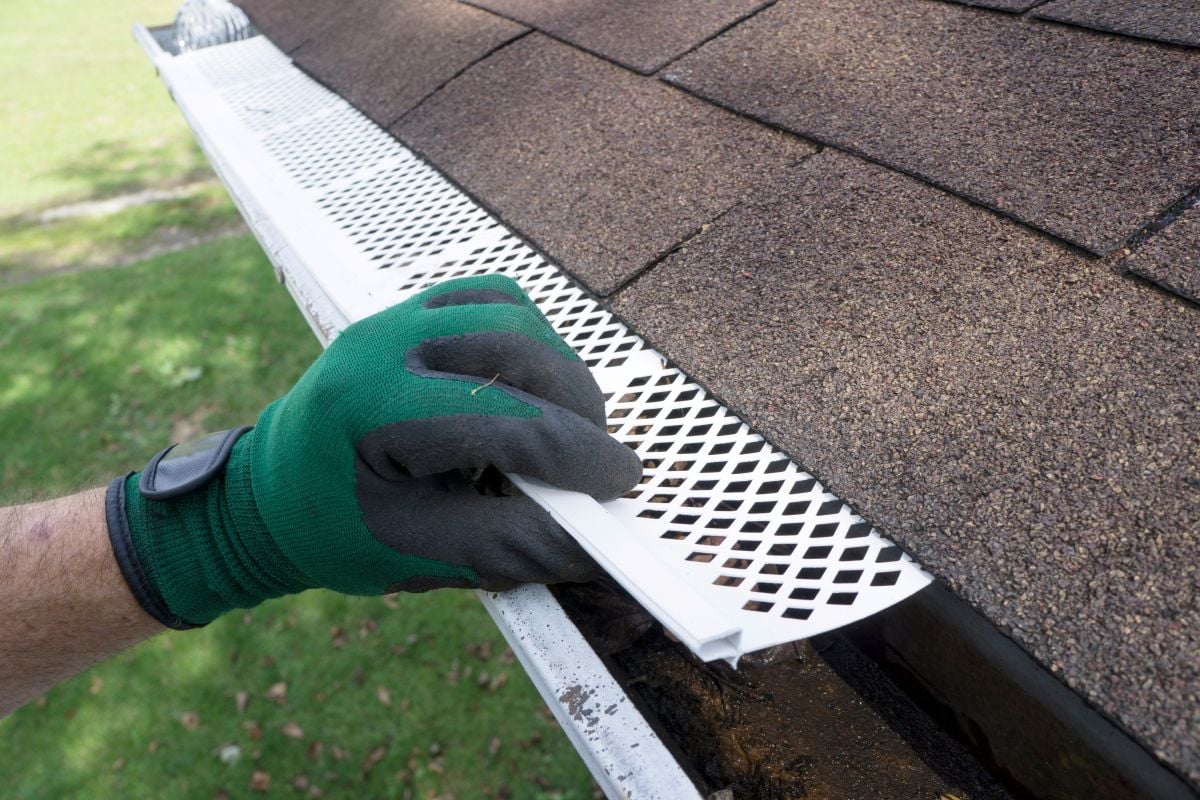
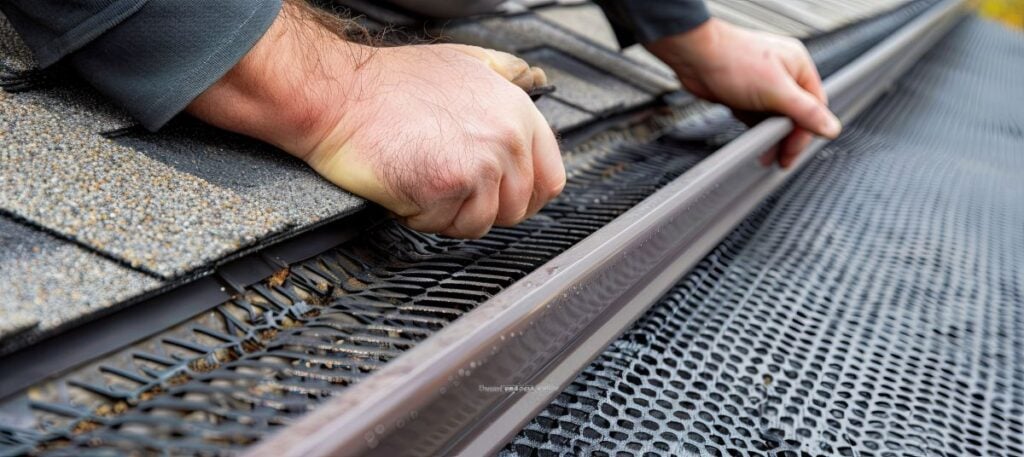
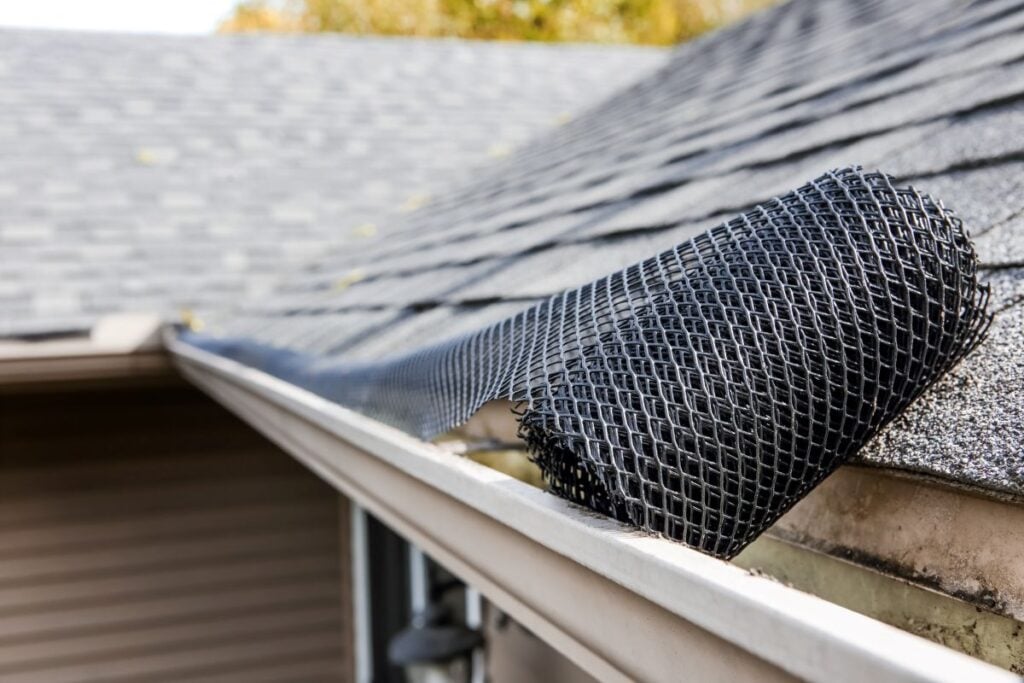
The guards are then secured to the gutter using the manufacturer’s specified attachment method: snap-in clips, screws through the front lip, adhesive systems, or attachment under the first row of shingles (though this method can void some roof warranties). Sealing at joints prevents debris from working its way underneath the guard over time.
- Manufacturer-specified attachment: Follow product installation instructions exactly.
- Warranty considerations: Avoid attachment methods that void roof manufacturer warranties.
- Corner and joint sealing: Prevent debris infiltration at seams.
- Secure fastening: Loose guards blow off in wind or trap debris underneath.
6. Final Testing and Cleanup
The installer tests the completed system by running water through each gutter section with a hose, checking that water flows freely into the gutter and downspouts while debris slides off the guard surface. Any issues discovered during testing (leaks, backups, uneven water flow) are corrected before the crew leaves.
- Water flow test: Verify guards allow water through and shed debris.
- Downspout drainage test: Confirm water exits downspouts freely.
- Debris sliding test: Test that leaves and debris slide off the guard surface.
- Cleanup: Remove all packaging, cut materials, and debris from the property.
DIY vs. Professional Gutter Guard Installation
Some gutter guard types are truly DIY-friendly for handy homeowners while others require professional expertise. Knowing the line saves you from safety risks, warranty problems, and premature guard failure.
- Truly DIY-friendly: Foam inserts and brush guards install with no tools other than a ladder; low-cost and low-risk.
- Moderately DIY-friendly: Snap-in aluminum mesh guards work for handy homeowners comfortable working at height.
- Professional recommended: Micro-mesh, reverse-curve, and any guards requiring modification of the roof edge or shingles.
- Safety considerations: Any DIY installation requires stable ladder placement, non-slip footwear, and ideally a helper. Falls from ladders remain a leading home maintenance injury.
- Warranty implications: Some manufacturer warranties require professional installation to remain valid.
Cost of Gutter Guard Installation in Pittsburgh
Gutter guard installation cost depends on guard type, home size, and whether you install yourself or hire a professional. Here are typical Pittsburgh-area 2026 cost ranges.
- DIY materials only: $1 to $8 per linear foot for foam, brush, or basic mesh products.
- Mesh screen installed: $2 to $4 per linear foot professionally installed.
- Reverse-curve installed: $7 to $18 per linear foot professionally installed.
- Micro-mesh installed: $8 to $25 per linear foot professionally installed.
- Typical 200-foot home: $400 (DIY foam) to $5,000 (premium micro-mesh installed).
- Add-on gutter repair: Additional $5 to $15 per linear foot for gutter repair before guard installation.
Common Installation Mistakes to Avoid
Several installation mistakes can dramatically shorten the life of a gutter guard system or void manufacturer warranties. Watch for these common pitfalls whether you install yourself or hire a professional.
- Installing over dirty gutters: Debris left in the gutter decomposes under the guard and clogs the system from below.
- Attaching guards under shingles: This method can void manufacturer roof warranties (particularly GAF and Owens Corning) and damage the shingle edge over time.
- Ignoring gutter repair: Sagging or damaged gutters need repair before guard installation, not after.
- Wrong guard for your trees: Standard mesh guards don’t stop pine needles; micro-mesh is required for pine coverage.
- Hiring the wrong contractor: According to the Better Business Bureau, home improvement scams rank as the 5th riskiest consumer scam category with a median loss of $1,800 per victim, based on the 2024 BBB Scam Tracker Risk Report. Verify BBB accreditation and PA registration before signing any contract.
- Skipping the water test: Never accept a gutter guard installation without water testing every gutter run.
Frequently Asked Questions
How long does gutter guard installation take?
Most single-family gutter guard installations in Pittsburgh complete in 4 to 8 hours, depending on home size, guard type, and whether gutter repair is needed. Simple snap-in guards on straight gutter runs finish faster than complex micro-mesh installations with multiple valleys and corners.
Do gutter guards void my roof warranty?
Some gutter guard attachment methods (particularly those requiring the guard to slide under the first row of shingles) can void GAF, Owens Corning, and other manufacturer roof warranties. Ask your installer for guards that attach only to the gutter itself, not to the roof surface.
Can I install gutter guards myself?
Foam and brush inserts are DIY-friendly for most handy homeowners. Snap-in mesh guards work for those comfortable working at height with basic tools. Reverse-curve and micro-mesh guards typically require professional installation for proper pitch, secure attachment, and warranty compliance.
How much does professional gutter guard installation cost in Pittsburgh?
Professional gutter guard installation in Pittsburgh runs $2 to $25 per linear foot depending on guard type, with a typical 200-foot home costing $400 to $5,000 total. Micro-mesh installations are the most expensive; basic mesh installations are the least.
Do I need to clean gutters before installing guards?
Yes, gutters must be thoroughly cleaned of all debris, sediment, and standing water before guards can be installed. Leftover material decomposes under the guards and eventually clogs the system from below. Professional installations include this cleaning in the scope of work.
What’s the best time of year for gutter guard installation in Pittsburgh?
Late spring through early fall (May through October) offers the most reliable installation weather in Pittsburgh. Installing before fall leaf drop maximizes the immediate benefit, but any dry weather day between April and November works well.
Plan Your Gutter Guard Installation
The right gutter guard installation protects your foundation, siding, and landscaping for decades while dramatically reducing seasonal maintenance. Whether you go with premium micro-mesh installed by a professional or budget-friendly foam inserts installed as a DIY project, matching the installation approach to your home, tree coverage, and skill level delivers the best long-term value.
McCormick Renovations installs seamless aluminum gutters across Pittsburgh and surrounding areas, and we can pair your new gutters with high-quality gutter guards during a gutter replacement to extend service life and reduce maintenance for years to come. If you are planning a gutter replacement or considering gutter guards as part of an exterior refresh, contact McCormick Renovations for a free estimate and honest recommendations on the right combination for your home.