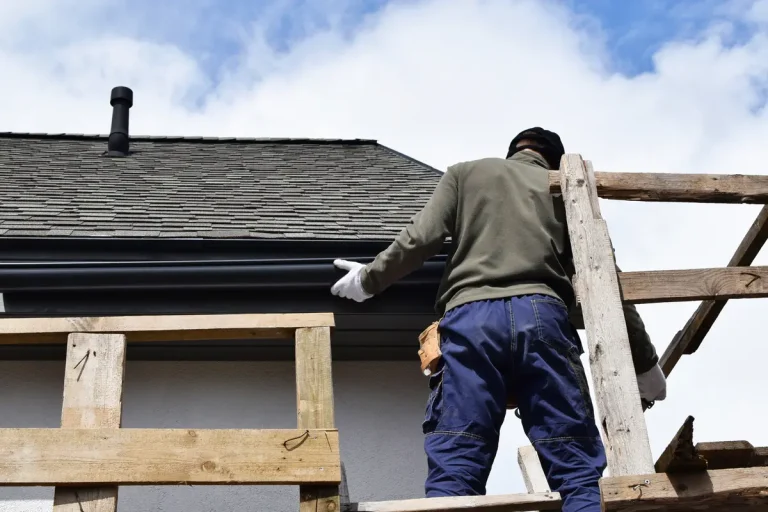
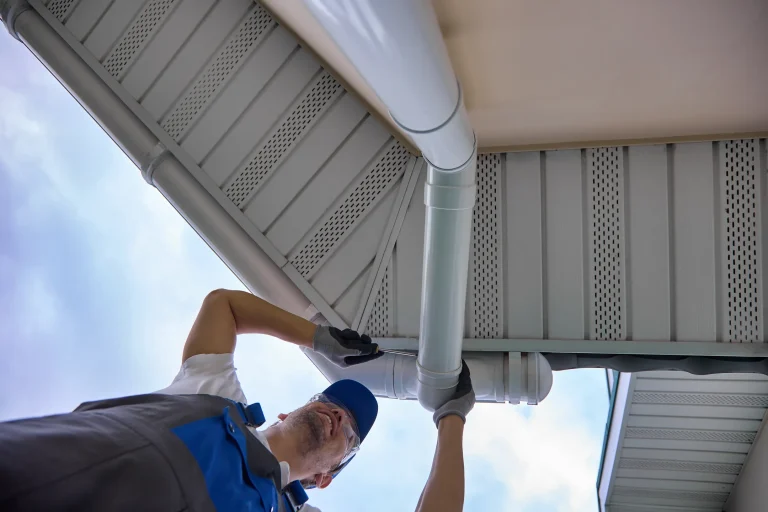
Maintaining a home can be a daunting task, but there are certain aspects of home upkeep that homeowners simply cannot afford to ignore. Gutters might not be the most glamorous part of your home, but they play a crucial role in protecting your property from water damage. Aluminum gutters, known for their cost-effectiveness and durability, typically last around 20 years and are the cheapest option to repair, making them a popular choice for homeowners looking for both functionality and value. This guide will cover everything you need to know about maintaining and repairing your gutters. Let’s get started.
Why Gutters Matter
Rain gutters channel rainwater away from your home’s foundation, walls, and roof, preventing water damage, soil erosion, and basement flooding. Neglecting your rain gutters can lead to a host of problems, including:
- Foundation Damage: Water pooling around your foundation can cause cracks and weaken the structural integrity of your home.
- Roof Damage: Clogged rain gutters can lead to water buildup on the roof, causing leaks, rot, and damage to your roofing materials.
- Basement Flooding: Poorly maintained rain gutters can direct water into your basement, leading to flooding and mold growth.
- Erosion and Landscaping Damage: Water overflow from clogged rain gutters can erode soil and damage plants around your home.
- Pest Infestation: Stagnant water in clogged rain gutters can attract mosquitoes, rodents, and other pests.
How Long Do Gutters Last Before They Need Repair or Replacement?
Aluminum gutters last 20 to 30 years, steel gutters last 15 to 25 years, and copper gutters last 50 years or more, with the actual lifespan depending heavily on installation quality, maintenance, and climate exposure. Most homeowners can expect to handle minor repairs every few years across that lifespan, with full replacement becoming the right call only when damage spans multiple sections or the system is past its service life. Proper drainage design also affects longevity. The 2021 International Residential Code (Section R801.3) requires that roof drainage discharge water at least 5 feet from foundation walls in areas with expansive or collapsible soils, which is why downspout extensions and splash blocks matter both for code compliance and gutter performance.
- Aluminum gutters: 20 to 30 years for quality seamless installations.
- Steel gutters: 15 to 25 years depending on coating and climate.
- Copper gutters: 50-plus years with minimal maintenance.
- Discharge requirement: Minimum 5 feet from foundation walls per IRC R801.3.
Signs That Your Gutters Need Repair and Gutter Repair Cost

Before we get into the nitty-gritty of gutter repair, it’s essential to know when your gutters need attention. Here are some telltale signs:
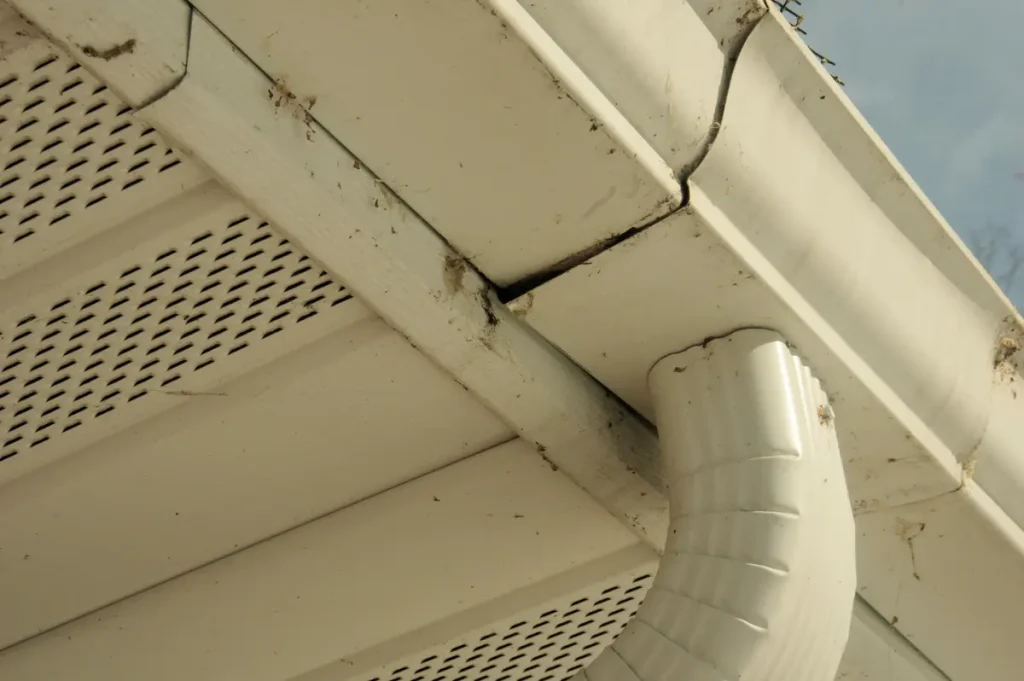
- Sagging Gutters: If your gutters are sagging or pulling away from your house, this is a clear sign they need repair.
- Water Marks or Stains: Water streaks on your siding or vertical stains indicate that water is overflowing from your gutters.
- Pooling Water: Pools of water around your home’s foundation suggest that your gutters are not directing water away properly.
- Rust and Corrosion: Visible rust or corrosion on your gutters can compromise their effectiveness.
- Plant Growth: Plants growing in your gutters mean there’s enough debris and moisture for them to thrive.
- Leaks and Holes: Any visible leaks or holes in your gutters need immediate attention.
Regularly checking existing gutters for these signs is crucial to ensure they are clean and functional, preventing potential water damage.
How Much Does Gutter Repair Cost?
Most gutter repairs cost between $150 and $1,500, depending on the issue and access difficulty. Minor seam leaks and sealant repairs run $150 to $400, sagging section repairs run $200 to $600, downspout repairs run $100 to $400 per location, and section replacement runs $300 to $1,500 depending on linear footage. Major structural repairs involving fascia damage or extensive rust can push the total past $2,000 when underlying issues need to be addressed at the same time.
Professional repairs cost more than DIY but include proper diagnosis, sealants rated for long-term performance, and warranty coverage on the work. Most homeowners save the most money by combining several small repairs into a single service visit rather than addressing issues one at a time. Replacing the full gutter system instead of repairing it makes financial sense when annual repair costs exceed 25 percent of replacement cost or when the gutters are past their service life.
- Minor seam leak repair: $150 to $400.
- Sagging section repair: $200 to $600.
- Downspout repair: $100 to $400 per location.
- Section replacement: $300 to $1,500 depending on linear footage.
Essential Tools and Materials for Gutter Repair
Before you start any gutter repair project, gather the necessary tools and materials. Here’s a checklist to help you get started:
Tools:
- Ladder
- Work gloves
- Safety goggles
- Caulk gun
- Putty knife
- Hacksaw
- Screwdriver or drill
- Measuring tape
- Trowel
- Bucket
Materials:
- Gutter sealant or caulk
- Gutter hangers or brackets
- Gutter screws
- Gutter patch kit
- Replacement sections of gutter
- Downspout extensions
- Gutter splash blocks
8 Steps For Repairing Gutters
1. Safety First
Safety should be your top priority when working on gutter repairs. Ensure you have a sturdy ladder and always place it on a level surface. Wear gloves and safety goggles to protect your hands and eyes from debris and sharp edges.
2. Gutter Cleaning: Clean Your Gutters
Before you can assess and repair any damage, it’s essential to clean your gutters thoroughly. Remove all leaves, twigs, and debris using a trowel and bucket. Rinse the gutters with a garden hose to clear out any remaining dirt. This step will give you a clear view of the condition of your gutters. Installing a gutter guard system can significantly reduce debris buildup and make cleaning easier.
3. Inspect for Damage
With clean gutters, inspect them for any visible signs of damage. Look for cracks, holes, rust, loose screws, sagging sections, and any areas where water is not flowing correctly. Take note of the issues you find so you can address them systematically.
4. Fix Sagging Gutters
Sagging gutters are often caused by loose or damaged hangers. Here’s how to fix them:
- Identify Loose Hangers: Locate the hangers or brackets securing the gutter to your house. Check if they are loose or damaged.
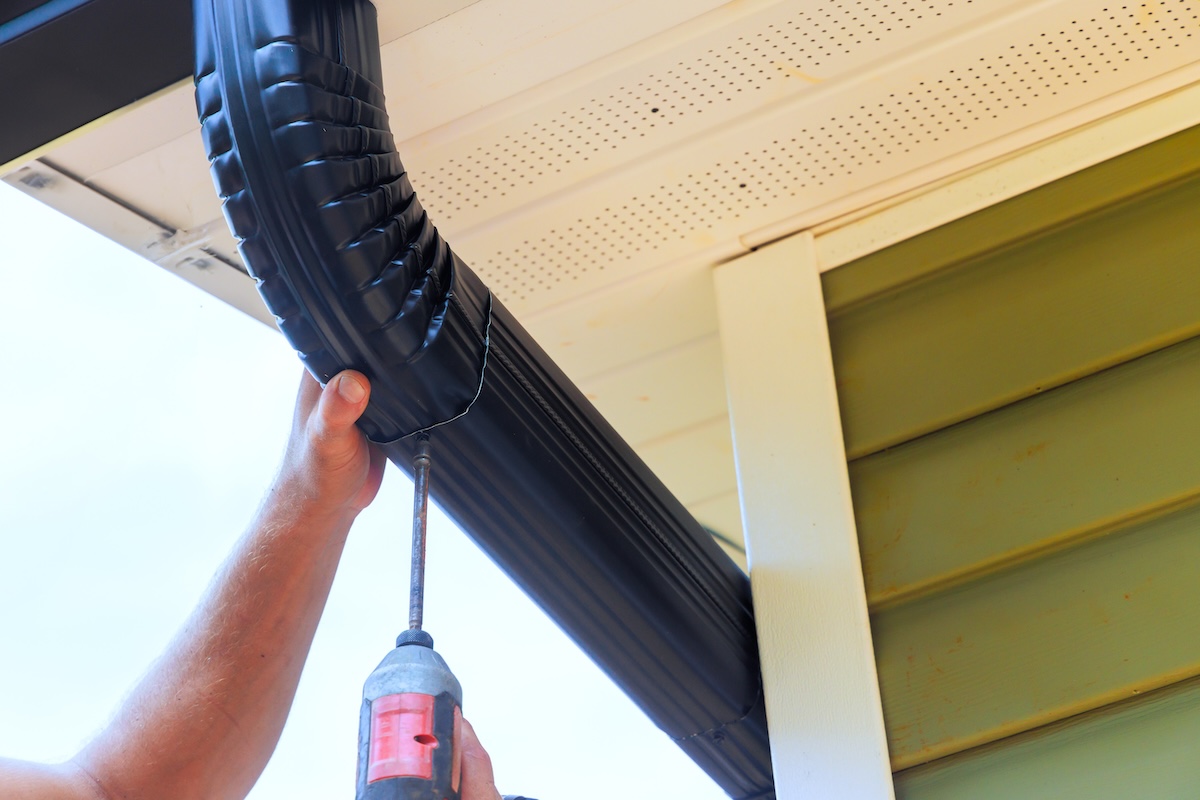
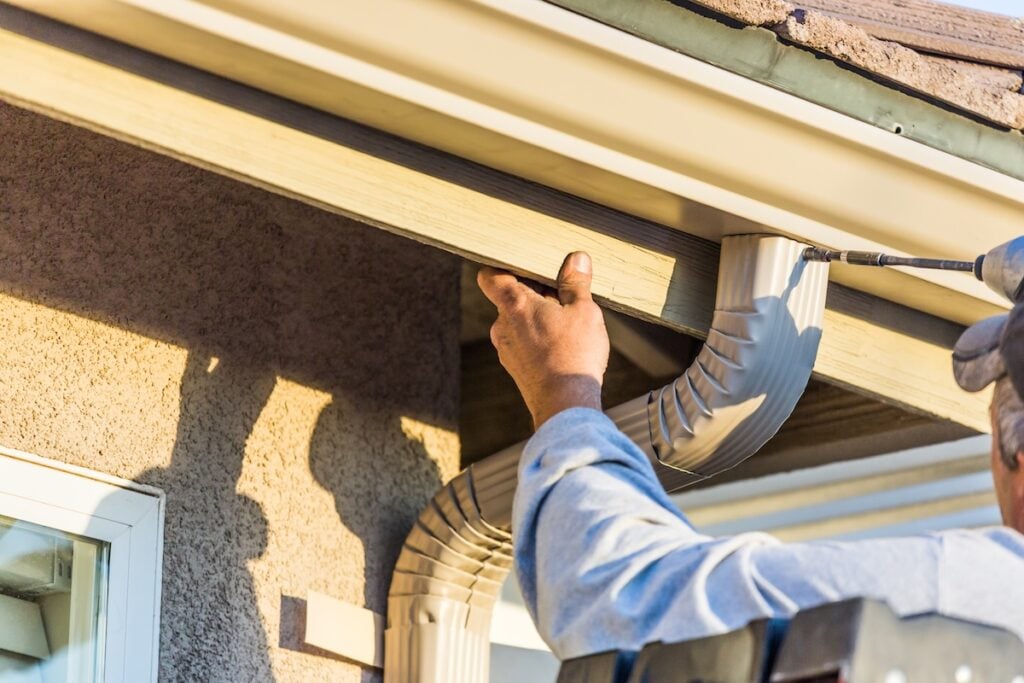
- Tighten or Replace Hangers: Use a screwdriver or drill to tighten loose hangers. If they are damaged, remove and replace them with new hangers or brackets. Ensure they are evenly spaced to provide adequate support.
5. Seal Leaks and Holes
Leaks and holes in your gutters, including a leaking gutter, can be patched easily with gutter sealant or a patch kit. Follow these steps:
- Clean the Area: Ensure the area around the leak or hole is clean and dry.
- Apply Sealant: Using a caulk gun, apply gutter sealant to the damaged area. Smooth it out with a putty knife to ensure an even seal.
- Patch Larger Holes: For larger holes, use a gutter patch kit. Cut a piece of metal flashing to cover the hole, apply sealant around the edges, and press the patch into place.
6. Repair or Replace Sections
If a section of your gutter is beyond repair, you’ll need to replace it. Follow these steps:
- Measure and Cut: Measure the damaged section and use a hacksaw to cut a replacement piece of gutter to the correct length.
- Remove the Damaged Section: Carefully remove the damaged section by unscrewing it from the hangers and disconnecting it from adjacent sections.
- Install the Replacement: Attach the replacement section using screws and new hangers. Ensure the connections are secure and watertight.
Sectional gutter repair is generally more cost-effective compared to seamless gutters, as it requires less labor and materials.
7. Address Downspout Issues
Gutters and downspouts are critical for directing water away from your home’s foundation. Here’s how to ensure they are functioning correctly:
- Check for Clogs: Clear any clogs in the downspouts by using a plumber’s snake or a high-pressure hose.
- Extend Downspouts: If your downspouts are too short, consider adding downspout extensions to direct water further away from your foundation.
- Install Splash Blocks: Place splash blocks at the base of downspouts to prevent soil erosion and direct water away from your home.
8. Regular Maintenance
To keep your gutter system in top condition, regular maintenance is essential. Create a gutter maintenance schedule to ensure they remain clean and functional. Consider installing gutter guards to reduce the buildup of debris and make cleaning easier.
When Should You Hire a Professional Instead of DIYing Gutter Repair?
A homeowner should hire a professional anytime the repair requires working above 10 feet, involves structural fascia or roof damage, or affects more than 20 percent of the total gutter system. Single-story homes with simple eave heights and minor leak or sealant issues are reasonable DIY candidates for handy homeowners with proper safety equipment. Two-story homes, steep terrain, large rooflines, and anyone uncomfortable on a ladder should default to professional repair.
The math also favors hiring out when the cost of tools, sealants, replacement materials, and a full day of work approaches the cost of a professional repair quote. Insurance and liability are additional factors: a fall from a ladder during DIY gutter work is one of the most common home-improvement accident scenarios, and personal injury costs dwarf the savings of avoiding a professional call.
- Single-story DIY candidates: Minor leaks, sealant repairs, and downspout extensions.
- Hire-a-pro situations: Two-story homes, steep terrain, and any structural repair.
- Safety threshold: Any work above 10 feet warrants professional handling.
- Insurance consideration: DIY falls account for thousands of emergency room visits annually.
When Is It Time to Replace the Whole Gutter System Instead of Repairing?
Full gutter replacement is the right call when annual repair costs climb past 25 percent of replacement cost, when damage spans more than 25 percent of total linear footage, or when the system is past its expected service life. Aluminum systems at 25-plus years old, steel systems at 20-plus years old, and any system with persistent leaks, widespread sagging, paint failure, and fascia damage are clear replacement candidates. Replacement also delivers significant efficiency of scale: per-foot installation costs drop, the entire system gets a uniform slope and hanger spacing, and the warranty starts over from day one.
Replacement cost typically runs $4 to $12 per linear foot installed depending on material and gauge, with most homes falling between $1,200 and $3,500 for a full seamless aluminum replacement. Copper and steel systems run higher, while standard sectional aluminum runs lower than seamless.
- Age threshold: Aluminum past 25 years, steel past 20 years.
- Damage threshold: Issues affecting more than 25 percent of total linear footage.
- Cost trajectory: Annual repair costs climbing past 25 percent of replacement cost.
- Replacement cost: $4 to $12 per linear foot installed depending on material.
Preventative Measures and Best Practices
Let’s get into a few tips on how to keep your gutters in optimal condition.
Install Gutter Guards: Benefits and Tips

Gutter guards are a valuable investment to reduce the frequency of gutter cleaning and prevent clogs. They come in various types, including mesh screens, foam inserts, and brush guards. Choose the one that best suits your needs and budget.
It is also important to choose reputable gutter guard providers for installation to ensure the system is properly fitted and effective in maintaining the integrity of your gutters.
Regular Inspections
Regularly inspect your gutters, especially after heavy storms or during the fall when leaves are falling. Early detection of issues can prevent more extensive damage and costly repairs.
Trim Overhanging Branches
Trim trees and branches that hang over your roof and gutters. This prevents leaves and debris from accumulating in your gutters and causing clogs.
Ensure Proper Slope
Ensure your gutters have the correct slope to allow water to flow freely towards the downspouts. A slight slope (about 1/4 inch for every 10 feet) is usually sufficient. Adjust the hangers or brackets if necessary.
Check for Proper Drainage
Ensure that your downspouts are directing water away from your home’s foundation. If necessary, install extensions or splash blocks to improve drainage.
Avoid DIY Solutions for Major Issues
While minor gutter repairs can be handled by homeowners, major issues like structural damage or extensive gutter replacement are best left to professionals. Attempting complex repairs without proper knowledge and tools can lead to further damage. Hiring professionals to repair gutters ensures that the job is done correctly and efficiently, preventing future problems and maintaining the integrity of your home.
Frequently Asked Questions About Gutter Repair
Q: How long does a gutter repair last?
A properly executed gutter repair using quality sealant and new hangers typically lasts 5 to 15 years, often matching the remaining service life of the original system. Sealant-only repairs without hardware replacement are shorter-term and should be considered temporary fixes that last 2 to 5 years.
Q: Can I repair a sagging gutter without replacing it?
Yes, sagging gutters can usually be repaired by replacing or tightening the hangers and adjusting the slope. The repair takes one to three hours per affected section and costs $200 to $600 when done professionally, well below the cost of full replacement.
Q: Does homeowners insurance cover gutter repair?
Most homeowners insurance covers gutter damage from sudden events like wind, hail, or falling tree limbs, but excludes damage from age, wear, or neglect. Filing a claim requires dated photos of the damage, documentation of the storm event, and prompt notification of the insurance adjuster.
Q: How often should gutters be inspected?
Gutters should be inspected at least twice per year, in the late spring and after fall leaf drop. Homes with heavy tree cover, pine trees, or after significant storms benefit from additional inspections to catch small issues before they become major repairs.
Q: Can damaged gutters cause foundation problems?
Yes, persistently overflowing or clogged gutters drive water against the foundation, which can crack basement walls, saturate the soil, and lead to settling. Foundation repair costs run $2,000 to $25,000, dramatically more than the cost of timely gutter repair.
Q: Are seamless gutters easier to repair than sectional gutters?
Sectional gutters are easier and cheaper to repair because individual sections can be removed and replaced without affecting the entire run. Seamless gutters require more skill to repair but have fewer seams to leak in the first place, which often results in fewer repairs overall.
Need a Gutter Replacement? Contact McCormick Renovations
McCormick Renovations specializes in seamless gutter replacement and installation across the region, and is the right call when an existing gutter system has reached the end of its useful life and needs to be replaced. We do not offer gutter repair, gutter cleaning, or routine inspection services, but we install high-quality seamless aluminum, steel, and copper gutters with proper slope, secure hangers, and downspouts that discharge well away from the foundation. If your gutters are leaking, sagging, pulling away from the fascia, or simply past their service life, contact McCormick Renovations today for a free estimate on a new gutter system that protects your home for decades.