Understanding the roof replacement timeline before signing a contract helps homeowners plan around the noise, activity, and scheduling reality of a full re-roof. A typical asphalt shingle replacement completes in one to three days of active work, but the full process from first inspection to final walk-through can span several weeks once inspections, permits, material orders, and weather windows are factored in. This guide walks Pittsburgh homeowners through the five distinct phases every roof replacement moves through, what to expect in each, and how to prepare so nothing surprises you along the way.
- Phased overview: A start-to-finish breakdown of the five phases from estimate to warranty handover.
- Timing realities: How long each phase takes and what causes delays.
- Homeowner preparation: Practical steps you can take between phases to keep the job moving.
Why Understanding the Roof Replacement Timeline Matters
Homeowners who understand the timeline in advance make better decisions and avoid frustration once the crew arrives. A clear picture of each phase also helps you plan around family schedules, work-from-home commitments, and the logistics of a busy home during active construction.
Setting Realistic Expectations for the Homeowner
Roof replacement is a compressed but intense event, and the mental model most homeowners bring to the job is often out of sync with how the work actually happens. The tear-off day is loud, dusty, and produces a lot of debris. Installation is fast once tear-off finishes, but proper flashing, valley work, and ridge installation take longer than the shingle field itself. Understanding that the timeline includes several days of noise, protective tarps over landscaping, and a dumpster in the driveway sets expectations so the reality feels manageable rather than overwhelming. Homeowners in Pittsburgh and surrounding areas who plan ahead sleep better through the work.
- Noise reality: Tear-off day is the loudest, with continuous impact and hammering.
- Debris volume: A typical residential re-roof generates 3 to 5 tons of tear-off material.
- Landscape protection: Expect tarps and plywood on shrubs, decks, and pool covers.
- Driveway use: A dumpster and material staging occupy the driveway for the duration.
Preparing Your Home and Family
The days leading up to installation involve more than just clearing the driveway. Fragile items inside the attic should be moved, wall-mounted decor should come down (impact vibration can loosen frames), and pets should have a quiet space away from the work zone. Homeowners with young children or shift workers should plan for the noise and consider a day out of the house during active tear-off. Setting these expectations before day one keeps the family comfortable and the crew focused on the work.
- Attic protection: Remove or cover valuables stored directly under the roof.
- Wall decor: Take down frames, mirrors, and shelves along shared walls.
- Pet planning: Arrange a quiet space or boarding for anxious animals.
- Family schedule: Plan around loud tear-off hours (typically 7 AM to 5 PM).
5 Phases of a Roof Replacement
Every roof replacement moves through the same five phases, though the time spent in each varies by home, contractor, and season. The phases below represent the standard sequence from first contact through warranty handover.
1. Initial Inspection and Estimate
The process starts with a professional inspection where the contractor evaluates the existing roof, identifies underlying issues, and takes measurements. This phase typically involves 30 to 90 minutes on-site, followed by a detailed written estimate delivered within one to seven days. A quality estimate itemizes materials, labor, tear-off, disposal, permits, and warranty terms rather than lumping everything into a single line item. Homeowners should request at least three estimates and take time to review each carefully before making a decision.
- On-site time: 30 to 90 minutes for a thorough residential inspection.
- Estimate delivery: One to seven days after the inspection for detailed written proposals.
- What to look for: Itemized labor, materials, tear-off, disposal, and warranty.
- Comparison timeline: Allow one to two weeks for gathering and comparing multiple estimates.
2. Contract Signing and Material Ordering
Once you accept an estimate, the contract signing formalizes the scope, price, timeline, warranty terms, and payment schedule. After signing, the contractor orders materials from the manufacturer and schedules the job on their calendar. Standard architectural shingles typically ship within one to two weeks, while premium or custom-color products can take three to six weeks. This phase is also when the contractor pulls the required municipal building permit for the work.
- Contract elements: Scope, price, warranty, payment schedule, and timeline.
- Material lead time: One to two weeks for standard shingles, three to six for custom.
- Permit pulling: One to five business days for most Pittsburgh-area municipalities.
- Scheduling: Peak season (May to October) can push installation dates out two to six weeks.
3. Pre-Installation Preparation
The days before installation involve final coordination between the crew and the homeowner. The contractor confirms the start date, delivers materials to the driveway (usually one to two days before tear-off), and places a dumpster on-site. The homeowner walks the property with the crew lead to identify landscaping, HVAC units, pool equipment, and other items that need protection. This phase also includes final weather-window confirmation, since crews typically hold two to three days of clear weather for a straightforward install.
- Material delivery: One to two days before tear-off begins.
- Dumpster placement: Same day as material delivery or morning of tear-off.
- Property walk: Identify landscaping and equipment that need protection.
- Weather monitoring: Final confirmation the day before the start date.
4. Roof Tear-Off and Installation
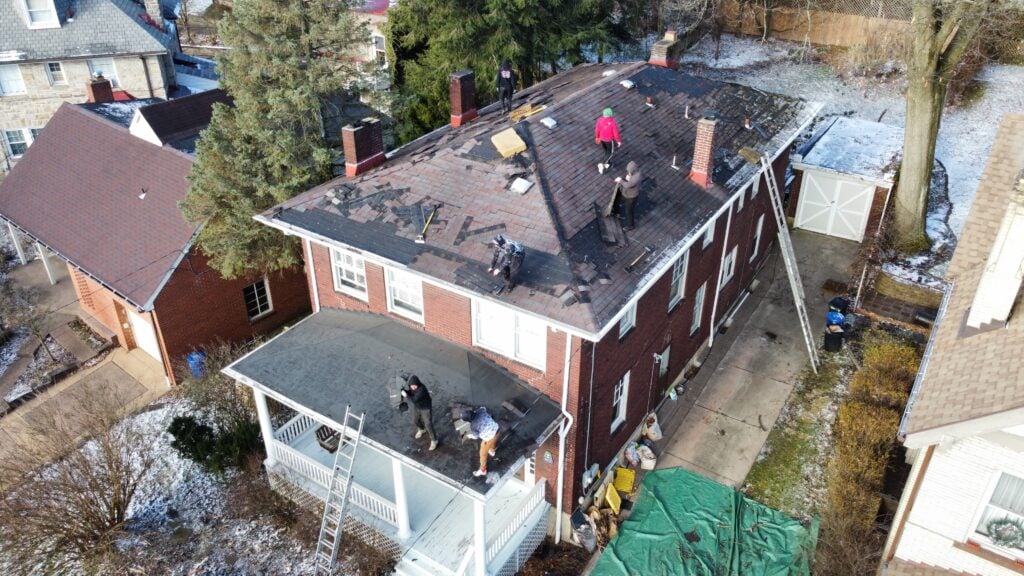
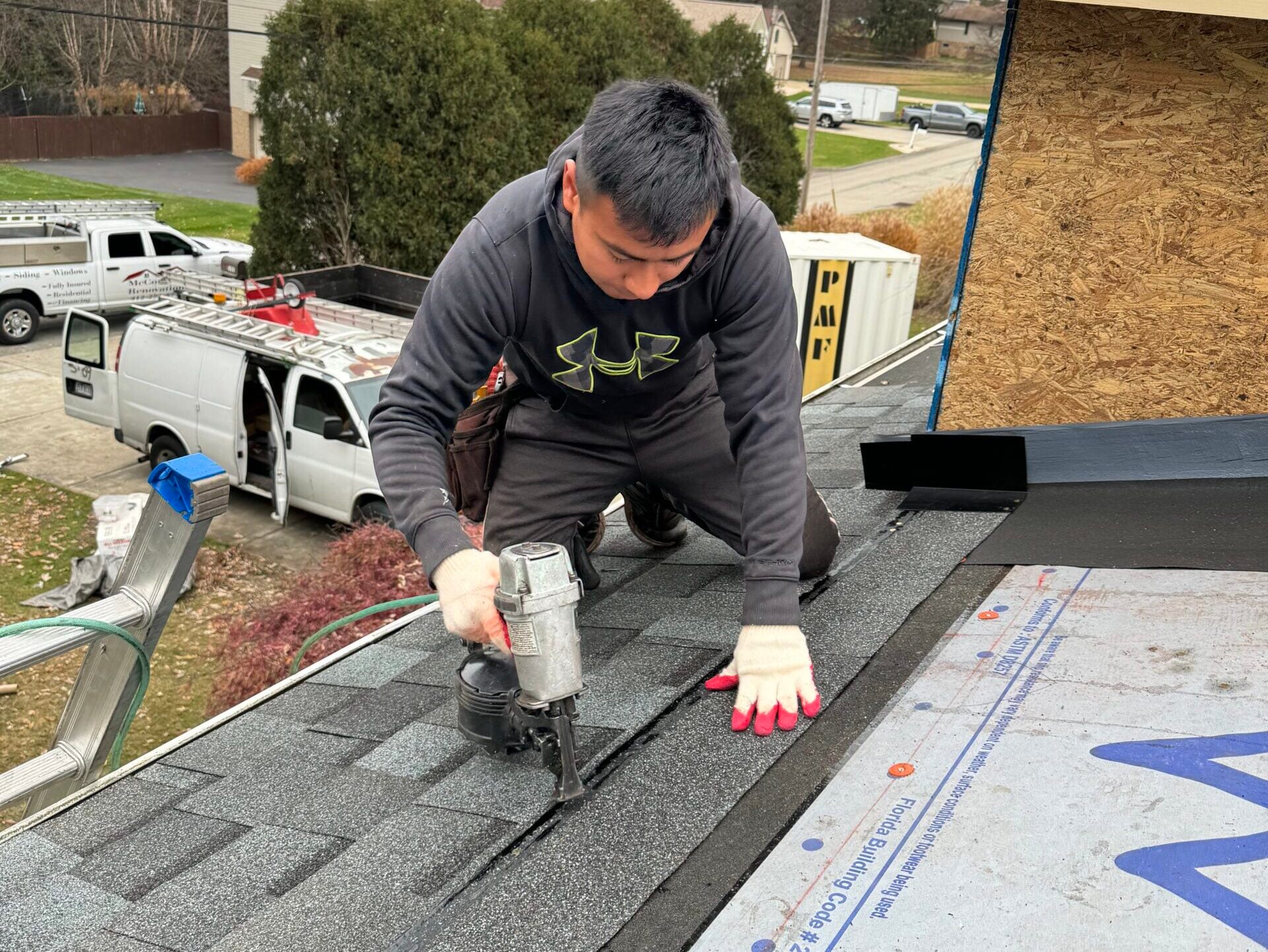
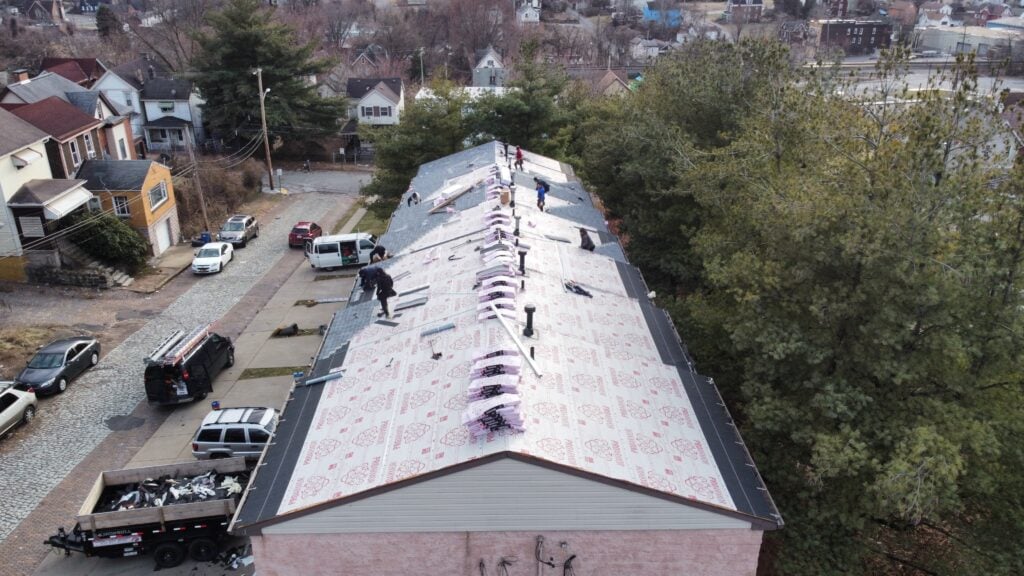
The active work phase is where the bulk of the timeline happens. Tear-off begins early on day one, with the entire existing roof stripped down to the deck for inspection. Any damaged decking gets replaced, then underlayment, ice and water shield, drip edge, and shingles go on in sequence. Federal OSHA regulations under 29 CFR 1926.501(b)(13) require workers on residential construction sites at heights of 6 feet or more to use guardrail systems, safety nets, or personal fall arrest systems, which is part of why professional crews need setup time each morning before starting work. Most asphalt shingle installations complete in one to three days, while metal, tile, and slate can extend to a week or more.
- Day one: Complete tear-off, deck inspection, and underlayment installation.
- Day two: Shingle field installation, flashing, and valley work.
- Day three: Ridge caps, penetrations, and final detail work.
- Safety setup: 30 to 60 minutes each morning for fall protection anchors and equipment.
5. Cleanup, Final Inspection, and Warranty Handover
The final phase completes on the last install day. Crews clean the yard with magnetic sweeps to collect stray nails, remove dumpsters and debris, and perform a walk-through with the homeowner to verify quality and completeness. The contractor delivers the manufacturer warranty registration, workmanship warranty documentation, and final invoice at this stage. Municipal inspections happen within one to two weeks after installation and are typically the contractor’s responsibility to coordinate. A thorough handover puts the paperwork and warranty coverage in your hands from day one.
- Cleanup: Magnetic nail sweep, debris removal, and dumpster pickup.
- Walk-through: Homeowner and crew lead verify quality and completeness.
- Warranty registration: Manufacturer and workmanship warranty documentation delivered.
- Municipal inspection: One to two weeks after install, typically contractor-coordinated.
What Can Delay a Roof Replacement Timeline
Even the best-planned roof replacements can hit delays. Understanding what causes those delays helps homeowners stay patient and informed when they happen.
Weather Delays
Pittsburgh weather is the single biggest source of timeline delays across the region. Rain, high winds over 25 mph, and lightning all stop work for safety and quality reasons. Winter installations face temperature restrictions, since asphalt shingles need surface temperatures above 40°F to seal properly. Crews monitor forecasts closely and typically require two to three consecutive dry days before starting a tear-off, since a partially opened roof is vulnerable to interior damage.
- Rain and lightning: Complete work stoppage for safety.
- High winds: Work stops above 25 mph for shingle handling and safety.
- Temperature limits: Below 40°F affects asphalt shingle sealing.
- Weather windows: Crews need two to three consecutive dry days for tear-off.
Deck and Structural Issues Discovered During Tear-Off
Deck damage is only visible once the old roofing comes off, so it often appears mid-project rather than during the initial inspection. Rotted plywood, damaged rafters, or unexpected animal nesting can each add half a day to two days depending on scope. Reputable contractors include a per-sheet deck replacement price in the original contract so pricing is transparent when the issue is discovered.
- Rotted decking: Half a day per section of significant damage.
- Rafter damage: One to two days for structural repair before continuing.
- Animal damage: Nests and gnawed wood require targeted repair.
- Contract clarity: Look for per-sheet decking replacement pricing in the estimate.
Permit and Inspection Requirements
Municipal permit and inspection timelines vary across Pittsburgh and surrounding areas, and unexpected review or scheduling delays can push the timeline back. Most permits are issued within one to five business days, but complex projects or roof system changes (like switching from asphalt to metal) can take two to three weeks. Post-installation inspections are typically scheduled within two weeks of completion.
- Standard permits: One to five business days for typical asphalt replacement.
- Complex projects: Two to three weeks for roof system changes.
- Post-install inspection: Scheduled within two weeks of job completion.
- Contractor coordination: Reputable contractors handle all permit and inspection scheduling.
Frequently Asked Questions
How Long Does a Full Roof Replacement Take?
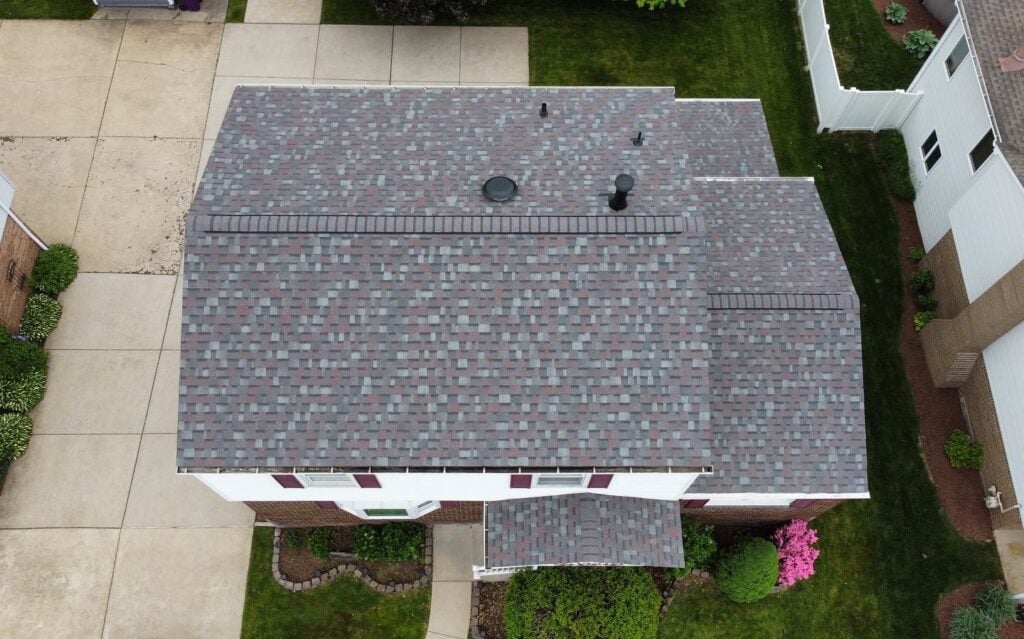
Most asphalt shingle roof replacements in Pittsburgh and surrounding areas complete in one to three days of active work, with the total start-to-finish timeline (including estimates, contracts, and material ordering) spanning three to eight weeks. Metal, tile, and slate installations take longer.
Do I Need to Be Home During the Installation?
You do not need to be home during active work, though you should be present for the initial inspection, contract signing, and final walk-through. Many homeowners choose to leave the house during the noisiest hours of tear-off.
What Time of Year Is Best for Roof Replacement?
Spring and fall are the most popular seasons because temperatures are consistent and precipitation is manageable. Late winter and early spring offer the shortest scheduling wait times, while summer is the busiest and often carries longer scheduling delays.
Can Roof Replacement Happen in Winter?
Yes, roof replacements happen year-round in Pittsburgh as long as temperatures stay above 40°F for asphalt shingle adhesion and the surface stays dry. Winter installs often come with faster scheduling and reduced pricing.
What Happens If It Rains During Installation?
Crews tarp any exposed sections and resume work once conditions clear. Reputable contractors carry heavy-duty tarps specifically for this scenario and take responsibility for any weather-related interior damage during the project window.
Do I Have to Move My Cars for a Roof Replacement?
Yes, you should move all vehicles out of the driveway and away from the immediate work zone. Falling debris, nails, and shingle granules can damage vehicles parked within 20 feet of the home during active tear-off and installation.
Ready for a New Roof? Contact McCormick Renovations
A predictable, well-managed roof replacement timeline is one of the clearest signs of a quality contractor, and homeowners across Pittsburgh and surrounding areas deserve transparency about every phase of the work. McCormick Renovations brings 30-plus years of family-owned experience to every roof we install, with clear communication from the first estimate through the final warranty handover. If you are considering a roof replacement and want a contractor who lays out every phase of the timeline in writing before signing, reach out to McCormick Renovations today for a free estimate. Our team will inspect your roof, walk you through the process, and design an installation plan that fits your home and your calendar.