Choosing the right siding insulation is one of the most impactful decisions a homeowner can make when re-siding a house, because the wrong pick can cost thousands in wasted energy over the life of the wall. Whether you live in a drafty 1960s ranch or a newer build with rising utility bills, the layer behind your cladding controls how warm your living room feels in February and how hard your air conditioner works in July. This guide breaks down four common exterior wall insulation options, what they cost, and which homes they suit best.
- Material breakdown: A clear look at rigid foam, insulated vinyl, mineral wool, and house wrap systems.
- Performance data: R-values, typical price ranges, and energy savings you can expect.
- Selection guidance: How to match the right insulation to your home, climate, and budget.
What Is Siding Insulation and Why Does It Matter?
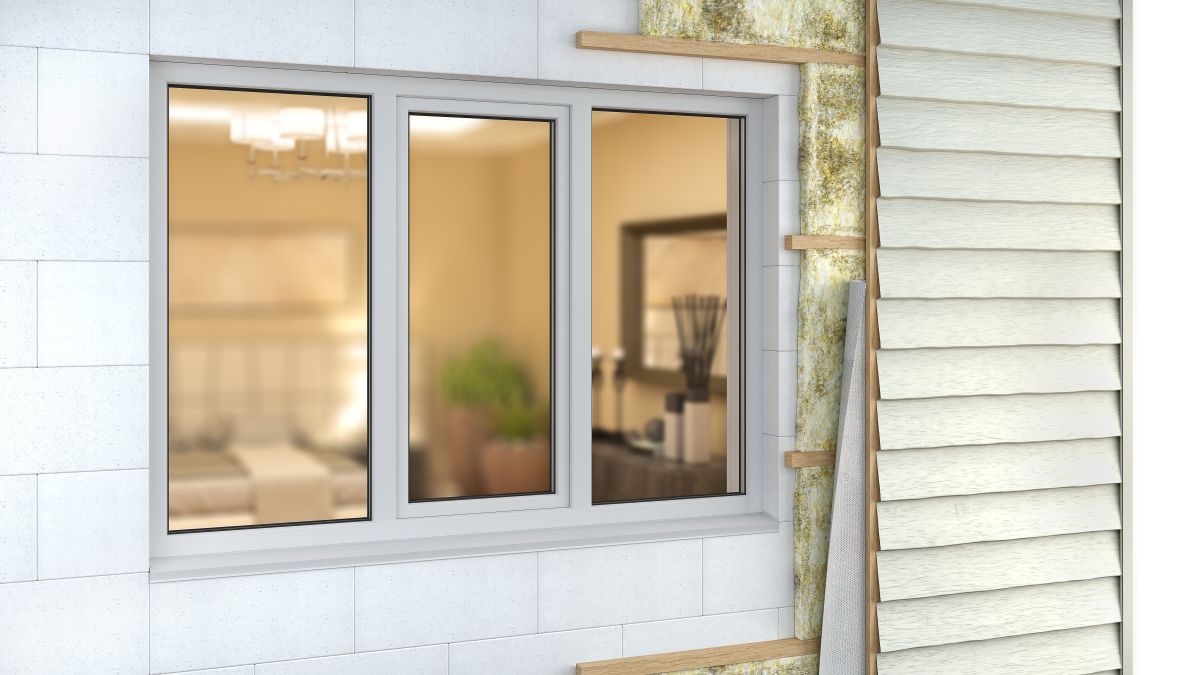
Siding insulation is a layer of thermal material installed between the exterior sheathing and the cladding to resist heat flow and stop air leaks. It serves a different purpose than the batts inside your wall cavities, and homeowners across Pittsburgh and surrounding areas often discover the difference only after their first winter heating bill in an upgraded home.
How Does Continuous Exterior Insulation Work?
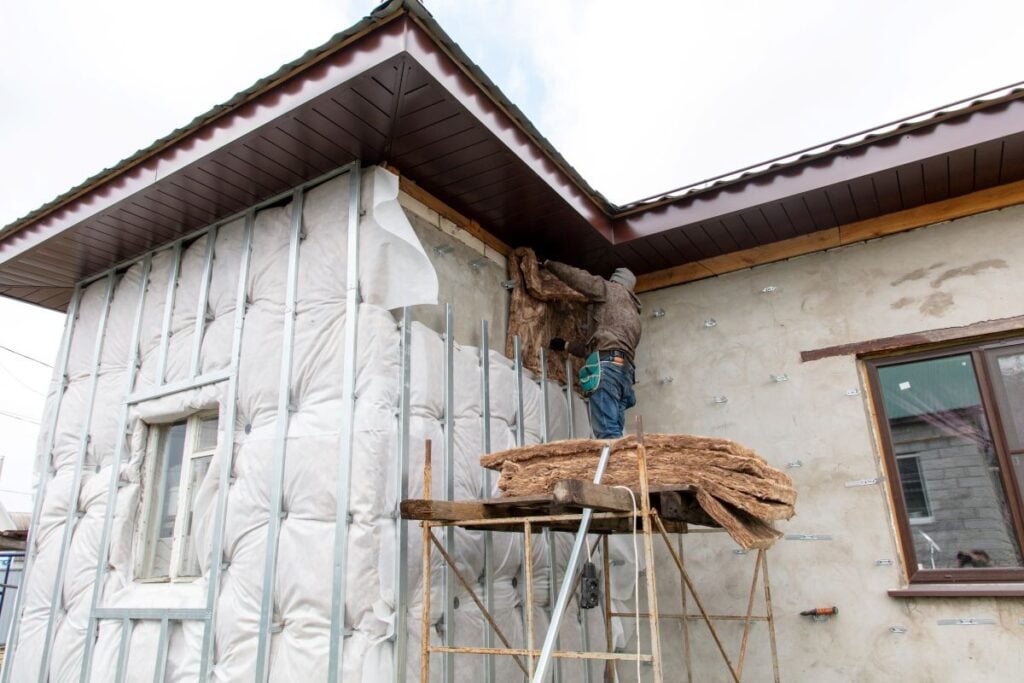
Continuous exterior insulation is a layer of rigid material that wraps the entire exterior of the wall assembly without breaks at the studs. In a standard wood-framed wall, the studs themselves act as thermal bridges because wood conducts heat far better than the insulation in the cavities between them. Roughly 25% of a typical wall surface is framing, which means a wall with R-13 batts can perform closer to R-9 in real conditions. Continuous insulation covers the studs and stops that bridging, raising the effective R-value of the entire assembly.
- Thermal bridging defense: Continuous insulation cuts heat loss through wood studs, which can otherwise account for up to 25% of wall area.
- Air leakage reduction: Properly taped foam or wrap acts as an air barrier, which is responsible for a large share of winter heat loss.
- Code alignment: The 2021 International Energy Conservation Code requires continuous insulation on most new wood-frame walls in colder climate zones.
- Moisture control: A correctly detailed exterior layer keeps the wall sheathing warmer and drier, reducing condensation risk.
Why Is Pittsburgh a Strong Candidate for Upgraded Wall Insulation?
Pittsburgh sits in IECC Climate Zone 5, where winters routinely drop into the teens and summers carry significant humidity. That swing makes the building envelope work hard year round, and homes built before the mid-1990s in Pittsburgh and surrounding areas frequently lack any continuous exterior insulation. Replacing siding without adding insulation is a missed opportunity, because the wall is already opened up and the incremental cost is small compared to the long-term comfort gain.
- Climate match: Zone 5 demands roughly R-13 cavity plus R-5 continuous, or R-20 cavity, on wood-frame walls per the 2021 IECC.
- Older housing stock: Many homes built before 1995 were never insulated beyond minimal cavity batts.
- Heating-dominated load: Most annual energy use goes toward heating, so wall upgrades have a strong payoff.
- Comfort gains: Cold interior wall surfaces and drafts disappear once continuous insulation is added.
4 Siding Insulation Options Worth Considering
Each of the four options below performs differently on R-value, cost, moisture handling, and ease of installation. Read through each one with your own home, climate, and budget in mind, then compare against the recommendations later in this guide.
1. Rigid Foam Board Insulation
Rigid foam board is a sheet-form insulation, typically polyisocyanurate (polyiso), extruded polystyrene (XPS), or expanded polystyrene (EPS), installed over the sheathing before new siding goes up. It is the most common choice for serious energy retrofits because it delivers high R-value per inch in a thin profile and is widely accepted by building inspectors. A 1-inch polyiso board provides roughly R-6, while a 1-inch XPS board provides about R-5, and EPS comes in around R-3.6 to R-4.2 per inch. Installed cost typically lands between $1.50 and $4.50 per square foot depending on thickness and foam type.
- R-value range: R-3.6 to R-6 per inch depending on the foam type chosen.
- Best applications: Whole home re-sides, additions, and energy retrofits in colder climates.
- Material costs: Roughly $0.50 to $2.00 per square foot for the foam itself, before labor.
- Considerations: Requires careful taping and flashing details to act as an air barrier and to manage moisture.
2. Insulated Vinyl Siding
Insulated vinyl siding is standard vinyl with a contoured layer of EPS foam laminated to the back of each panel. It combines the cladding and a thin insulation layer into a single product, which simplifies installation and adds rigidity that helps the panels resist dents and warping. Typical R-values land between R-2 and R-3.5, which is meaningful but lower than what a dedicated foam board layer can provide. Pricing usually runs 50% to 100% higher than standard vinyl, so homeowners should weigh the simplicity against the modest R-value bump and decide whether a separate continuous foam layer would deliver more value.
- R-value range: R-2 to R-3.5, built into the panel itself.
- Best applications: Mid-range re-sides where a moderate efficiency gain and improved panel rigidity are the goals.
- Material costs: Roughly $4 to $9 per square foot installed, depending on grade.
- Considerations: Lower R-value than dedicated foam board, and not all contractors are experienced with the thicker panels.
3. Mineral Wool Continuous Insulation
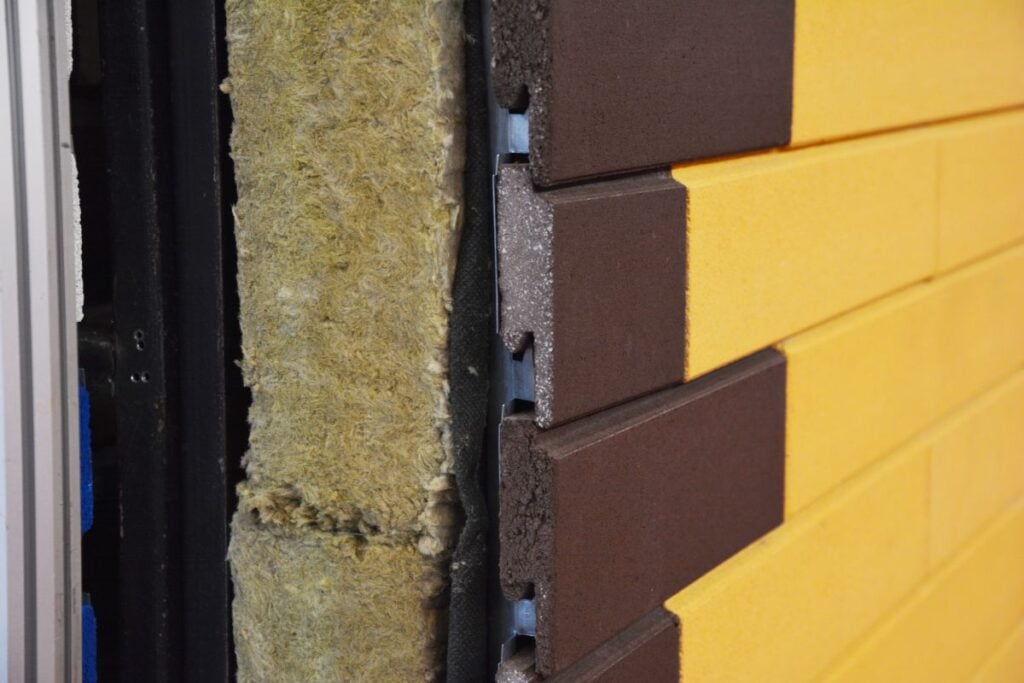
Mineral wool, also called rock wool or stone wool, is a dense fibrous board made from molten rock spun into fibers. It is a strong choice for homeowners who want continuous exterior insulation without using foam plastic, and it brings benefits that foam cannot match in fire and moisture performance. Mineral wool boards deliver about R-4 per inch, are non-combustible, are vapor-open so walls can dry outward, and have excellent sound-dampening properties. The tradeoff is a higher material cost, usually $1.50 to $3.50 per square foot of board, plus more careful detailing to avoid compressing the dense fibers during siding installation.
- R-value range: Approximately R-4 per inch.
- Best applications: Historic homes, fire-prone areas, and homeowners prioritizing vapor-open wall assemblies.
- Material costs: Roughly $1.50 to $3.50 per square foot for the board.
- Considerations: Heavier and pricier than foam, and installers must avoid compression to preserve R-value.
4. House Wrap with Drainage Plane
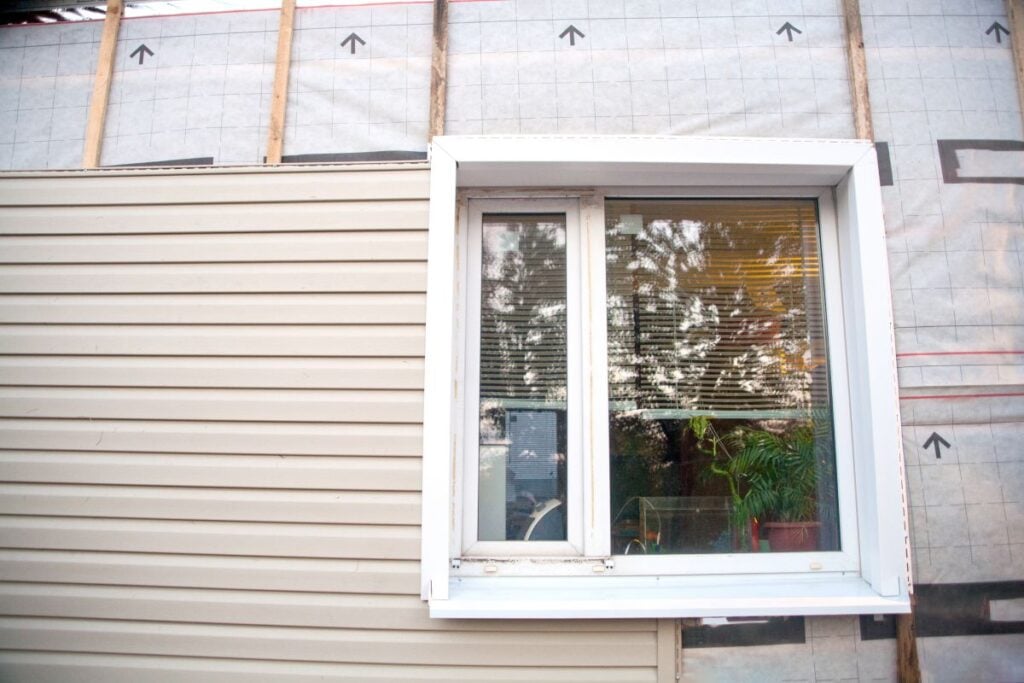
House wrap is a thin synthetic membrane installed over the sheathing to block bulk water and air infiltration while allowing water vapor to escape. On its own, house wrap has no meaningful R-value, but modern drainable wraps with built-in spacer ribs create a capillary break that protects the wall and complements other insulation strategies. For homes that already have adequate cavity insulation and a healthy budget for siding only, a high-performance drainable wrap can still deliver real comfort gains by cutting air leakage. The U.S. Department of Energy specifically advises that whenever exterior siding is removed on an uninsulated wood-frame wall, homeowners should both blow insulation into the empty wall cavity and add continuous insulation before installing the new siding, which makes a re-side the most cost-effective moment to upgrade the envelope.
- R-value range: Effectively zero, but reduces convective heat loss through air sealing.
- Best applications: Homes with sufficient cavity insulation that need better air and water management.
- Material costs: Roughly $0.30 to $1.00 per square foot installed.
- Considerations: Should be paired with continuous foam or mineral wool for true thermal upgrades in cold climates.
How Do You Choose the Right Siding Insulation?
The best siding insulation depends on your climate zone, the age of your home, your budget, and whether moisture or fire performance is a priority. Homeowners in Pittsburgh and surrounding areas should weigh long-term energy savings alongside upfront cost, because the wall stays in place for decades.
What Should You Look at First?
Start with a clear understanding of your existing wall assembly, your climate zone, and what you want the upgrade to accomplish. A home that already has dense-packed cellulose in the cavities has different needs than a 1950s ranch with empty stud bays. The 2021 IECC sets minimum R-values for walls, and meeting or exceeding them is usually the right target. Talk with a qualified renovation contractor who can pull permits, run a blower-door test if needed, and recommend an insulation strategy that matches the rest of the wall assembly.
- Existing cavity condition: Empty cavities benefit from drill-and-fill before any exterior insulation is added.
- Climate zone targets: Zone 5 typically calls for R-20 cavity or R-13 plus R-5 continuous on wood-frame walls.
- Moisture profile: Vapor-open assemblies suit homes prone to interior humidity, while foam-based assemblies suit drier, leakier homes.
- Budget reality: Spend more on insulation when you already plan to re-side, since labor is the bulk of the cost.
How Much Will Energy Costs Drop?
Energy savings vary by home and climate, but the gains from a properly insulated re-side are real and measurable. The Department of Energy reports that homeowners can save up to 20% on heating and cooling costs by adding insulation and addressing air leaks across the building envelope. For a Pittsburgh home with a $2,400 annual heating and cooling bill, that translates to roughly $480 per year. Combine those savings with potential federal tax credits of up to 30% of materials, and the payback timeline on continuous insulation often lands between 5 and 10 years.
- Heating and cooling savings: Up to 20% reduction in combined energy costs after envelope upgrades.
- Federal tax credits: Up to 30% of qualifying insulation material costs, capped at $1,200 per year under current law.
- Comfort improvements: Warmer interior wall surfaces, fewer drafts, and better noise reduction.
- Resale value: Energy-efficient siding upgrades often boost both appraised value and buyer interest.
Frequently Asked Questions
How Much Does Siding Insulation Cost in Pittsburgh?
Most homeowners in Pittsburgh and surrounding areas pay $1.50 to $4.50 per square foot for continuous exterior insulation materials, with installed totals often falling between $3 and $8 per square foot when added during a re-side. The total varies based on foam type, wall area, and whether existing siding removal is involved.
How Long Does Siding Insulation Last?
Properly installed rigid foam board, insulated vinyl, and mineral wool generally last 30 to 50 years, which is similar to the lifespan of the siding itself. Premium house wraps typically carry 15- to 25-year warranties when installed to manufacturer specifications.
Can You Add Siding Insulation Without Removing Existing Siding?
In most cases, no. Continuous exterior insulation needs to be installed against the sheathing, which means the existing siding must come off first. The exception is drill-and-fill cavity insulation, which can be blown in through small holes drilled through the siding or sheathing.
Is Insulated Vinyl Siding Worth the Extra Cost?
Insulated vinyl siding is worth the upgrade for homeowners who want a modest efficiency gain and added panel rigidity in one product. However, a separate layer of rigid foam under standard siding typically delivers higher R-value per dollar in cold climates.
Does Siding Insulation Qualify for Tax Credits?
Yes, qualifying insulation materials installed in a primary residence are eligible for the federal Energy Efficient Home Improvement Credit, which covers up to 30% of material costs with an annual cap of $1,200. Labor costs are not covered, and homeowners should consult a tax professional for current rules.
Do I Need a Licensed Contractor for Siding Insulation Work?
Pennsylvania requires home improvement contractors performing work over $500 to be registered with the state Attorney General’s office. Hiring a registered, insured renovation company protects your investment and ensures the wall assembly meets local building codes.
Why McCormick Renovations Is the Right Partner for Your Siding Insulation Upgrade
McCormick Renovations brings hands-on experience, deep product knowledge, and a commitment to clean, code-compliant installation to every wall we open up in Pittsburgh and surrounding areas. We help homeowners pick the right combination of rigid foam, insulated vinyl, mineral wool, or drainable house wrap based on the actual condition of the home, the climate zone, and the long-term goals for comfort and efficiency. If you are weighing siding insulation options and want a clear, no-pressure recommendation backed by real numbers, reach out to McCormick Renovations today for a free consultation. Our team will walk your home, explain the tradeoffs, and design a siding upgrade that pays you back for decades.