Slate roof repair is one of the most specialized skills in the roofing industry, and identifying damage early can extend the life of your slate roof by decades while avoiding the significant water damage that develops when slate failures go unaddressed. Pittsburgh homes with historic slate roofs (particularly those built in the late 1800s and early 1900s) are especially common in Fox Chapel, Squirrel Hill, and other established neighborhoods, and these roofs represent both a significant investment and an important architectural feature worth preserving. This guide walks Pittsburgh homeowners through the four most common signs of slate roof damage and when to call a specialized slate roofing professional.
- 4 warning signs: From cracked slates to more subtle failures like delamination and flashing issues.
- When to call a slate specialist: Why slate roofing requires specialized expertise most general contractors don’t have.
- Repair vs. replacement guidance: How to evaluate whether repair or full replacement is the right call.
What Makes Slate Roofs Different
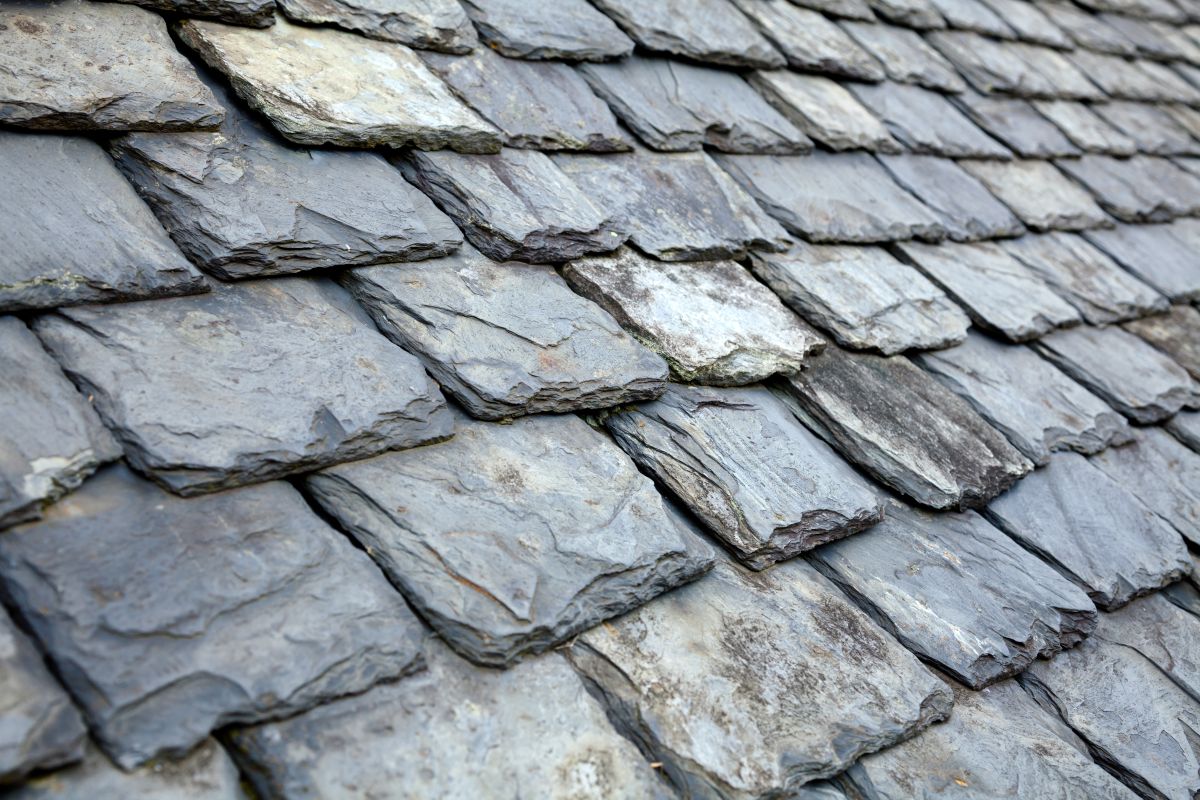
Slate is one of the most aesthetically pleasing and durable of all roofing materials, made from natural stone that resists fire, insects, and weather in ways no synthetic material can fully replicate. Because slate is quarried natural stone, each piece has slight variations in color, thickness, and quality, and slate roofs require installation techniques that are dramatically different from asphalt shingle work.
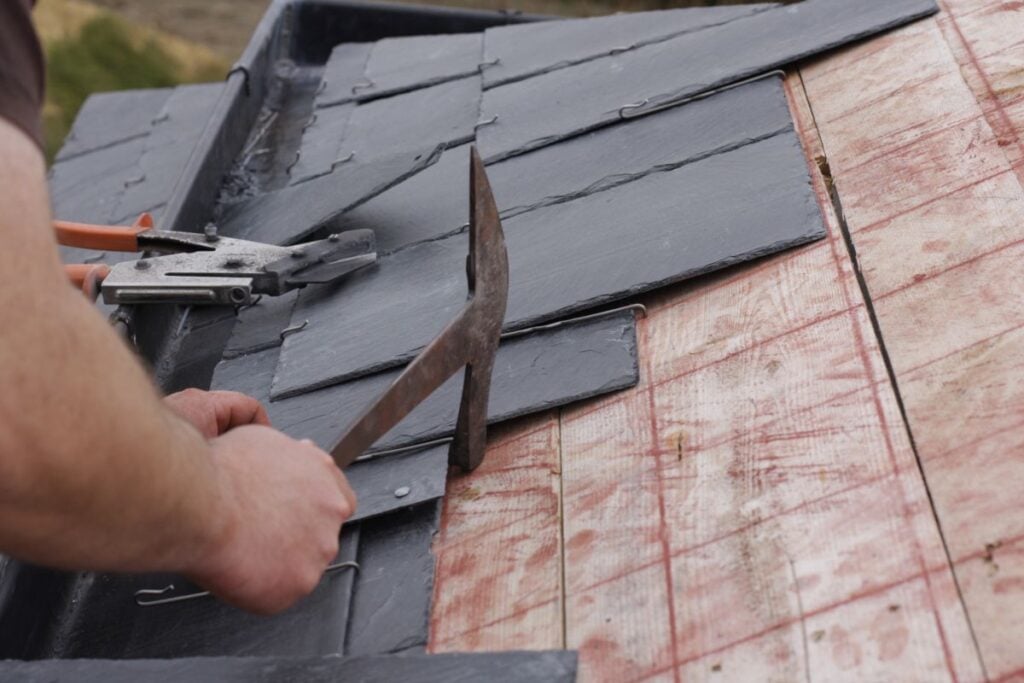
Slate roofs also require specialized tools (slate rippers, slate cutters, and copper nails), specialized fasteners (copper nails to match slate’s lifespan), and specialized flashing materials (typically copper). Most general roofing contractors do not carry the tools, training, or experience to properly repair slate, which is why finding the right specialist matters more for slate than for any other roof type.
4 Signs Your Slate Roof Needs Repair
Recognizing the signs of slate roof damage early lets you address problems before they lead to interior water damage, structural issues, or the need for full replacement. Walk through this four-sign checklist annually and after every major storm.
1. Cracked or Broken Slates
Cracked or broken slates are the most common form of slate roof damage, typically caused by fallen tree branches, hail impact, foot traffic during other roof work, or general aging of lower-grade slate. Individual cracked slates allow water to reach the underlying felt and roof deck, and the damage tends to accelerate through freeze-thaw cycles once water gets in. Cracked slates should be replaced promptly using proper slate replacement technique, which requires removing the damaged slate without disturbing the surrounding slates.
- Impact damage: Fallen branches, hail, or dropped tools are common causes.
- Foot traffic damage: HVAC service or chimney work often cracks slates.
- Age-related cracking: Lower-grade S2 or S3 slate cracks more readily than premium S1.
- Repair method: Individual slate replacement using slate ripper and copper nails or hooks.
2. Missing Slates
Missing slates create an obvious gap in the roof surface that exposes the underlying felt directly to weather. Slates can go missing from wind events, ice damage, corroded nails failing, or the slate above pulling loose during a storm. Missing slates should be replaced immediately to prevent water damage to the underlying deck and to the interior of the home. Small numbers of missing slates are straightforward specialist repairs; large-scale missing slates often indicate systemic nail failure that may require broader intervention.
- Wind loss: High-wind events can dislodge slates with weak or corroded fasteners.
- Nail failure: Older iron or galvanized nails corrode and release slates.
- Ice damage: Ice buildup can pry slates loose from the roof.
- Systemic vs. isolated: Many missing slates in one area often signal broader nail failure.
3. Flashing Failure Around Chimneys, Valleys, and Skylights
Flashing failures are one of the leading causes of slate roof leaks because the metal flashing that seals penetrations often has a shorter lifespan than the slate itself. Original slate roofs typically used copper flashing to match the slate’s longevity, but some 20th-century installations used galvanized steel or lead that corrodes and fails long before the slate. When flashing fails on a slate roof, the leak point is often around chimneys, valleys, skylights, and roof-to-wall transitions rather than through the slate itself.
- Copper flashing: Original standard, lasts 50 to 100 years or more.
- Galvanized or lead flashing: Shorter lifespan (30 to 50 years) than the slate above it.
- Common leak points: Chimneys, valleys, skylights, and roof-to-wall transitions.
- Repair scope: Flashing repair often requires removing surrounding slates and re-installing after new flashing goes in.
4. Slate Delamination or Powdering
Slate delamination is a natural aging process where lower-grade slate begins to split along its natural cleavage lines, resulting in visible flaking, powdering, or thinning of the slate surface. Delamination is most common on S3 or lower-grade imported slates and typically indicates that the slate roof is approaching the end of its serviceable life. Widespread delamination usually means it is time to consider full replacement rather than piecemeal repair, since patched slate on a delaminating roof creates ongoing maintenance costs.
- Visible flaking: Powder or thin flakes visible below the slate.
- Surface pitting: Small holes or pits appearing on the slate face.
- Grade indicator: Delamination is more common on S2/S3 grade slate.
- Systemic issue: Widespread delamination typically signals full replacement needed.
When to Call a Slate Roofing Specialist
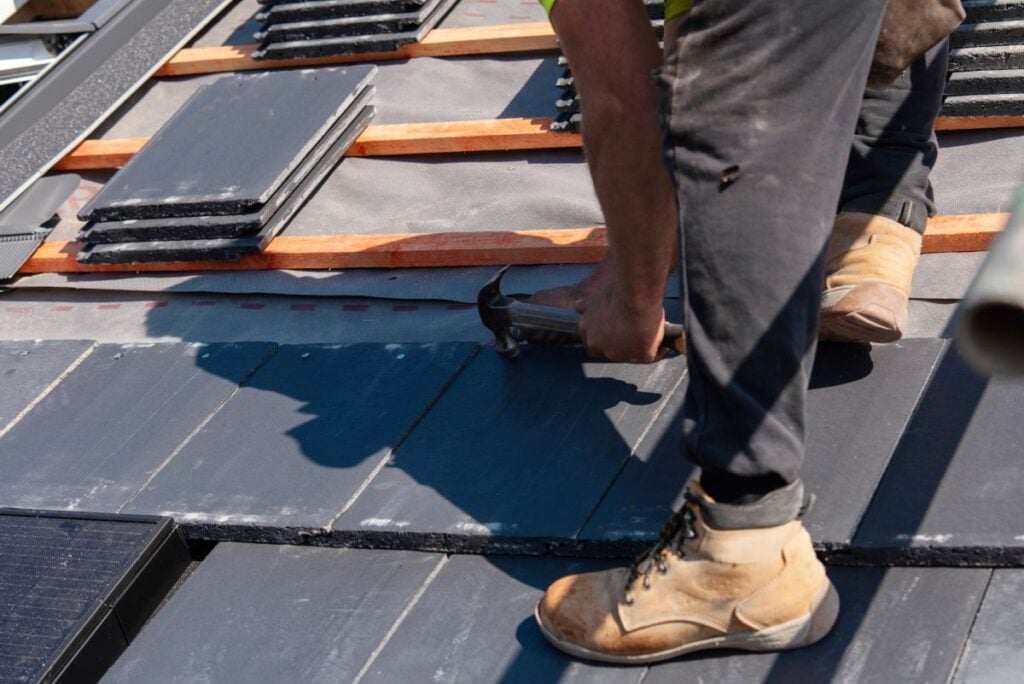
Slate roofing requires specialized expertise that most general roofing contractors do not have, which makes contractor selection uniquely important for slate work. Call a slate specialist rather than a general roofer whenever any of the following situations apply.
- Any active leak from a slate roof: Improper repair can crack surrounding slates and worsen the problem.
- More than 5 cracked or missing slates: Larger-scale repair requires expertise.
- Flashing repair around chimneys, valleys, or skylights: These transitions require specialized slate techniques.
- Visible delamination or widespread aging: Only a specialist can assess whether repair or replacement is appropriate.
- Historic property considerations: Historic slate roofs require preservation-focused approaches.
- After significant storm damage: Insurance restoration on slate requires specialized documentation.
According to the National Park Service’s Preservation Brief 29, slate roofs properly installed require relatively little maintenance and will last 60 to 125 years or longer depending on slate type, roof configuration, and geographical location, with some slate roofs known to last over 200 years. Because slate is a fundamentally repairable material, the NPS recommends repair over replacement whenever the underlying slate remains in sound condition.
Slate Repair vs. Replacement Decision
Choosing between ongoing slate repair and full replacement is one of the most consequential decisions a slate roof owner will make. The right call depends on the slate grade, the extent of existing damage, and your long-term plans for the home.
- Repair makes sense when: The majority of slate is in sound condition, damage is localized, and the slate grade suggests significant remaining lifespan.
- Replacement makes sense when: Widespread delamination is present, more than 25 percent of slates have failed, the underlying deck has significant damage, or ongoing repair costs exceed 30 percent of replacement cost.
- Replacement material options: Full slate replacement (highest cost, historically accurate), synthetic slate (DaVinci and other brands, moderate cost with slate appearance), or transition to architectural asphalt shingles (lowest cost, different appearance).
- Historic homes: Preservation guidelines often require in-kind slate replacement rather than material substitution.
Cost of Slate Roof Repair in Pittsburgh
Slate roof repair costs run significantly higher than repairs on asphalt or other common roofing materials because of the specialized labor and materials required. Here are typical Pittsburgh-area 2026 cost ranges.
- Individual slate replacement: $30 to $75 per slate for straightforward repairs.
- Small area repair (5 to 15 slates): $500 to $2,000 depending on access and scope.
- Larger repair or flashing rebuild: $1,500 to $5,000 or more for complex work.
- Full chimney flashing rebuild on slate roof: $1,500 to $4,000 depending on chimney size.
- Full slate roof replacement: $20 to $40 per square foot installed ($40,000 to $100,000+ for a typical residential slate roof).
Emergency service and hard-to-access work can add 25 to 50 percent to standard rates.
Frequently Asked Questions
How can I tell if my slate roof needs repair or full replacement?
If more than 25 percent of your slates are cracked, missing, or delaminating, or if you have multiple recurring leaks that repair has not resolved, full replacement is likely the right call. A slate specialist can inspect the roof and provide a repair vs. replacement recommendation based on slate grade, extent of damage, and underlying deck condition.
How much does slate roof repair cost in Pittsburgh?
Slate roof repair in Pittsburgh typically runs $500 to $2,000 for small area repairs (5 to 15 slates), $1,500 to $5,000 for larger repair or flashing rebuild work, and $20 to $40 per square foot for full slate replacement. Emergency service and hard-to-access work can add 25 to 50 percent to standard rates.
Can a regular roofing contractor repair a slate roof?
Most general roofing contractors do not have the specialized tools, training, or experience for slate work, and improper repair often cracks surrounding slates and worsens leaks. Always hire a contractor with documented slate roofing experience for slate repair, and ask to see recent slate work references.
Why do slate roofs last so long?
Slate is quarried natural stone with extremely low water absorption, high fire resistance, and no organic content that can decay. When properly installed with copper nails and copper flashing, slate roofs regularly last 100 years or more, with some historic slate roofs approaching 200 years of service.
What is the difference between S1, S2, and S3 slate?
ASTM C406 grades slate as S1 (75+ years expected service life), S2 (40 to 75 years), or S3 (20 to 40 years) based on water absorption and other physical properties. Most premium slate installed in North America is S1 grade, with Pennsylvania and Vermont producing some of the world’s highest-quality S1 slate.
Should I replace my slate roof with the same material?
The best replacement for a slate roof is another slate roof in most cases, particularly for historic homes where preservation matters. If cost is prohibitive, synthetic slate products like DaVinci offer a similar appearance at a lower price point. Transitioning to asphalt shingles is the lowest-cost option but significantly changes the home’s appearance.
Get Expert Slate Roof Guidance
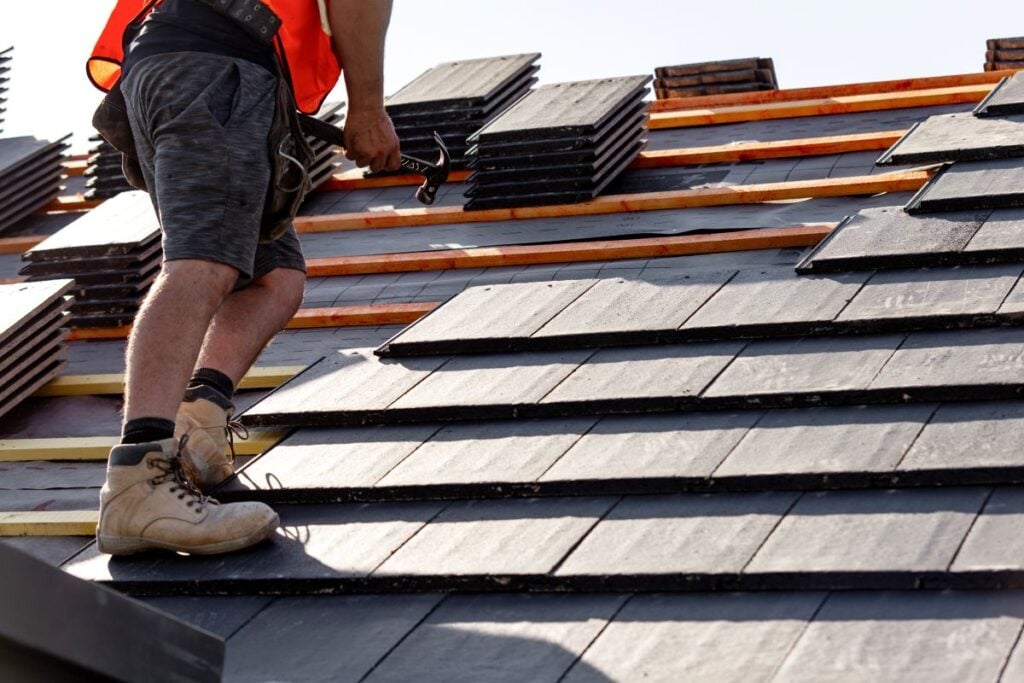
Slate roof damage rarely fixes itself, and the cost of proper professional repair is almost always dramatically lower than the cost of interior water damage that develops when slate failures are left untreated. Whether you have a few cracked slates or you are weighing repair against full replacement, working with a contractor who understands slate is essential to protecting your investment.
For slate roof repair specifically, McCormick Renovations recommends consulting a specialized slate roofing contractor with documented slate experience. If your slate roof has reached end of life and you are considering replacement to a modern alternative like synthetic slate or architectural asphalt shingles, McCormick’s residential roofing team serves Pittsburgh and surrounding areas with more than 30 years of experience. Contact McCormick Renovations for a free consultation on replacement options and to discuss the material transition that best fits your home and budget.