Gutter maintenance is one of the cheapest, highest-leverage steps a homeowner can take, because clogged or damaged gutters quietly drive foundation cracks, basement moisture, fascia rot, and ice dams that cost tens of thousands of dollars to fix. The work itself takes a few hours twice a year, but the payoff compounds across decades by keeping water flowing away from the home instead of into it. This guide walks through six specific seasonal tasks that every homeowner should complete, what each one prevents, and the signs that point to professional gutter repair or replacement.
- Seasonal checklist: Six specific tasks tied to spring, fall, and winter conditions.
- What each task prevents: The real damage each step blocks, with cost ranges.
- Repair or replace: How to tell when maintenance is no longer enough.
Why Does Gutter Maintenance Matter?
Gutter maintenance protects the entire building envelope by keeping rainwater and snowmelt flowing into downspouts instead of overflowing onto siding, soffit, fascia, foundation walls, and landscaping. The cost of neglect runs from minor cosmetic fixes to major foundation repairs, depending on how long the system has been failing.
How Does a Working Gutter System Actually Protect Your Home?
A working gutter system catches roof runoff at the eaves, channels it into downspouts, and discharges it at least five to ten feet away from the foundation. When the system fails, water sheets down siding, saturates the soil immediately around the foundation, and forces moisture into basement walls and crawl spaces. The U.S. Environmental Protection Agency identifies regular gutter cleaning and repair as one of the core steps homeowners should take to prevent mold and moisture problems, alongside foundation grading and humidity control. Homeowners in Pittsburgh and surrounding areas see the consequences of neglected gutters every spring when basement moisture and fascia rot become visible.
- Foundation protection: Keeps soil around the foundation from saturating with each rainfall.
- Siding and trim protection: Stops constant water exposure that drives paint failure and rot.
- Basement dryness: Reduces hydrostatic pressure against foundation walls.
- Mold prevention: Cuts the moisture supply that allows mold to grow within 24 to 48 hours.
What Damage Do Clogged Gutters Actually Cause?
Clogged gutters drive a predictable progression of damage that starts small and grows fast. Water that backs up under shingles can rot the roof deck, water that overflows soaks fascia boards and soffits, and water that pools at the foundation can crack basement walls and cause settling. The repair costs scale accordingly: a $300 gutter cleaning prevents thousands in fascia replacement, tens of thousands in foundation work, and uncounted damage from mold remediation. Homeowners in Pittsburgh and surrounding areas with mature trees nearby face the highest risk because leaf litter accumulates quickly.
- Roof deck rot: $1,000 to $5,000 to replace damaged sheathing during a re-roof.
- Fascia and soffit damage: $500 to $3,000 to replace rotted boards.
- Foundation cracks: $2,000 to $25,000 to repair depending on severity.
- Basement waterproofing: $3,000 to $15,000 for interior or exterior remediation.
6 Seasonal Must-Dos for Gutter Maintenance
Each of the six tasks below is tied to a specific season and addresses a specific failure mode. Walk through them in order each year, and adjust the timing based on local tree cover, weather patterns, and how the previous season’s debris load actually behaved.
1. Clean Gutters Thoroughly in Late Spring
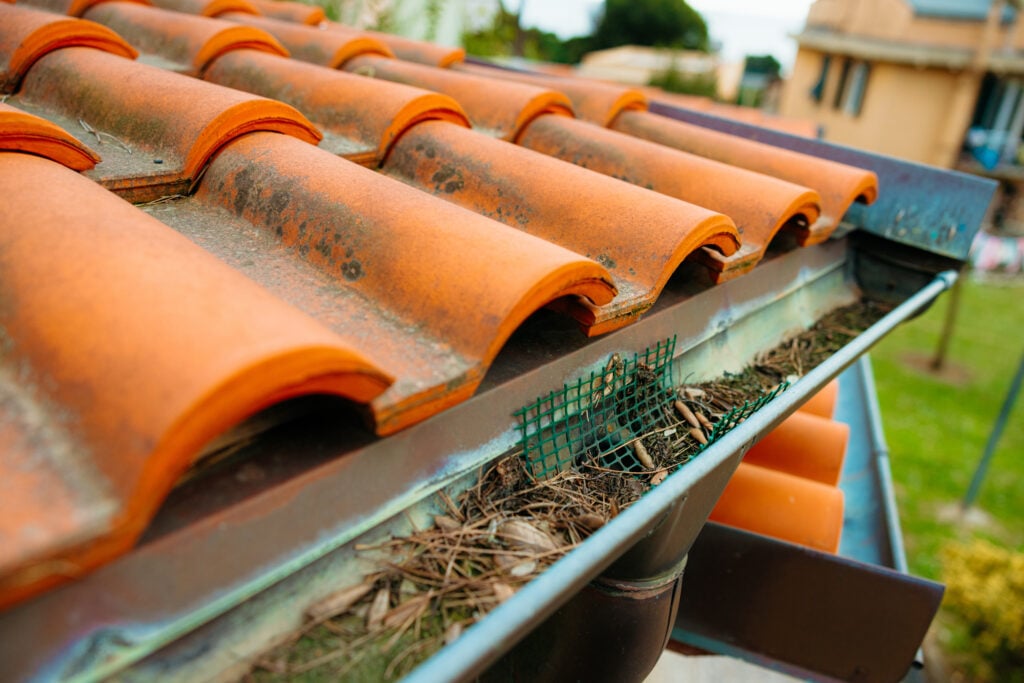
Late spring cleaning removes the heavy debris load that accumulated over winter, including pollen, seed pods, helicopter samaras, broken branches, and last fall’s leaves that finally rotted into a sludge. This is the most important gutter cleaning of the year because spring rains are heavy, summer storms are frequent, and the debris that survived winter is dense enough to form near-permanent blockages. Plan to do this work in May or early June after the maple, oak, and walnut trees have finished dropping seed pods. Pittsburgh and surrounding areas homeowners with mature trees nearby should plan on a full half-day for this task.
- Best timing: May or early June after spring tree debris falls.
- What to remove: Pollen, seed pods, samaras, broken twigs, and decomposed leaves.
- DIY cost: $0 to $50 in supplies if you already own a ladder.
- Professional cost: $150 to $400 depending on home size and gutter linear footage.
2. Inspect and Flush Downspouts in Spring
Downspout flushing pushes water from a garden hose through the entire downspout system to confirm water actually exits the discharge point. Clogs commonly form at the elbow where the downspout meets the gutter and again at the lower elbow above grade. A flush test reveals partial clogs that look fine from the ground but cut water flow by 50 percent or more. Run the test on every downspout, watch for leaks at seams, and confirm the discharge water travels at least five to ten feet from the foundation before reaching grade.
- What to check: Flow at each downspout, leaks at seams, and discharge distance.
- Clog signal: Water backing up in the gutter above the downspout opening.
- Discharge target: Five to ten feet away from the foundation, with a splash block or extension.
- Tools needed: Garden hose, ladder, gloves, and downspout cleaning attachment.
3. Trim Overhanging Branches in Early Summer
Trimming overhanging branches removes the primary source of debris that ends up in the gutter, while also reducing damage from falling limbs and abrasion from branches scraping the roof in wind. The target is to keep all branches at least 6 to 10 feet from the roof edge, which dramatically reduces leaf load in the fall and limits storm risk year round. Early summer is the right time to trim because most deciduous trees have leafed out enough to show the actual branch geometry, and the cuts have time to seal before winter. Homeowners with large mature trees should call an arborist for high or heavy branches.
- Target clearance: Six to ten feet of clear space above the roof.
- What to remove: Branches that overhang the roof, dead limbs, and branches touching the siding.
- DIY cost: $50 to $200 in saw and pole pruner if you don’t already own them.
- Professional cost: $300 to $2,000 for arborist work depending on tree size and quantity.
4. Clean Gutters Again After Fall Leaf Drop
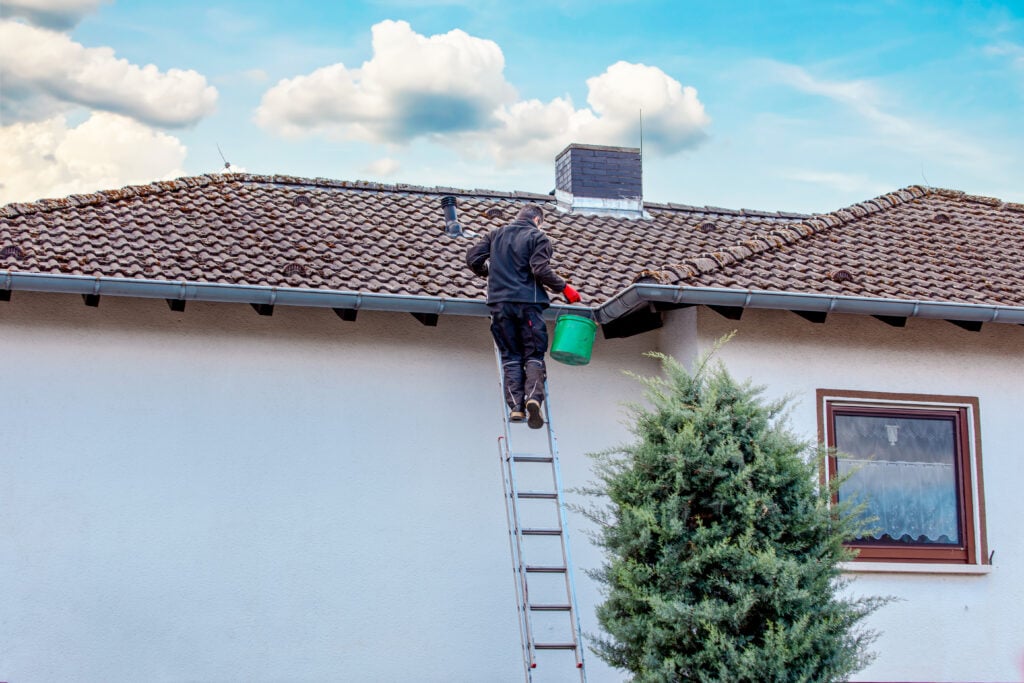
Fall cleaning is the second mandatory cleaning of the year, completed after the last leaves have fallen and before the first hard freeze. Cleaning too early leaves a second load of debris in the gutter through winter, while cleaning too late risks ice formation in still-clogged sections. The right window in Pittsburgh and surrounding areas runs from early November through early December depending on weather. A thorough fall cleaning removes leaves, twigs, pine needles, and any accumulated grit from the shingles, and it sets up the system for winter freeze-thaw cycles.
- Best timing: Early November to early December after the last leaves fall.
- What to remove: Leaves, pine needles, twigs, and shingle grit.
- Why it matters: Clean gutters resist ice dam formation far better than clogged ones.
- Professional cost: $150 to $400 for a complete cleaning.
5. Inspect Gutters and Seams Before Winter
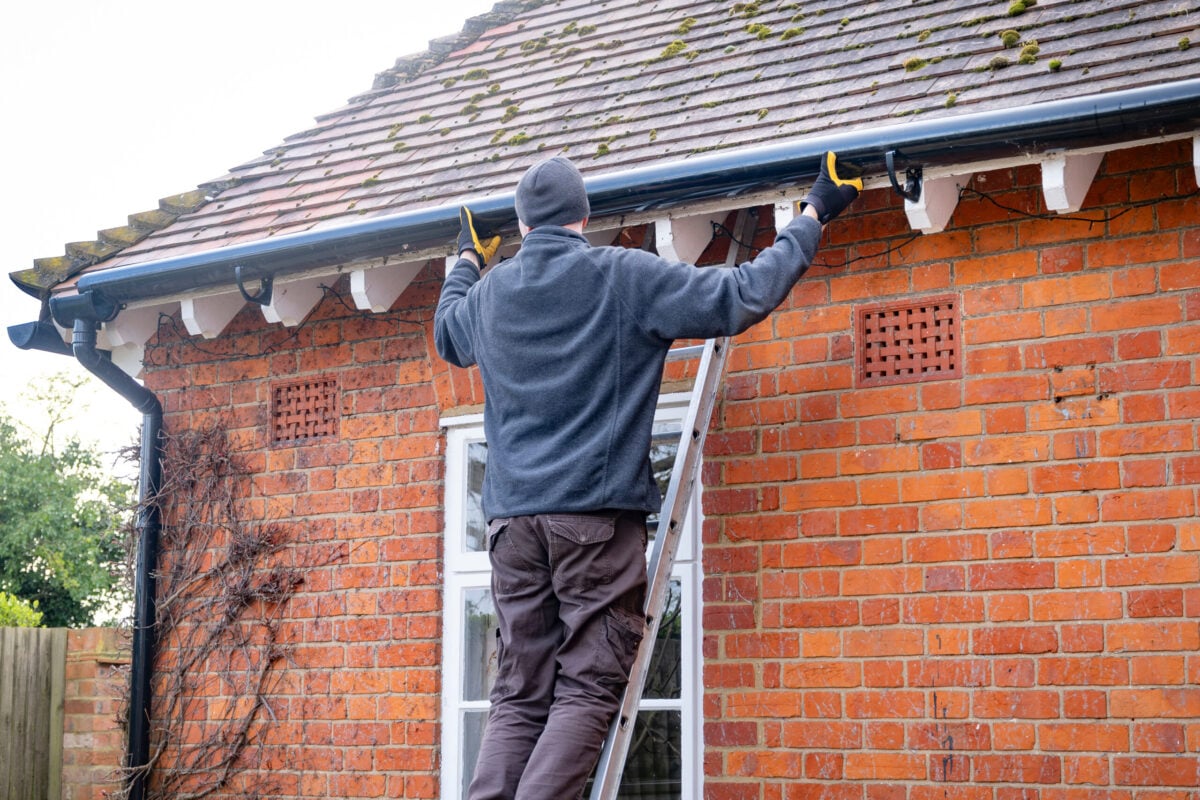
A pre-winter inspection identifies sagging sections, loose hangers, separated seams, and damaged fascia before freeze-thaw cycles turn small issues into major repairs. Walk the perimeter of the home and look for gutters pulling away from the fascia, water staining on siding below seams, or visible gaps in the gutter run. Check that all hangers are secure and that downspouts are firmly attached at every elbow. Small repairs in November cost a fraction of the same work after winter has expanded every crack and loosened every fastener.
- What to check: Sagging sections, loose hangers, separated seams, damaged fascia.
- Common findings: Gutter spikes pulling out of fascia, separated end caps, cracked elbows.
- DIY repair: Gutter sealant, replacement hangers, and screw-in spikes.
- Professional repair: $150 to $500 per repair for sagging or separated sections.
6. Monitor for Ice Dams Through Winter
Winter monitoring focuses on ice dam formation at the eaves, where freeze-thaw cycles cause meltwater to refreeze and back up under the shingles. Ice dams form when attic heat melts roof snow that then refreezes at the cold eaves, and they push water under the shingles into the wall cavities and ceiling. After each heavy snow event, look for thick ice ridges along the eaves, icicles hanging from the gutters, and water staining inside upstairs ceilings. Pittsburgh and surrounding areas homeowners should pay particular attention to north-facing eaves and shaded sections.
- Visual cues: Thick ice ridges at eaves, large icicles, water staining on interior ceilings.
- Underlying causes: Poor attic insulation, inadequate ventilation, or clogged gutters.
- Short-term fix: Roof rake the lower 3 to 4 feet of snow after major storms.
- Long-term fix: Improve attic insulation, balance ventilation, and add ice and water shield.
How to Decide Between Maintenance, Repair, and Replacement
Gutter systems eventually reach the end of their useful life, even with consistent maintenance, and the right time to replace depends on age, condition, and the cost trajectory of ongoing repairs. Homeowners in Pittsburgh and surrounding areas should walk through this decision with a qualified contractor every five years or so.
When Does Repair Make Sense?
Repair is the right choice when the gutter system is structurally sound, the damage is localized, and the rest of the run is in good condition. Sagging in one section, a leaking seam at a corner, or a single detached downspout are all good repair candidates. Aluminum gutters can typically be repaired with sealant, replacement hangers, and section splices for 5 to 15 years before age-related failures justify full replacement.
- Age threshold: Gutter systems under 15 years old.
- Damage threshold: Issues affecting less than 20 percent of the total linear footage.
- Cost threshold: Annual repair costs less than 25 percent of replacement cost.
- Material condition: Gutters otherwise hold their shape and color.
When Should You Replace the Whole System?
Replacement makes sense when the gutters are past their service life, when damage spans multiple sections, or when annual repair costs are climbing toward replacement cost. Aluminum gutters last 20 to 30 years, steel gutters last 15 to 25 years, and copper gutters can last 50 years or more. Persistent leaks, widespread sagging, paint failure, and fascia damage all signal that piecemeal repair is no longer the right answer.
- Aluminum lifespan: 20 to 30 years for quality seamless installations.
- Steel lifespan: 15 to 25 years depending on coating and climate.
- Copper lifespan: 50-plus years with minimal maintenance.
- Replacement cost: $4 to $12 per linear foot installed depending on material and gauge.
Frequently Asked Questions
How Often Should Gutters Be Cleaned?
Most homes need gutter cleaning twice per year, once in late spring and once after fall leaf drop. Homes with heavy tree cover, pine trees, or large oaks may need a third cleaning in mid-summer to clear seed pods and accumulated debris.
How Much Does Professional Gutter Cleaning Cost?
Professional gutter cleaning in Pittsburgh and surrounding areas typically costs $150 to $400 per visit, depending on home size, gutter linear footage, and access difficulty. Single-story homes fall on the lower end, while two- and three-story homes run higher.
Are Gutter Guards Worth It?
Gutter guards reduce cleaning frequency by 50 to 80 percent and protect against major clogs from leaves and large debris. Quality micromesh and reverse-curve products carry the strongest performance records, while plastic screen inserts often fail within a few years.
Does Homeowners Insurance Cover Gutter Damage?
Homeowners insurance typically covers gutter damage from sudden events like wind, hail, or falling tree limbs, but it excludes damage from age, wear, or neglect. Filing requires documentation of the storm event and dated photos of the damage.
Can I Clean My Own Gutters Safely?
Single-story homes with manageable roof pitches can often be cleaned safely with a sturdy ladder, gloves, and basic equipment. Two-story homes, steep pitches, and any home where the homeowner is uncomfortable on a ladder should be handled by a professional.
Do I Need a Licensed Contractor for Gutter Repair or Replacement?
Pennsylvania requires home improvement contractors performing work over $500 to be registered with the state Attorney General’s office. Hiring a registered, insured contractor protects manufacturer warranties, ensures proper installation, and reduces your liability if anything goes wrong.
Why McCormick Renovations Is the Right Partner for Your Gutter Replacement
McCormick Renovations specializes in seamless gutter replacement and installation across Pittsburgh and surrounding areas, with hands-on experience, deep product knowledge, and a commitment to clean, code-compliant workmanship on every system we install. We do not offer gutter cleaning or seasonal maintenance services, but we are the right call when an existing gutter system has reached the end of its useful life and needs to be replaced. We install seamless aluminum, steel, and copper gutters with proper slope, secure hangers, and downspouts that discharge well away from the foundation. If your gutters are leaking, sagging, pulling away from the fascia, or failing to channel water properly, reach out to McCormick Renovations today for a free estimate on a new gutter system that protects your home for decades.