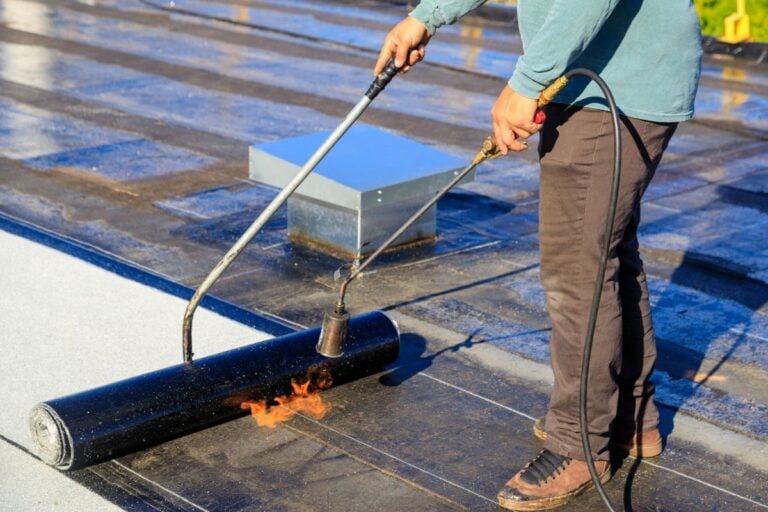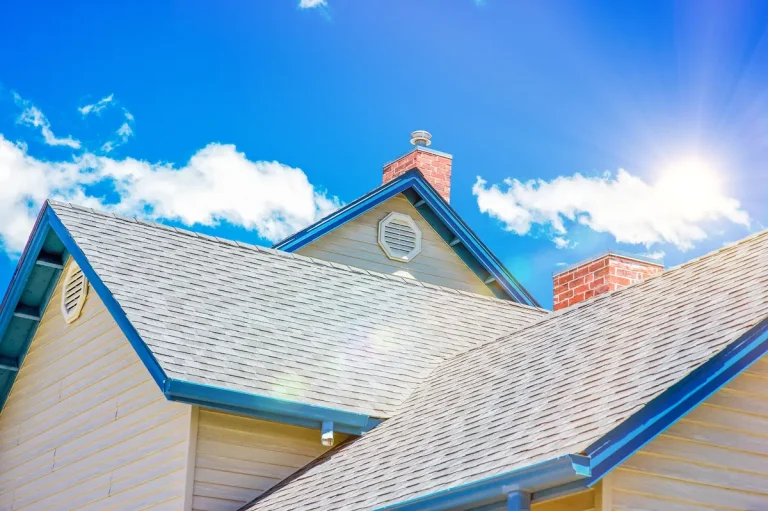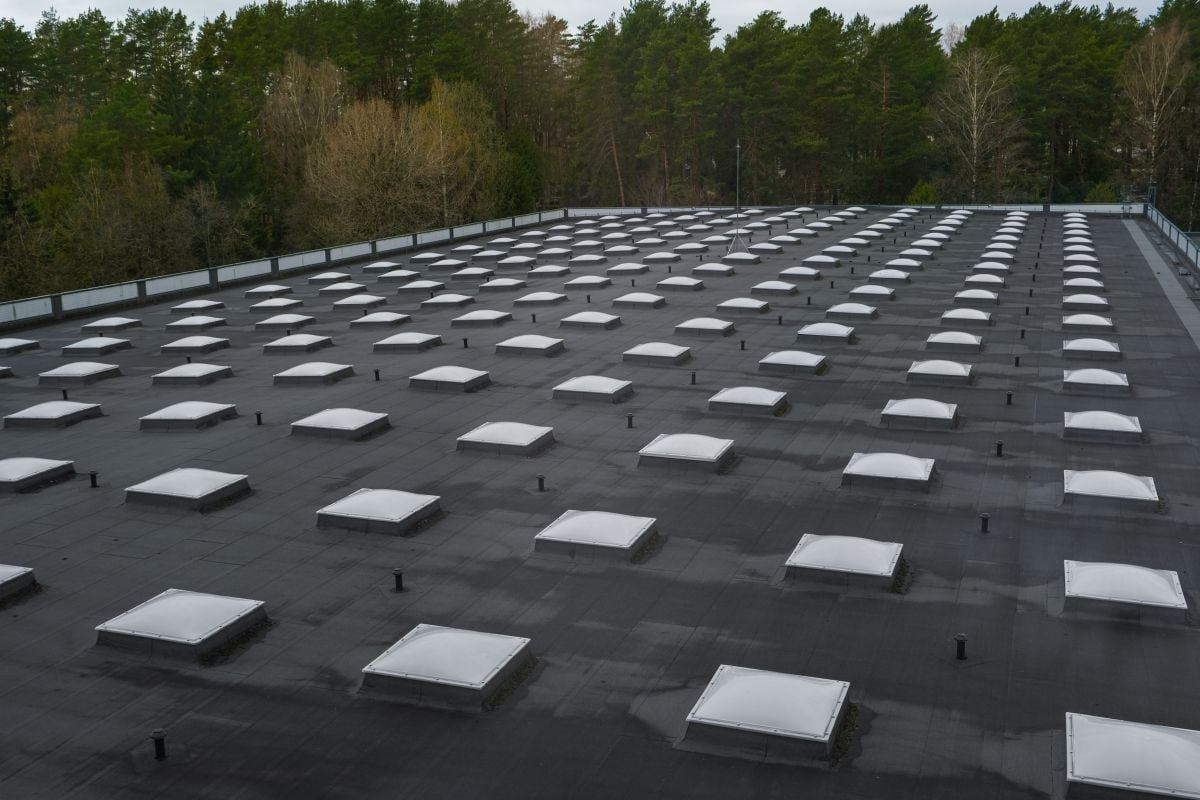
When water shows up on a ceiling and the membrane above it is rubber, knowing the basics of rubber roof repair helps homeowners and small commercial property owners make smart decisions instead of expensive ones. EPDM rubber roofing is one of the most durable low-slope roofing materials available, but no membrane lasts forever, and small problems left alone tend to grow into big ones. This guide walks through the six most common rubber roof issues, how to recognize each one, and the proven fix options that bring the roof back to watertight condition.
- Six common issues: What goes wrong on EPDM roofs and how to spot each one early.
- Fix options: Specific repair methods, from seam patches to full membrane replacement.
- Cost guidance: Realistic price ranges and when repair beats replacement.
Why Do Rubber Roofs Need Repair in the First Place?
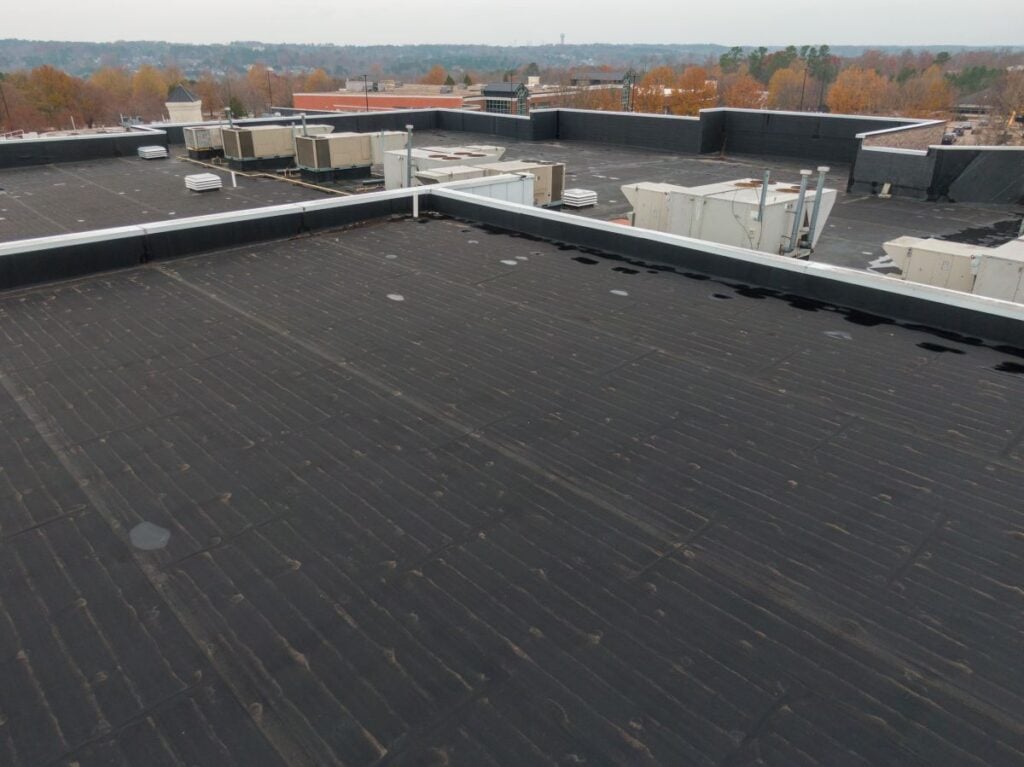
Rubber roofs need repair because they live on top of a building exposed to UV radiation, hail, foot traffic, freeze-thaw cycles, and seasonal expansion and contraction. Even a well-installed EPDM roof develops issues over a multi-decade lifespan, and most of those issues are repairable when caught early.
How Long Does an EPDM Rubber Roof Actually Last?
A properly designed, installed, and maintained EPDM rubber roof has an expected service life of about 38 years according to the EPDM Roofing Association, which is the industry trade body representing manufacturers and suppliers. Real-world results vary based on membrane thickness, attachment method, drainage design, and climate exposure. Homeowners and property owners in Pittsburgh and surrounding areas often see 25 to 35 years from a quality EPDM install, with many roofs continuing to perform well past that range when maintained.
- Expected service life: Around 38 years for properly installed and maintained EPDM.
- Membrane thickness matters: 60-mil and 90-mil membranes outperform thinner 45-mil sheets.
- Attachment method: Fully adhered systems often outlast mechanically fastened in high-wind areas.
- Drainage design: Standing water dramatically shortens any flat-roof membrane’s life.
What Are the Top Causes of Damage in Pittsburgh?
The mid-Atlantic climate creates a specific set of stressors for rubber roofs in Pittsburgh and surrounding areas, with freeze-thaw cycles and tree debris leading the list. Hail and ice dams contribute too, especially on additions and porch roofs that get less attention than the main building. Understanding the causes helps property owners know what to inspect for and how often.
- Freeze-thaw cycling: Daily temperature swings stress seams and flashing.
- UV exposure: Continuous sunlight slowly degrades the membrane surface.
- Falling debris: Tree branches, acorns, and ice cause punctures and abrasion.
- Foot traffic: HVAC service technicians, satellite installers, and chimney work all add wear.
6 Common Rubber Roof Issues and How to Fix Them
Each of the six issues below appears regularly on inspection reports, and each one has a defined repair path. Read through with your roof in mind, and pay particular attention to whether the issue is isolated or appears in multiple locations, since widespread damage often points to replacement rather than repair.
1. Seam Separation
Seam separation happens when the adhesive or seam tape joining two pieces of EPDM membrane begins to lift, gap, or fishmouth open. Seams are the most common failure point on any rubber roof because they involve a chemical or mechanical bond that has to hold across decades of thermal movement. The good news is that seam repair is one of the most straightforward fixes available, and a properly executed repair often outlasts the original seam. Catching seam separation early prevents water from reaching the substrate below, where damage spreads quickly and quietly.
- Visual signs: Lifted edges, fishmouth openings, and visible gaps along seam lines.
- Repair method: Clean the area, apply EPDM primer, and install a 6-inch cover strip with seam tape.
- Cost range: Roughly $200 to $800 for spot seam repair depending on length and access.
- When to escalate: Multiple failing seams across the roof usually point to membrane replacement.
2. Punctures and Tears
Punctures and tears occur when sharp objects penetrate the membrane, typically from falling branches, hail, dropped tools, or foot traffic on small debris. Even a small hole can let surprising amounts of water into the building during a single storm, and the damage often appears far from the actual puncture as water travels along the substrate before finding a path inward. Quick patches stop the immediate leak, while permanent repairs use vulcanized cover patches that bond chemically to the original membrane.
- Visual signs: Visible holes, tears, slits, or impact dimples on the membrane.
- Repair method: Clean and dry the area, apply primer, and install an EPDM cover patch with seam tape or adhesive.
- Cost range: Roughly $150 to $500 per puncture depending on size and location.
- Prevention tips: Trim overhanging branches and add walkway pads in high-traffic zones.
3. Flashing Failures
Flashing failures happen at the transitions between the rubber roof and other building elements, including walls, chimneys, vents, drains, and HVAC curbs. These transition details handle complex movement and water flow, which makes them statistically the most leak-prone areas of any low-slope roof. Failed flashing usually shows as cracked, lifted, or pulled-back edges where the membrane meets vertical surfaces, and the repair varies significantly based on the substrate behind the flashing.
- Visual signs: Cracked sealant, lifted flashing edges, and water staining at wall transitions.
- Repair method: Remove failed flashing, clean substrate, install new EPDM flashing, and seal with termination bar and sealant.
- Cost range: Roughly $300 to $1,200 per detail depending on complexity.
- Common locations: Wall-roof transitions, chimneys, skylight curbs, and pipe penetrations.
4. Ponding Water and Drainage Issues
Ponding water is standing water that remains on the roof more than 48 hours after rain, and it shortens membrane life by accelerating UV damage, biological growth, and seam stress. The underlying cause is usually inadequate slope, clogged drains or scuppers, or sagging structural support. Repair options range from simple drain cleaning to installing tapered insulation that creates positive slope toward drains. Persistent ponding on an older roof is one of the strongest signals to plan a full replacement with corrected drainage.
- Visual signs: Standing water, watermark rings, biological growth, and dirt accumulation in low spots.
- Repair method: Clear drains, add scuppers, install tapered insulation, or rebuild the substrate.
- Cost range: Roughly $500 for drain clearing to $5,000-plus for tapered insulation work.
- Critical threshold: Water remaining 48 hours after rain warrants a drainage review.
5. Shrinkage and Membrane Pulling
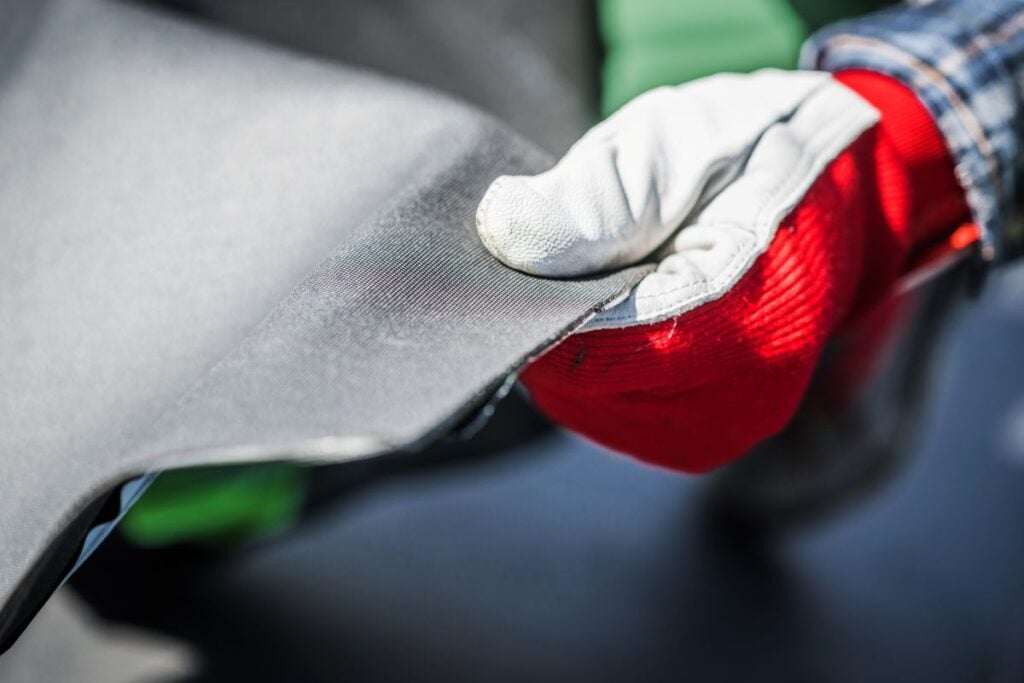
Shrinkage is a slow, gradual contraction of the EPDM membrane that pulls flashing away from walls, lifts edges, and stresses seams across the entire roof. It typically appears late in a roof’s life on older, mechanically fastened systems and is one of the clearest indicators that the membrane is approaching end of service. Local repairs to flashing and edge details can buy time, but widespread shrinkage usually means the roof is overdue for replacement rather than additional patching.
- Visual signs: Flashing pulled away from walls, lifted membrane at edges, and stretched or torn corners.
- Repair method: Re-flash affected areas with new EPDM and termination bar in the short term.
- Cost range: Roughly $1,000 to $4,000 for partial re-flashing across multiple details.
- Long-term outlook: Widespread shrinkage indicates the membrane is at end of life.
6. Surface Cracking, Crazing, and UV Damage
Surface cracking and crazing are fine networks of shallow cracks that develop as the membrane ages and loses plasticizers under continuous UV exposure. The damage is usually cosmetic in early stages, but deeper cracking allows water to penetrate the membrane and accelerates failure. Reflective EPDM coatings can extend service life on roofs with surface-level damage by adding a fresh UV barrier, while membranes with deep cracking generally need replacement.
- Visual signs: Fine cracks across the surface, chalking, color fading, and brittleness.
- Repair method: Apply a manufacturer-approved acrylic or silicone roof coating.
- Cost range: Roughly $2 to $5 per square foot for a quality coating system.
- Limitations: Coatings extend life but do not repair structural damage to the membrane.
How Do You Decide Between Repair and Replacement?
The repair-versus-replace decision comes down to age, the percentage of the roof affected, the underlying cause, and the cost trajectory of ongoing repairs. Property owners in Pittsburgh and surrounding areas should weigh both the immediate fix cost and the expected future service life of the existing membrane.
When Does Repair Make Sense?
Repair is the right choice when the roof is well within its service life, the issue is isolated to a small percentage of the roof area, and the membrane otherwise looks healthy. A 15-year-old EPDM roof with a single seam failure or two punctures is a textbook repair candidate. So is a roof with a localized flashing failure around a single chimney. Routine maintenance and small repairs typically pay for themselves many times over by extending the membrane’s full service life.
- Age threshold: Roofs less than 25 years old usually warrant repair.
- Damage threshold: Issues affecting less than 10% of the roof area.
- Cost threshold: Annual repair costs less than 2% of replacement cost.
- Membrane condition: Membrane is otherwise pliable, intact, and properly seamed.
When Should You Plan Full Replacement?
Replacement makes sense when the roof is approaching or past its expected service life, when widespread shrinkage or cracking is present, or when annual repair costs are climbing year over year. A 35-year-old roof with multiple seam failures, ponding water, and fading membrane is sending clear signals that any repair is short-term. Replacement also creates the opportunity to upgrade insulation, correct drainage, and choose a thicker, longer-lasting membrane.
- Age threshold: Roofs over 30 years old approaching documented service life.
- Damage threshold: Issues spread across more than 25% of the roof area.
- Cost trajectory: Annual repair costs rising and approaching 50% of replacement cost over time.
- System upgrades: Replacement allows added insulation, better drainage, and thicker membrane.
Frequently Asked Questions
How Much Does Rubber Roof Repair Cost?
Most rubber roof repairs in Pittsburgh and surrounding areas cost between $200 and $1,500 depending on the issue and the access required. Seam repairs and small punctures fall on the lower end, while flashing rebuilds and tapered insulation work fall on the higher end.
How Long Does a Rubber Roof Repair Last?
A properly executed seam or puncture repair using primer, seam tape, and an EPDM cover patch typically lasts 10 years or more, often matching the remaining life of the original membrane. Sealant-only repairs are short-term fixes and should be considered temporary.
Can I Repair My Rubber Roof Myself?
Small punctures can be patched by handy homeowners using EPDM repair kits, but seam work, flashing repairs, and any fix involving access challenges are best handled by a licensed contractor. DIY repairs that fail often void manufacturer warranties.
How Often Should a Rubber Roof Be Inspected?
Plan a professional inspection every two to three years and after any significant weather event, including hail, high wind, and heavy ice. Twice-yearly visual inspections by the property owner help catch issues early, especially around seams, flashing, and drains.
Can a Rubber Roof Be Coated to Extend Its Life?
Yes, manufacturer-approved acrylic or silicone roof coatings can add 10 to 15 years of service life to an EPDM roof with cosmetic UV damage. Coatings are not appropriate for membranes with deep cracks, widespread shrinkage, or seam failures.
Do I Need a Licensed Contractor for Rubber Roof Repair?
Pennsylvania requires home improvement contractors performing work over $500 to be registered with the state Attorney General’s office. Hiring a registered, insured roofing contractor protects your investment, preserves manufacturer warranties, and ensures repairs meet local building codes.
Why McCormick Renovations Is the Right Partner for Your Rubber Roof Repair
McCormick Renovations brings hands-on experience, proper EPDM materials, and a commitment to clean, code-compliant repairs to every rubber roof we service in Pittsburgh and surrounding areas. We diagnose the actual cause of the leak rather than chasing symptoms, and we recommend the right balance of repair and replacement based on the age, condition, and remaining service life of your existing membrane. If you are seeing seam separation, ponding water, flashing failures, or any of the other issues covered above and want a clear, no-pressure assessment backed by real numbers, reach out to McCormick Renovations today for a free estimate. Our team will inspect every seam and detail, explain the tradeoffs, and design a repair or replacement plan that protects your building for decades.