If you have a flat or low-slope roof and have been researching options, you may have heard the term torch down roofing without ever getting a clear explanation of what it actually is. Torch down is a heat-welded modified bitumen system that bonds rubberized asphalt sheets to the roof using a propane torch, and it has been a workhorse on commercial buildings, additions, and porch roofs for decades. This guide walks through how the system is installed, where it makes sense, and the practical considerations homeowners and small business owners should understand before signing a contract.
- How it works: The materials, layers, and step-by-step installation process behind torch down roofing.
- Where it’s used: The roof types and building situations where torch down outperforms alternatives.
- What to weigh: Lifespan, cost, safety considerations, and how it compares to EPDM and TPO.
What Is Torch Down Roofing?
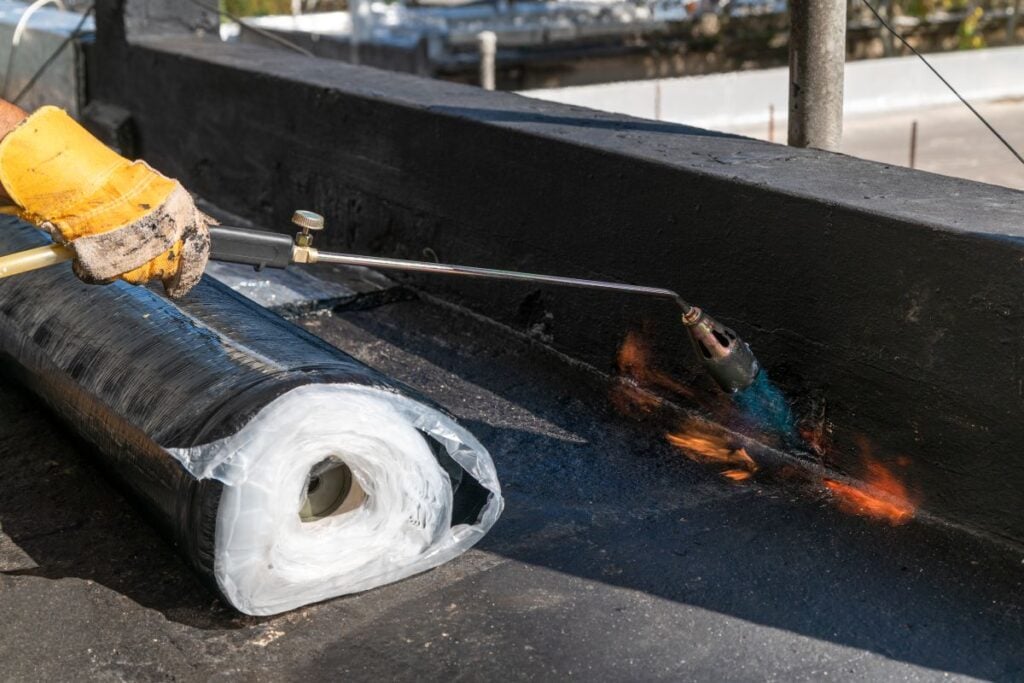
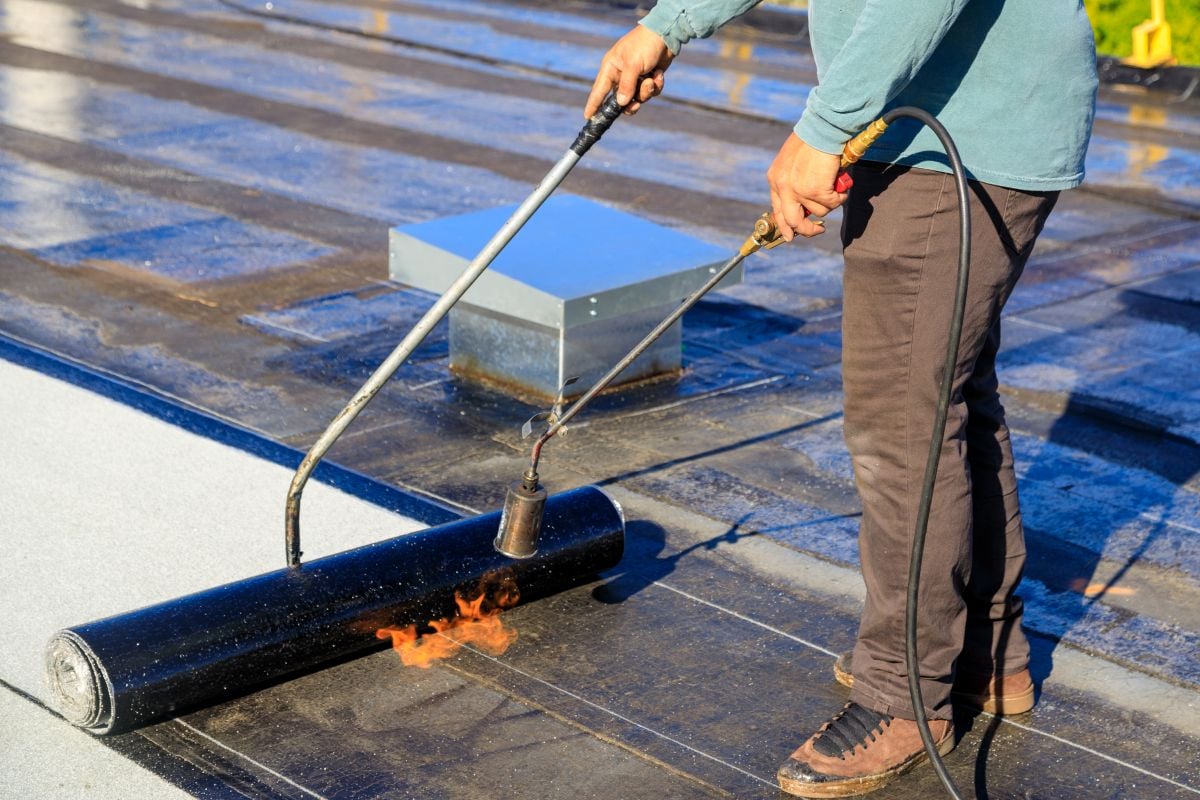
Torch down roofing is a multi-layer modified bitumen membrane system installed by heating the underside of factory-made rolls with a propane torch and bonding them directly to the substrate or base sheet. The result is a continuous, redundant waterproof membrane built specifically for low-slope and flat roof applications.
How Is the Membrane Manufactured?
Torch down membranes are manufactured by reinforcing asphalt with polymer modifiers and a fiberglass or polyester mat carrier in a controlled factory setting. The two most common modifier types are atactic polypropylene (APP), which produces a plastic-like membrane with strong UV and heat resistance, and styrene butadiene styrene (SBS), which produces a rubber-like membrane with better cold-weather flexibility. The factory production gives torch down its consistency and durability advantage over older built-up roofing systems that were assembled layer by layer on the roof itself. Homeowners in Pittsburgh and surrounding areas typically see SBS membranes recommended because the climate runs cold enough to benefit from added flexibility.
- APP modified bitumen: Plastic-modified asphalt with strong UV and heat resistance.
- SBS modified bitumen: Rubber-modified asphalt with better cold-weather flexibility.
- Reinforcing mat: Fiberglass or polyester carrier embedded in the membrane for tensile strength.
- Membrane thickness: Typically 120 to 180 mils, far thicker than single-ply rubber membranes.
What Layers Make Up a Torch Down System?
A standard two-ply torch down system uses a base sheet and a cap sheet bonded together with the propane torch. The base sheet provides initial waterproofing, dimensional stability, and a clean surface for the cap sheet to bond to. The cap sheet carries mineral granules embedded in the surface that protect the asphalt from UV radiation and add the finished color and texture. Together, the two layers create a redundant waterproof system that performs better than any single-ply membrane of comparable cost.
- Insulation board: Typically polyiso rigid foam attached to the deck below the membrane.
- Base sheet: First ply of modified bitumen, smooth or lightly granulated.
- Cap sheet: Second ply with mineral granules for UV protection and finished appearance.
- Flashing details: Wall, drain, and penetration flashings made from the same membrane material.
How Is Torch Down Roofing Actually Installed?
Torch down installation is a methodical process that requires trained crews, proper safety equipment, and strict fire prevention protocols. Read through the steps below to understand what a quality installation looks like, and what to expect on a project at your home or building.
What Happens During a Standard Installation?
A standard installation begins with full removal of the old roof, inspection of the deck, and replacement of any rotten or damaged sheathing. The crew then mechanically fastens or adheres rigid insulation boards to the deck, followed by the modified bitumen base sheet. The cap sheet is rolled out, and a propane torch heats the underside of the roll until the asphalt becomes shiny and tacky, at which point the crew presses the membrane into firm contact with the layer below. Seams are overlapped a minimum of 3 inches and double-checked for full bond.
- Tear-off and inspection: Remove old material and assess deck condition before installation.
- Insulation layer: Install rigid foam insulation to meet code R-value requirements.
- Base sheet application: Mechanically fasten or torch down the first ply.
- Cap sheet application: Heat-weld the granulated cap sheet with overlapping seams.
Why Is Safety Training So Important?
Safety training matters because torching activities have historically caused serious building fires, and the industry has worked for decades to bring that risk down. The National Roofing Contractors Association reports that since the implementation of its Certified Roofing Torch Applicator (CERTA) program, the roofing industry has seen a significant decrease in serious roofing torch-related fire incidents. Hiring a contractor whose crew includes CERTA-certified applicators is one of the most important steps property owners in Pittsburgh and surrounding areas can take to protect both the building and the workers.
- CERTA certification: Industry-standard training for safe torch application.
- Insurance requirements: Many underwriters require CERTA-certified workers as a coverage condition.
- Fire watch protocols: Trained crews maintain post-application fire watch for hours after work ends.
- Direct torching limits: Modern best practices restrict direct torching over combustible substrates.
Where Is Torch Down Roofing Used?
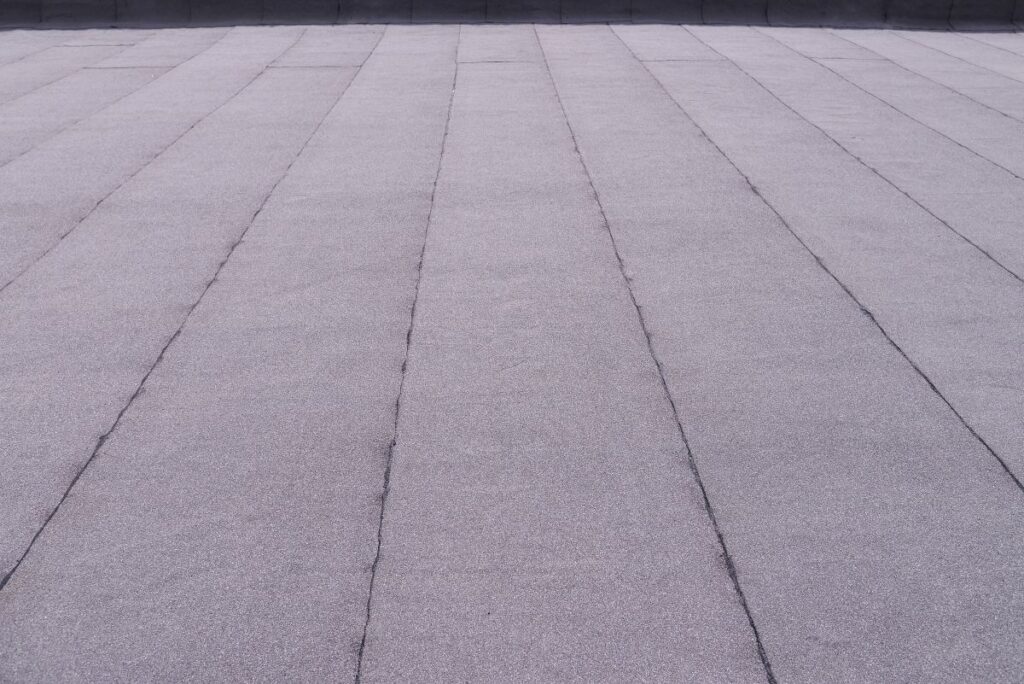
Torch down roofing performs best in specific situations and roof types, so understanding when to specify it matters as much as understanding how it works. Property owners should weigh both the building geometry and the climate before settling on torch down over single-ply alternatives.
What Buildings Are Best Suited to Torch Down?
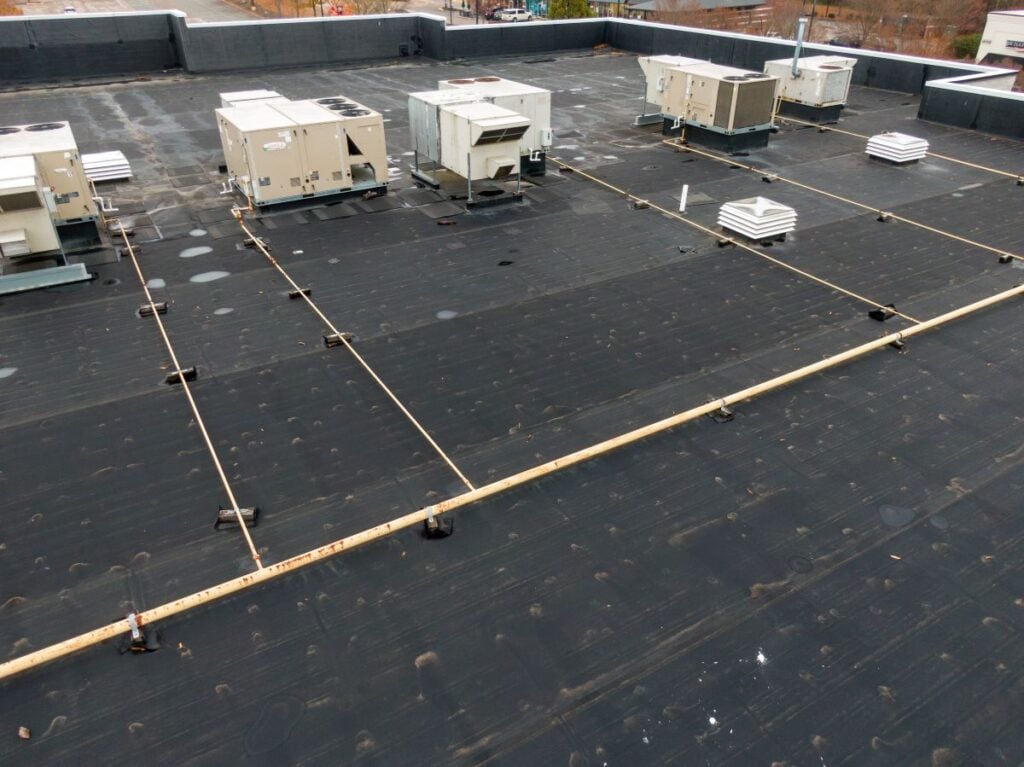
Torch down is most commonly used on low-slope and flat roofs where slope ranges from 1/4 inch per foot to 3 inches per foot. Commercial buildings, apartment buildings, additions, garage roofs, porch roofs, and dormers are typical applications. The membrane handles foot traffic better than most single-ply systems, which makes it a strong choice for roofs that carry HVAC equipment or that get walked frequently for maintenance. Pittsburgh and surrounding areas have a large stock of older homes with low-slope porch roofs and flat additions where torch down is one of the leading options.
- Low-slope commercial roofs: Office buildings, retail spaces, and warehouses with flat profiles.
- Residential additions: Flat-roof additions, porch roofs, and dormer roofs on older homes.
- Roofs with foot traffic: HVAC platforms, deck transitions, and frequently serviced areas.
- Buildings with tight roof details: Multiple penetrations and complex flashing benefit from heat-welded membranes.
When Should You Choose a Different System?
Torch down is not the right choice for every situation, and several factors push the decision toward alternatives. Buildings with combustible substrates, occupancy that cannot be evacuated for fire safety, or local fire code restrictions on open-flame work often steer toward self-adhered or cold-applied modified bitumen, EPDM rubber, or TPO. Buildings with very large simple roof areas may also achieve better economics with single-ply systems that cover ground faster than two-ply modified bitumen.
- Combustible deck conditions: Older wood decks may require alternative installation methods.
- Occupied building constraints: Schools, hospitals, and offices often restrict torching activity.
- Local fire codes: Some jurisdictions limit or prohibit open-flame roofing work.
- Large simple roof areas: Single-ply membranes may install faster and cheaper at scale.
How Does Torch Down Compare to Other Flat Roof Systems?
Torch down sits in the middle of the flat-roof market on cost, lifespan, and complexity, with specific strengths and weaknesses against the major alternatives. Read through the comparisons below to see where torch down stands relative to the systems most commonly considered alongside it.
What Is the Lifespan of a Torch Down Roof?
A properly installed two-ply torch down roof typically lasts 15 to 25 years, with well-maintained installations regularly hitting the upper end of that range. Lifespan depends heavily on membrane thickness, cap sheet granule quality, drainage design, and whether annual maintenance is actually performed. The system is also one of the most repairable flat roofs available, since damaged areas can be cut out and replaced with a heat-welded patch that bonds chemically to the original membrane.
- Standard service life: Roughly 15 to 25 years for a quality two-ply system.
- Membrane thickness: Thicker cap sheets and three-ply systems can extend life beyond 25 years.
- Drainage impact: Standing water shortens life on any flat roof system.
- Maintenance impact: Annual inspections and minor repairs significantly extend lifespan.
How Does the Cost Compare to EPDM and TPO?
Installed costs for torch down roofing in Pittsburgh and surrounding areas typically run $5 to $12 per square foot, depending on substrate condition, insulation requirements, and the complexity of flashing details. EPDM rubber roofs typically run $4 to $10 per square foot, and TPO single-ply systems typically run $5 to $12 per square foot. The cost differences are real but modest, and the right choice usually comes down to roof geometry, climate, and contractor expertise rather than price alone.
- Torch down installed cost: Roughly $5 to $12 per square foot for a two-ply system.
- EPDM installed cost: Roughly $4 to $10 per square foot for a typical single-ply system.
- TPO installed cost: Roughly $5 to $12 per square foot for a typical single-ply system.
- Cost drivers: Insulation requirements, deck condition, and detail complexity matter most.
6 Frequently Asked Questions
1. How Long Does Torch Down Roofing Last?
A properly installed two-ply torch down roof typically lasts 15 to 25 years, with annual maintenance and good drainage often pushing it toward the upper end. Three-ply systems and premium SBS membranes can extend service life further when conditions allow.
2. Is Torch Down Roofing Safe to Install?
Torch down installation is safe when performed by trained, certified crews following industry best practices, including the NRCA CERTA program. Property owners should verify that any contractor performing torch work carries proper insurance and that the crew includes CERTA-certified applicators.
3. Can Torch Down Be Installed Over an Existing Roof?
In some cases yes, but a full tear-off is usually the better choice because it allows inspection and replacement of damaged decking, proper insulation upgrades, and elimination of trapped moisture. Local building codes and warranty requirements often dictate whether overlay is permitted.
4. How Much Does Torch Down Roofing Cost?
Most installed torch down roofs in Pittsburgh and surrounding areas cost $5 to $12 per square foot, with a typical 1,500 square foot flat roof landing between $7,500 and $18,000. Insulation thickness, deck condition, and flashing complexity drive the variation.
5. Does Torch Down Roofing Require Special Maintenance?
Annual inspections, gutter and drain cleaning, and prompt repair of small issues are the core maintenance items for any flat roof, including torch down. Replacing missing granules, sealing flashing, and clearing debris from drains are the most common ongoing tasks.
6. Do I Need a Licensed Contractor for Torch Down Installation?
Pennsylvania requires home improvement contractors performing work over $500 to be registered with the state Attorney General’s office. For torch down specifically, hire a registered, insured contractor with CERTA-certified applicators on the crew to protect both the building and your warranty coverage.
Why McCormick Renovations Is the Right Partner for Your Torch Down Roof
McCormick Renovations brings hands-on experience, quality modified bitumen materials, and a commitment to safe, code-compliant installation to every torch down roof we install in Pittsburgh and surrounding areas. We help property owners decide between torch down, EPDM, TPO, and self-adhered modified bitumen based on the actual condition of the building, the climate, and the long-term goals for performance and budget. If you are weighing torch down roofing for an addition, porch roof, or commercial building and want a clear, no-pressure recommendation backed by real numbers, reach out to McCormick Renovations today for a free estimate. Our team will inspect every detail, explain the tradeoffs, and design a roofing system that protects your building for decades.