Solar shingles cost between $21 and $65 per square foot installed in 2026, which puts a typical residential system between $40,000 and $130,000 before any state incentives are applied. That price range reflects a real technology upgrade over rack-mounted solar panels, but the financial math has changed significantly this year. This guide walks Pittsburgh homeowners through 2026 solar shingle pricing by brand, the shifting incentive landscape, and the honest tradeoffs to weigh before signing a contract that could tie up $50,000 or more of your home budget.
- 2026 pricing: Real cost ranges by brand, size, and system type.
- Incentive reality: What changed with the federal tax credit and what remains available.
- Value assessment: When solar shingles make sense and when they do not.
What Are Solar Shingles and How Do They Work?
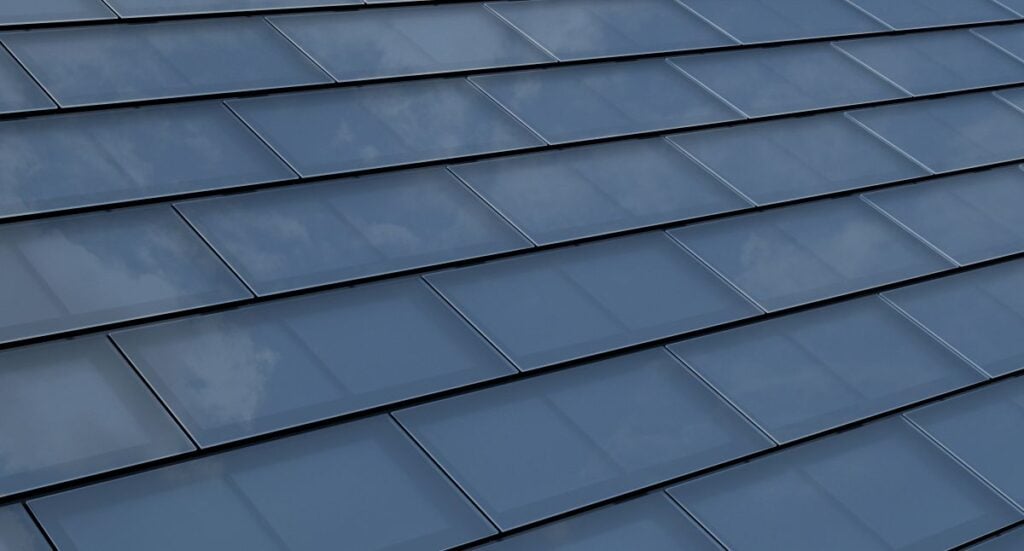
Solar shingles combine roofing and electricity generation into a single integrated product, replacing traditional shingles with photovoltaic cells that produce power while acting as the primary roof surface. The technology has matured significantly since Tesla first launched the Solar Roof concept, and 2026 offers real product options from multiple manufacturers.
How Solar Shingles Differ From Traditional Solar Panels
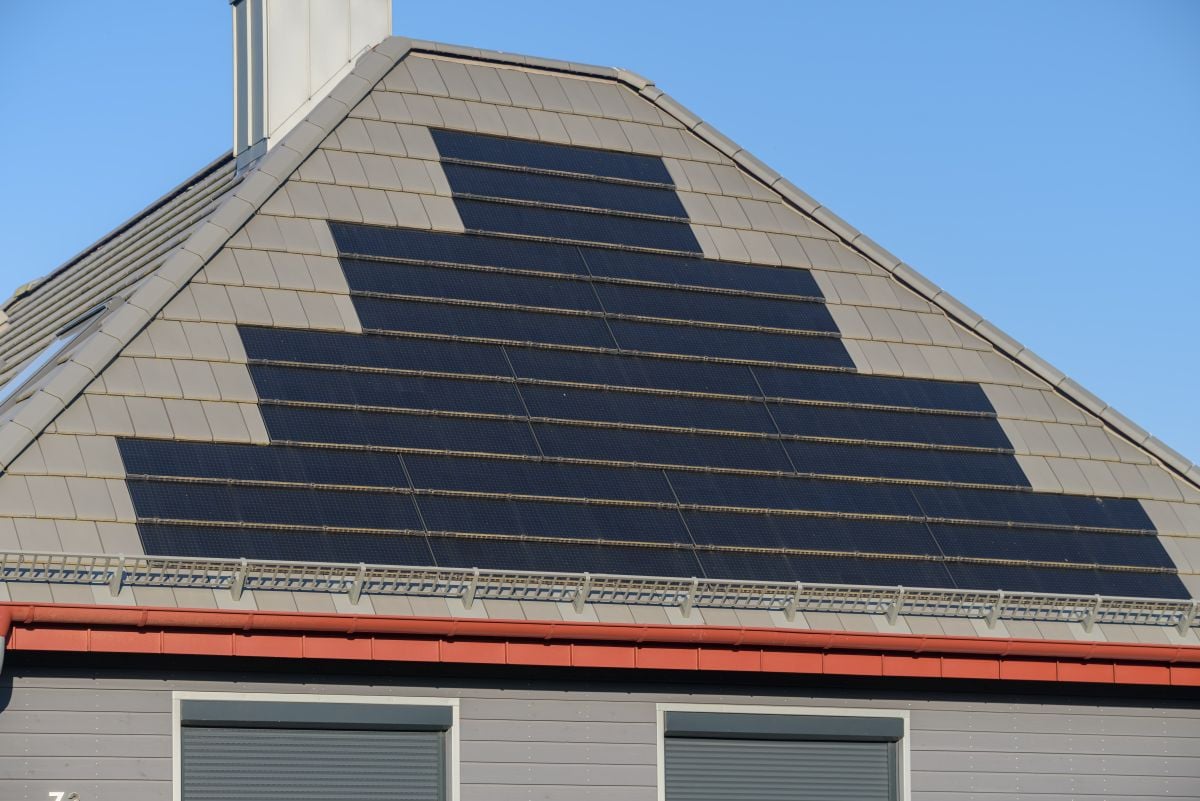
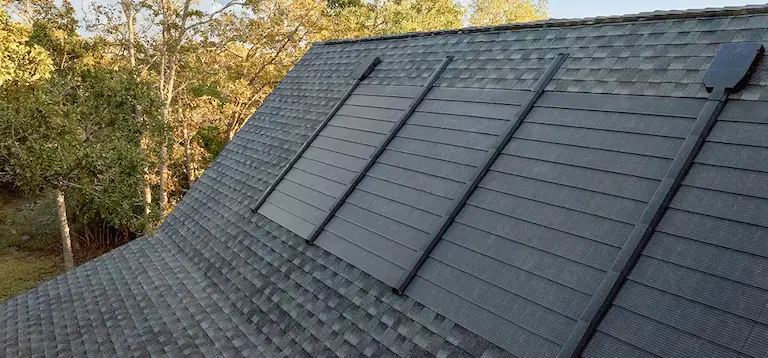
Traditional solar panels mount on top of an existing roof with racking hardware, while solar shingles integrate directly into the roof structure and replace the shingles themselves. The result is a cleaner appearance, better durability against wind and hail on certain products, and no penetrations through the roof deck for panel mounting. The tradeoff is higher upfront cost per watt of generated power, since solar shingles have to serve two functions simultaneously and typically produce less power per square foot than a comparable panel array. Pittsburgh homeowners considering solar shingles should understand this fundamental tradeoff before comparing pricing.
- Integrated design: Solar cells are laminated directly into shingle bodies.
- No racking hardware: Solar shingles eliminate the need for roof-mounted panel racks.
- Lower power density: Solar shingles produce less power per square foot than panels.
- Higher cost per watt: Integration adds cost that panels avoid.
Common Solar Shingle Brands in 2026
Three brands dominate the U.S. solar shingle market in 2026: Tesla Solar Roof (the aesthetic leader with the highest efficiency and Powerwall integration), GAF Timberline Solar (the nailable solar shingle that any GAF-certified roofer can install), and CertainTeed Apollo II (a lightweight modular option with a strong roofing-trade network). Each takes a different approach to the same problem, and the best choice depends on your budget, timeline, and whether you already need a new roof. Sun Tegra and Luma Solar round out the market with more specialized offerings.
- Tesla Solar Roof: Highest aesthetic quality, Powerwall integration, Class 3 hail rating.
- GAF Timberline Solar: Nailable installation, widest installer network, Class 4 hail rating.
- CertainTeed Apollo II: Lightweight modular design with strong roofing contractor availability.
- Specialty brands: Sun Tegra and Luma Solar target specific installation scenarios.
Solar Shingles Cost Breakdown in 2026
Solar shingle pricing in 2026 varies significantly by brand, roof complexity, and total system size. The five sections below break down the real costs Pittsburgh homeowners should expect when comparing quotes.
1. Cost Per Square Foot in 2026
Solar shingle installation costs $21 to $65 per square foot in 2026, depending on brand and system size. Tesla Solar Roof runs $20 to $28 per square foot at the low end and can reach $63 per square foot for complex installations. GAF Timberline Solar runs $15 to $22 per square foot and is often the most affordable option due to its nailable installation. CertainTeed Apollo II falls between the two at $16 to $22 per square foot. These figures include both active (power-generating) and inactive (matching aesthetic) shingles needed to cover the full roof.
- Tesla Solar Roof: $20 to $28 per square foot for simple roofs, higher for complex.
- GAF Timberline Solar: $15 to $22 per square foot with wide installer availability.
- CertainTeed Apollo II: $16 to $22 per square foot with strong roofing-trade access.
- Coverage requirement: Costs include both active and inactive shingles.
2. Total System Cost by Home Size
For a typical 2,000 square foot Pittsburgh home with an 8-10 kW system, total solar shingle installation costs run $40,000 to $75,000 in 2026. Smaller homes at 1,500 square feet run $30,000 to $55,000, while larger homes at 3,000 square feet can push past $130,000 for premium Tesla installations. These figures cover the solar shingles themselves, non-active shingles, electrical work, inverter, wiring, permits, and utility interconnection. Roof complexity, pitch, and number of penetrations affect the final number significantly.
- 1,500 square foot home: $30,000 to $55,000 total installed.
- 2,000 square foot home: $40,000 to $75,000 total installed.
- 3,000 square foot home: $75,000 to $130,000-plus total installed.
- Complex roofs: Add 15 to 30 percent for multiple planes and penetrations.
3. Additional Costs to Budget For
Beyond the base installation cost, several additional line items add to the total. Battery storage (Tesla Powerwall or third-party alternatives) adds $10,000 to $15,000 per unit and is often required for meaningful backup power. Old roof removal runs $6,000 to $20,000 depending on size and existing material. Structural reinforcement for older homes can add $1,000 to $10,000 if the current framing cannot support the added weight of solar shingles. Electrical panel upgrades run $1,500 to $4,000 for homes with older service entrances that need to accommodate the new system.
- Battery storage: $10,000 to $15,000 per unit for backup power.
- Roof removal: $6,000 to $20,000 depending on size and existing material.
- Structural reinforcement: $1,000 to $10,000 for older homes.
- Electrical upgrades: $1,500 to $4,000 for older service panels.
4. Comparison to Traditional Solar Panels Plus a New Roof
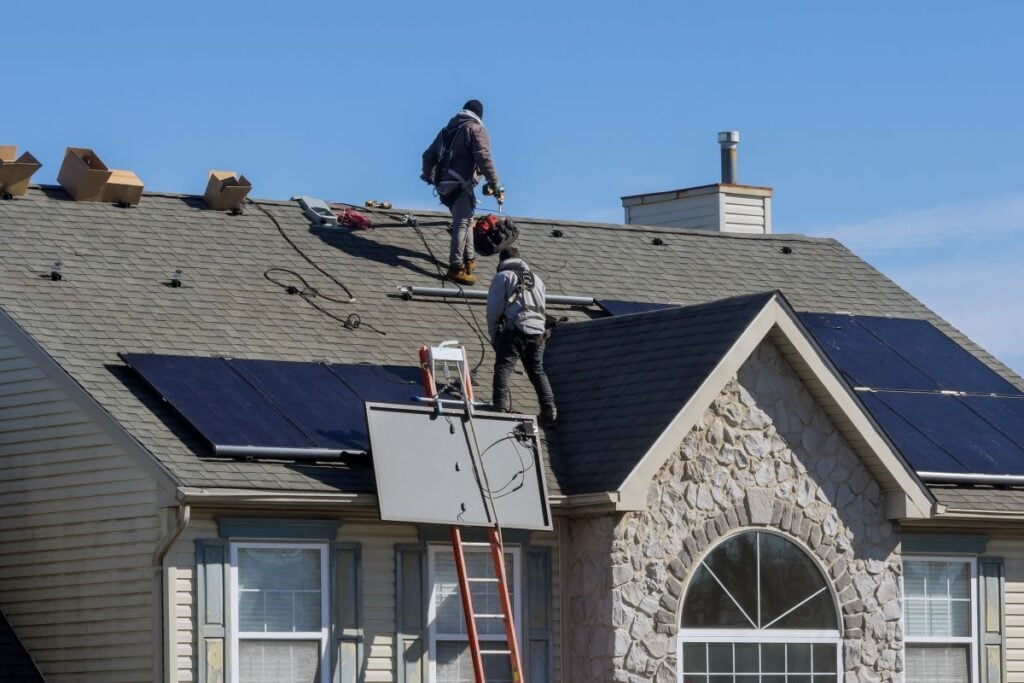
Traditional solar panels remain significantly cheaper per watt of generated power than solar shingles. A typical 8 kW solar panel system costs $20,000 to $30,000 installed in 2026, and adding a full roof replacement costs another $12,000 to $22,000 for a total of $32,000 to $52,000. That combined figure is often lower than the solar shingle equivalent by $10,000 to $50,000, though solar shingles deliver superior aesthetics and can add more to home value in resale scenarios. The right choice depends heavily on whether you value the integrated appearance enough to pay the premium.
- Traditional 8 kW panels: $20,000 to $30,000 installed.
- Combined with new roof: $32,000 to $52,000 total for panels plus roof.
- Solar shingle premium: $10,000 to $50,000 more than the combined approach.
- Aesthetic value: Integrated appearance justifies the premium for some homeowners.
5. What the Federal Tax Credit Situation Looks Like in 2026
The single biggest change in the solar shingle math for 2026 is the elimination of the federal residential solar tax credit. The One Big Beautiful Bill Act, signed into law July 4, 2025, terminated the Section 25D Residential Clean Energy Credit for customer-owned solar systems placed in service after December 31, 2025 (Source: IRS – Residential Clean Energy Credit). Homeowners who purchase solar shingles in 2026 and beyond cannot claim the 30 percent federal credit that had previously reduced net costs by $12,000 to $22,500 on a typical system. Third-party ownership arrangements like leases and PPAs can still access the commercial Section 48E credit through 2027, and state and utility incentives remain available depending on your specific location.
- Federal residential credit: Eliminated for customer-owned systems installed in 2026.
- Third-party ownership: Leases and PPAs can still access Section 48E through 2027.
- State incentives: Still available in many states, varying widely by program.
- Utility rebates: Local utility programs may still offer meaningful savings.
Are Solar Shingles Worth It in 2026?
The “worth it” question in 2026 looks very different than it did in 2024 or 2025. Homeowners need to run the numbers honestly with current 2026 pricing and the changed incentive landscape.
The Financial Case in 2026
Without the federal tax credit, the pure financial payback period for solar shingles in Pittsburgh has extended from roughly 10 to 12 years pre-2026 to 14 to 20 years depending on system size, electricity rates, and available state or utility incentives. Homeowners who plan to stay in their home for 15-plus years and who are already replacing an aging roof can still make the financial case work, especially when Pennsylvania electricity rates continue their upward trend. Homeowners planning to move within 10 years generally see traditional solar panels deliver a stronger financial return, even accounting for the aesthetic tradeoff.
- Payback period: 14 to 20 years for solar shingles in 2026 without federal credit.
- Long-term hold: Solar shingles favor owners planning 15-plus years in the home.
- Rate trend: Rising utility rates improve payback math over time.
- Move-within-10-years: Traditional panels usually make better financial sense.
The Aesthetic and Home Value Case
Solar shingles remain the aesthetic winner over rack-mounted panels, and this matters more in specific scenarios. HOA-restricted communities that prohibit visible panels but allow integrated solar shingles create a case where the premium price becomes worthwhile. Homeowners in high-end neighborhoods where curb appeal drives resale value also often justify the premium, and studies from Zillow and Lawrence Berkeley National Laboratory show solar installations add $15,000 to $25,000 in home value for typical systems. That value uplift partially offsets the higher upfront cost.
- HOA restrictions: Solar shingles satisfy communities that ban visible panels.
- High-end neighborhoods: Curb appeal drives resale value in some markets.
- Home value uplift: $15,000 to $25,000 typical increase from solar installations.
- Buyer perception: Integrated solar shingles read as permanent home upgrades.
When Solar Shingles Are NOT the Right Choice
Solar shingles are not the right choice for homeowners with a young roof (under 5 years old), those planning to move within 10 years, those on tight budgets, or those primarily focused on maximum electricity generation per dollar spent. A young roof means paying to remove perfectly good shingles just to install solar ones. Short-term ownership means paying premium prices for value the next owner captures. Budget-conscious buyers get more solar power for their money with traditional panels, and generation-focused buyers benefit from the higher efficiency of rack-mounted systems.
- Young existing roof: Cost of premature removal outweighs solar shingle benefit.
- Short-term ownership: Under 10 years, traditional panels deliver better returns.
- Tight budget: Solar panels generate more power per dollar.
- Generation focus: Rack-mounted panels remain the efficiency leader.
Frequently Asked Questions
How Long Do Solar Shingles Last?
Most solar shingles carry 25 to 30-year power warranties and comparable weatherization warranties. Solar cells degrade about 0.5 percent per year, which means a 25-year-old solar shingle still produces roughly 87 percent of its original power output. The roofing component typically matches or exceeds standard architectural shingle lifespan.
Do Solar Shingles Qualify for the Federal Tax Credit in 2026?
No, customer-owned solar shingle installations placed in service after December 31, 2025 do not qualify for the federal residential solar tax credit. The One Big Beautiful Bill Act eliminated Section 25D for new residential installations. Third-party ownership arrangements (leases and PPAs) may still access commercial credits through 2027.
How Do Solar Shingles Perform in Pittsburgh’s Climate?
Solar shingles perform reasonably well in Pittsburgh’s climate, though annual generation is lower than in sunnier regions due to fewer peak sun hours. Pittsburgh averages 3.7 to 4.1 peak sun hours per day, which translates to solar shingle systems generating 15 to 25 percent less annually than comparable systems in the Southwest.
Can Solar Shingles Be Installed on Any Roof?
Solar shingles work best on simple roof shapes (gable and hip) with at least 4 to 5 hours of direct sunlight on the primary roof face. Complex roofs with multiple dormers, valleys, and heavy shading add 15 to 30 percent to the cost and reduce generation. Structural capacity for the added weight must also be verified.
What Happens If a Solar Shingle Breaks or Malfunctions?
Individual solar shingles can be replaced by a certified installer, though replacement is more complex than swapping a traditional shingle. Warranty coverage typically handles power output failures, while physical damage from storms may fall under homeowners insurance. Confirm both warranty and insurance coverage before installation.
Should I Wait for Solar Shingle Prices to Drop?
Solar shingle prices have declined modestly since 2022, but a dramatic price drop in 2026 is unlikely given the loss of federal incentives and stable material costs. Electricity rates continue to rise, which offsets any potential savings from waiting. Homeowners already needing a new roof see the best value in acting now rather than waiting.
Making Sense of Solar Shingles in 2026
Solar shingles in 2026 represent a real technology option for Pittsburgh homeowners, but the financial math has changed significantly with the elimination of the federal residential tax credit. The strongest case for solar shingles today combines a homeowner who already needs a new roof, plans to stay in the home for 15-plus years, values aesthetic integration over pure power output, and has access to meaningful state or utility incentives. Homeowners without those specific conditions often find that traditional architectural roofing paired with (or without) separate rack-mounted solar panels delivers a stronger financial return in the current environment.
The best next step is to gather several solar shingle quotes from certified installers in your area, run the specific payback numbers for your home and utility rates, and check for current state or utility incentive programs before making a final decision.