Window condensation is one of the most common winter complaints homeowners raise, and the right response depends entirely on where the moisture is forming and what is causing it. Some condensation is harmless and clears with simple ventilation, while other types signal serious moisture problems or failed window seals that need professional attention. This guide breaks down the three locations condensation can appear, the underlying causes, and the practical steps that keep your windows clear and your home healthy.
- Three condensation types: Where moisture forms tells you what’s actually going wrong.
- Common causes: Indoor humidity, temperature differences, and window age all play a role.
- Prevention strategies: Specific fixes you can take this week, this season, and over the long term.
What Causes Window Condensation in the First Place?
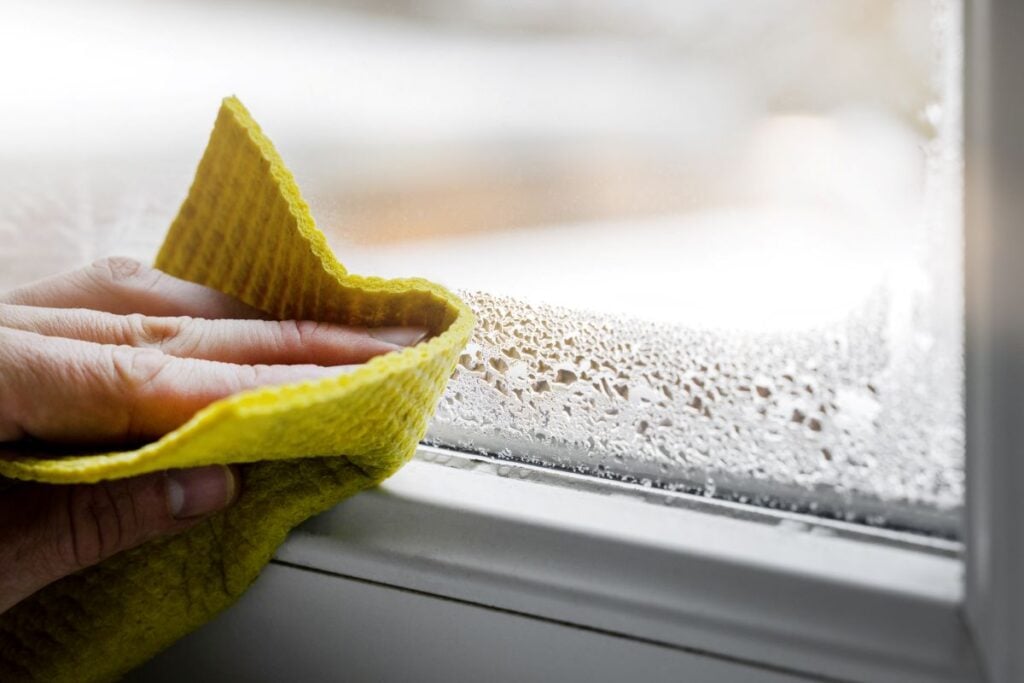
Condensation forms when warm, moisture-laden air contacts a surface that is colder than the dew point of that air. Windows are usually the coldest surfaces in a home during winter, which is why moisture appears there first even when humidity levels look reasonable on a hygrometer.
How Does the Dew Point Drive Condensation?
The dew point is the temperature at which water vapor in the air begins to condense into liquid. When indoor air at 70°F and 40% relative humidity touches a window pane that is 45°F, the air right at the glass cools, its relative humidity climbs past 100%, and the excess moisture deposits on the surface. The colder the glass and the higher the indoor humidity, the more condensation forms. Homeowners in Pittsburgh and surrounding areas notice this most during January and February when single-digit nights drive interior glass temperatures well below the dew point of normally humidified indoor air.
- Air temperature: Warmer air holds more moisture before reaching saturation.
- Surface temperature: Cold glass cools nearby air below its dew point.
- Relative humidity: Higher indoor humidity raises the dew point and makes condensation more likely.
- Outdoor temperature: The colder it is outside, the colder the inside surface of the glass.
Where Does Indoor Moisture Actually Come From?
Indoor moisture comes from a long list of everyday activities, and most homeowners underestimate how much water their household adds to the air each day. A family of four typically releases 2 to 4 gallons of water vapor into the home daily through breathing, cooking, showering, dishwashing, laundry, and houseplants. Tightly built modern homes hold that moisture in unless ventilation actively removes it. Older, leakier homes lose moisture more easily but pay for it in higher energy bills.
- Cooking and dishwashing: Boiling, simmering, and running the dishwasher all release water vapor.
- Showering and bathing: Bathrooms can spike to 90% or higher relative humidity within minutes.
- Laundry: Drying clothes indoors or venting a dryer improperly adds significant moisture.
- Occupants and pets: Each adult exhales roughly half a pint of water vapor per hour at rest.
3 Types of Window Condensation
Condensation forms in three different places on a window, and each one points to a different problem and a different solution. Read through each type below to identify which one matches what you are seeing in your home, since the right fix depends entirely on the location.
1. Interior Condensation on the Inside of the Glass
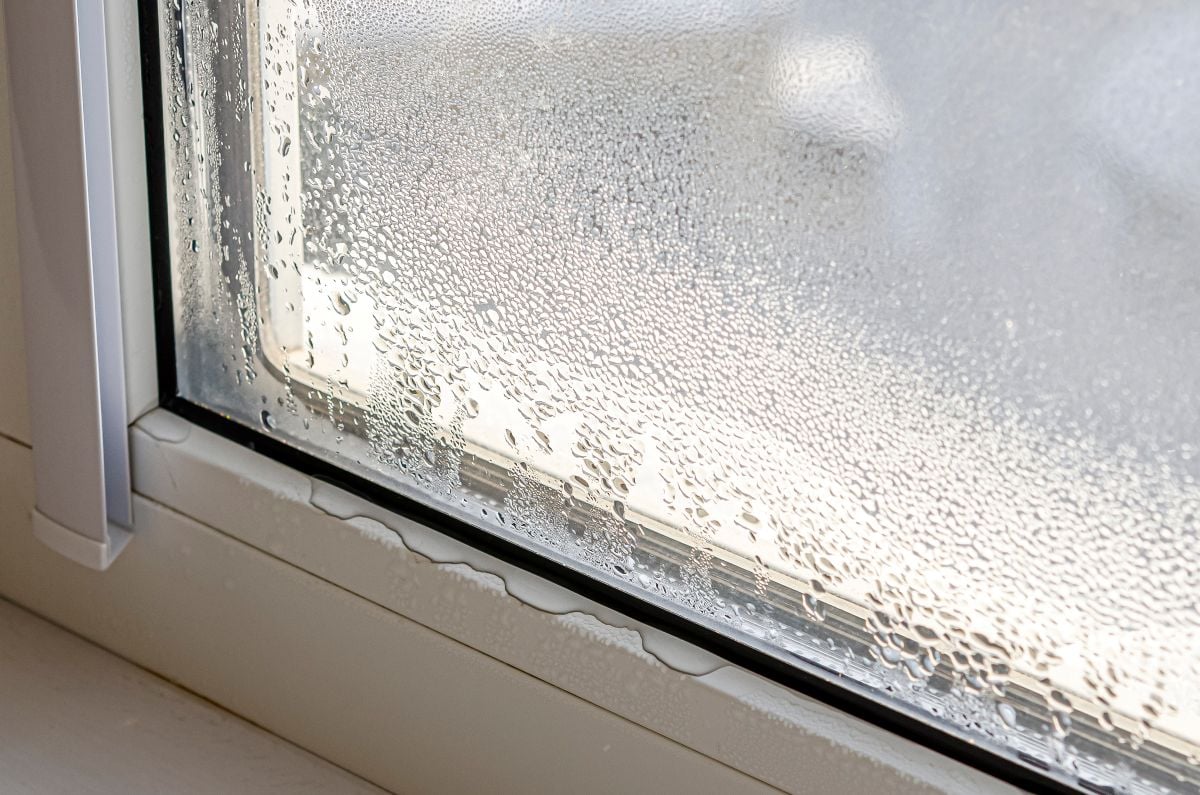
Interior condensation appears on the room-facing side of the window pane and is the most common type homeowners encounter in winter. It signals that indoor humidity is too high relative to the temperature of the glass surface, and it is the type most often within homeowner control. Persistent interior condensation can damage wood sills, trigger paint failure, and create the conditions for mold growth on the trim, drywall, and behind curtains. The U.S. Environmental Protection Agency recommends keeping indoor relative humidity between 30 and 50 percent to limit moisture problems and mold risk, which is the single most useful target homeowners can aim for.
- Where it appears: On the room side of the inner pane during cold weather.
- What it means: Indoor humidity is exceeding what the glass surface temperature can handle.
- Risk if ignored: Wood rot at sills, peeling paint, and mold on adjacent surfaces.
- Typical fix: Reduce indoor humidity through ventilation and source control.
2. Exterior Condensation on the Outside of the Glass
Exterior condensation appears on the outside surface of the window and is generally a sign of an efficient, well-insulated window rather than a problem. It happens on humid mornings when the outer pane stays cooler than the surrounding air because the modern glass package is doing its job and not letting interior heat reach the exterior surface. The condensation typically clears within an hour or two of sunrise. Homeowners sometimes confuse exterior condensation with seal failure, but the moisture wipes away easily with a hand from the outside.
- Where it appears: On the outer face of the exterior pane, usually on cool, humid mornings.
- What it means: The window is performing well and keeping interior heat from reaching the outside.
- Risk if ignored: Generally none, since the moisture evaporates quickly.
- Typical fix: No action needed in most cases, although trimming nearby landscaping helps airflow.
3. Between-the-Panes Condensation Inside the Insulated Glass Unit
Between-the-panes condensation appears as fog, haze, or droplets trapped inside the sealed space between the two panes of an insulated glass unit. It is the most serious of the three because it means the perimeter seal has failed, the insulating gas has escaped, and the window is no longer performing as designed. The window will continue to fog and clear with daily temperature swings, and the haze often becomes a permanent mineral deposit on the inside surfaces of the glass. There is no practical home repair, so the standard fix is sash or full window replacement.
- Where it appears: Between the two panes of glass, sealed inside the unit.
- What it means: The insulating glass seal has failed and the gas fill is gone.
- Risk if ignored: Reduced thermal performance, permanent haze, and loss of warranty value.
- Typical fix: Replace the insulated glass unit, the sash, or the entire window.
What Are the Underlying Causes of Persistent Condensation?
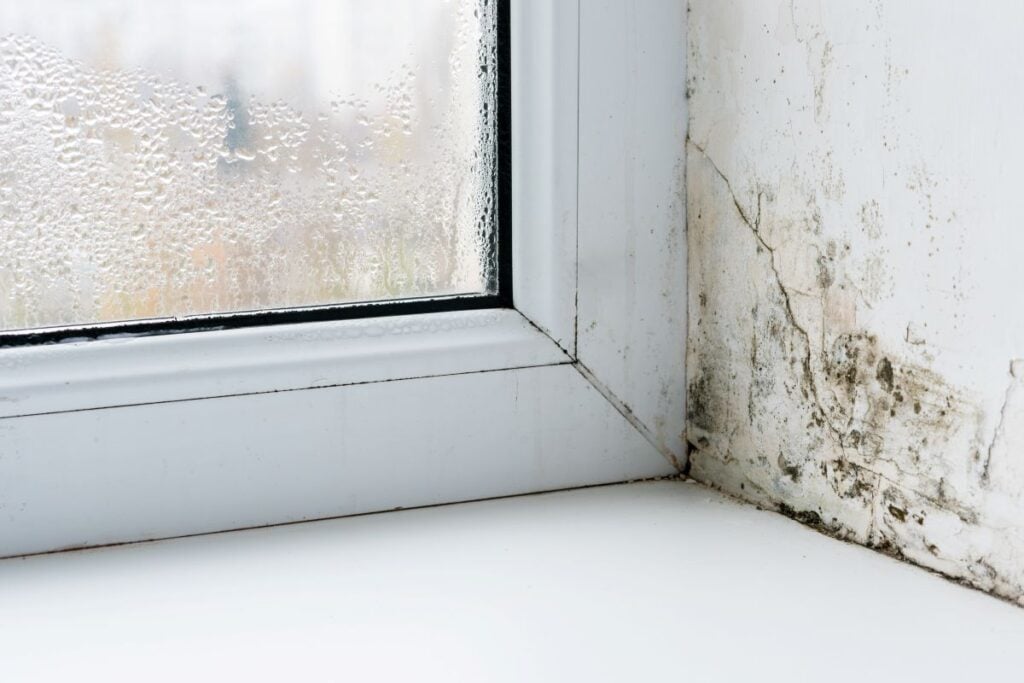
Beyond the immediate physics of dew point and surface temperature, persistent condensation usually traces back to a small set of root causes in the home. Homeowners in Pittsburgh and surrounding areas should walk through each of these to identify which ones apply to their situation.
Why Is My Home Holding Too Much Moisture?
Tight modern construction, oversized HVAC equipment, and undersized ventilation all contribute to homes that hold more moisture than they should. A house that has been weatherized with new insulation, air sealing, and replacement windows can suddenly show condensation that never appeared before, because the same daily moisture load now has nowhere to go. Adding mechanical ventilation, running bath and kitchen fans longer, and venting dryers correctly to the outside all help bring humidity back into balance.
- Air sealing improvements: Tighter envelopes hold moisture longer than older leaky homes.
- Inadequate ventilation: Bath and kitchen fans that run too briefly fail to remove moisture.
- Improper appliance venting: Dryers and gas appliances must vent fully to the exterior.
- Hidden moisture sources: Damp basements, crawl spaces, and plumbing leaks all add humidity.
Why Is the Glass Surface So Cold?
Cold interior glass surfaces drive condensation, and the underlying causes are usually window age, frame material, or installation quality. Older single-pane and early double-pane windows have inside surface temperatures far below the dew point of typical indoor air. Aluminum frames without thermal breaks conduct cold straight to the interior, creating cold spots at the perimeter even when the glass itself is acceptable. Drafty installations let cold outdoor air contact the back of the trim, chilling adjacent surfaces.
- Single-pane windows: Interior glass can drop into the 30s on cold nights.
- Aluminum frames without thermal breaks: Conduct cold rapidly across the frame.
- Failed insulating glass units: Lose much of their original R-value once the seal breaks.
- Drafty installations: Cold air infiltration chills sills, jambs, and surrounding drywall.
How to Prevent Window Condensation
Preventing window condensation is mostly about controlling indoor humidity and improving the temperature of the cold surface. A combination of short-term habit changes and longer-term upgrades typically solves the problem for good.
What Can You Do This Week?
Several quick, low-cost steps make a noticeable difference within days, and most homeowners see condensation drop substantially after working through this list. Buy an inexpensive hygrometer to measure actual indoor humidity, then watch how it responds to each change. Pittsburgh winters are dry enough that targeting 30 to 40 percent relative humidity usually keeps glass clear without making the home feel parched.
- Run bath fans: Operate them during showers and for 20 minutes afterward.
- Cover pots while cooking: Lids cut steam release dramatically.
- Confirm dryer venting: Make sure the duct runs continuously to the exterior.
- Open curtains and blinds: Let warm room air circulate across the cold glass.
What Should You Plan for This Year?
Longer-term fixes address the building envelope and the windows themselves, and they often combine with other home efficiency upgrades for the biggest payoff. If your windows are old, drafty, or showing between-the-panes fogging, replacement usually solves the condensation issue while also delivering meaningful energy savings. New ENERGY STAR Northern climate zone certified windows raise the interior glass temperature significantly, which moves the surface above the dew point of normally humidified indoor air.
- Replace failed insulated glass units: End between-the-panes fogging permanently.
- Add storm windows: Boost interior glass temperature on older single-pane units.
- Upgrade to ENERGY STAR windows: Modern low-E coatings keep the inside pane warmer.
- Install an HRV or ERV: Mechanical ventilation removes moisture without losing all the heat.
Frequently Asked Questions
Is Window Condensation Bad for My Home?
Persistent interior condensation can damage sills, trim, and drywall, and over time it creates conditions favorable to mold growth. Occasional condensation during extreme cold snaps is usually normal, but daily condensation is a signal to lower indoor humidity or improve the windows.
What Should Indoor Humidity Be in Winter?
The U.S. EPA recommends 30 to 50 percent indoor relative humidity for general health and moisture control, and homeowners in cold climates often need to stay closer to 30 to 40 percent in winter to keep windows clear. A simple hygrometer makes monitoring easy.
Does New Window Installation Fix Condensation?
In many cases yes, because new windows raise the inside surface temperature of the glass and reduce drafts that chill the surrounding trim. However, if indoor humidity is excessive, condensation can still appear on the warmer surface, so ventilation and humidity control should accompany window replacement.
Why Are My Windows Foggy Between the Panes?
Fogging trapped between the two panes means the insulating glass seal has failed and the inert gas fill has escaped. This is not a humidity issue and cannot be cleaned, so the typical fix is sash or full window replacement.
Can I Prevent Condensation Without Replacing Windows?
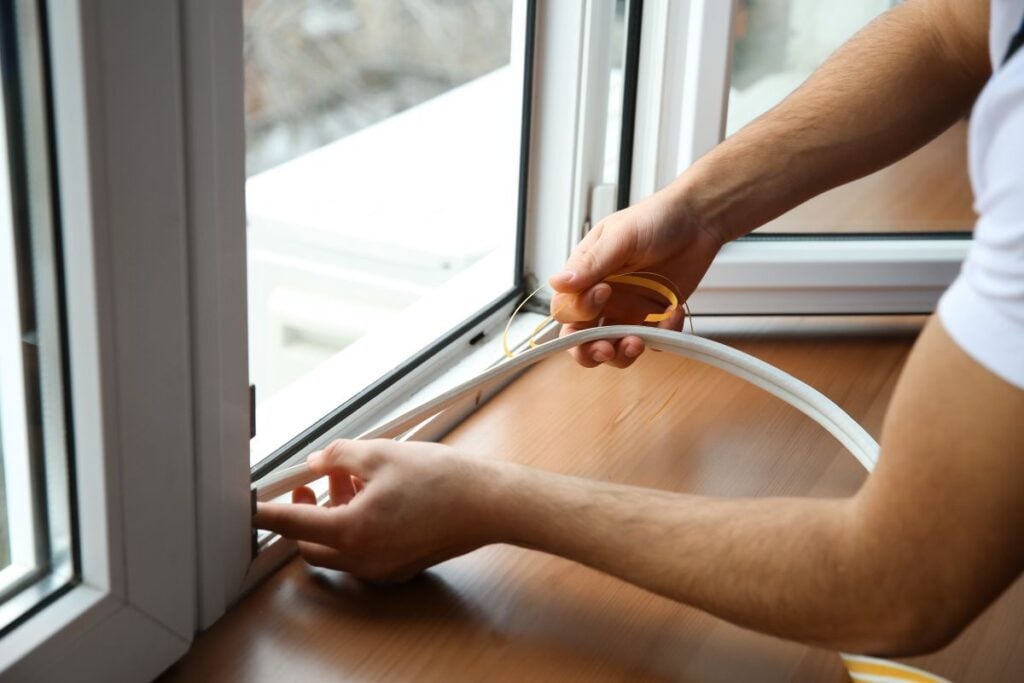
Yes, often. Lower indoor humidity through bath fans, kitchen fans, and dryer venting, run a dehumidifier in damp basements, and improve airflow across windows by opening blinds and moving furniture. Storm windows and interior film kits also raise the inside glass temperature on older units.
Do I Need a Licensed Contractor for Window Replacement?
Pennsylvania requires home improvement contractors performing work over $500 to be registered with the state Attorney General’s office. Hiring a registered, insured contractor protects warranty coverage and ensures proper flashing and air sealing during installation.
Why McCormick Renovations Is the Right Partner for Solving Window Condensation
McCormick Renovations brings hands-on installation experience, deep product knowledge, and a commitment to clean, weather-tight workmanship to every window we install in Pittsburgh and surrounding areas. We help homeowners diagnose whether condensation is a humidity issue, a window age issue, or a seal failure issue, and we recommend the right combination of ventilation upgrades, glass replacement, or full window replacement to fix it for good. If you are tired of wiping foggy windows every morning and want a clear, no-pressure assessment backed by real numbers, reach out to McCormick Renovations today for a expert guidance. Our team will walk every window, explain the tradeoffs, and design a solution that keeps your glass clear and your home healthy for decades.