Choosing the best insulation for attic spaces is one of the highest-return decisions a homeowner can make, since a well-insulated attic reduces heating and cooling costs, prevents ice dams, and keeps your home comfortable year-round. Pittsburgh’s climate delivers hot summers and cold winters that put every attic to the test, and the wrong insulation choice (or the right insulation installed poorly) can waste hundreds of dollars annually on wasted energy. This guide walks Pittsburgh homeowners through the four most common attic insulation types, current R-value recommendations, and how to pick the right option for your home.
- Four insulation types compared: Fiberglass batts, blown-in cellulose, spray foam, and mineral wool with pros, cons, and cost data.
- R-value guidance: Current DOE recommendations for Pittsburgh’s climate zone.
- How to choose and when to upgrade: Practical guidance for evaluating your current insulation and picking the right upgrade.
Why Attic Insulation Matters
Attic insulation is the single most important layer of the home’s thermal envelope because heat rises, and an under-insulated attic allows conditioned air to escape upward through the ceiling year-round. In Pittsburgh’s climate, this shows up as high winter heating bills, hot upstairs rooms in summer, and dangerous winter ice dams that form when escaping heat melts snow on the roof.
- Energy savings: Proper attic insulation can reduce heating and cooling costs by 10 to 20 percent for typical Pittsburgh homes.
- Ice dam prevention: Adequate insulation keeps roof deck temperatures uniform, preventing the melt-and-refreeze cycle that creates damaging ice dams.
- Comfort: Uniform indoor temperatures across floors and rooms make the whole home more livable.
- Roof protection: Proper insulation combined with ventilation extends the life of the roof deck and shingles by reducing thermal stress.
Understanding R-Value for Attic Insulation
R-value measures a material’s resistance to heat flow, and higher R-values mean better insulation performance. The ENERGY STAR program (a joint EPA and Department of Energy initiative) recommends attic insulation levels of R-49 to R-60 for homes in Pittsburgh’s climate zone (Zone 5), which is one of the highest recommendations in the country due to the region’s cold winters. Most Pittsburgh homes built before 1990 have significantly less insulation than current recommendations, often as little as R-19 to R-30.
- DOE recommendation for Pittsburgh: R-49 to R-60 for existing homes, R-60 for new construction.
- Common existing levels: Many older homes have R-19 to R-30, well below current standards.
- Depth translations: R-49 typically requires 14 to 18 inches of fiberglass or cellulose.
- Cost of upgrading: Adding R-30 on top of existing R-19 typically pays back in 3 to 7 years through energy savings.
4 Best Types of Attic Insulation
Four insulation types dominate residential attic applications in Pittsburgh and surrounding areas: fiberglass batts, blown-in cellulose, spray foam, and mineral wool. Each has strengths and tradeoffs that make it better suited to specific attic conditions and homeowner priorities.
1. Fiberglass Batts
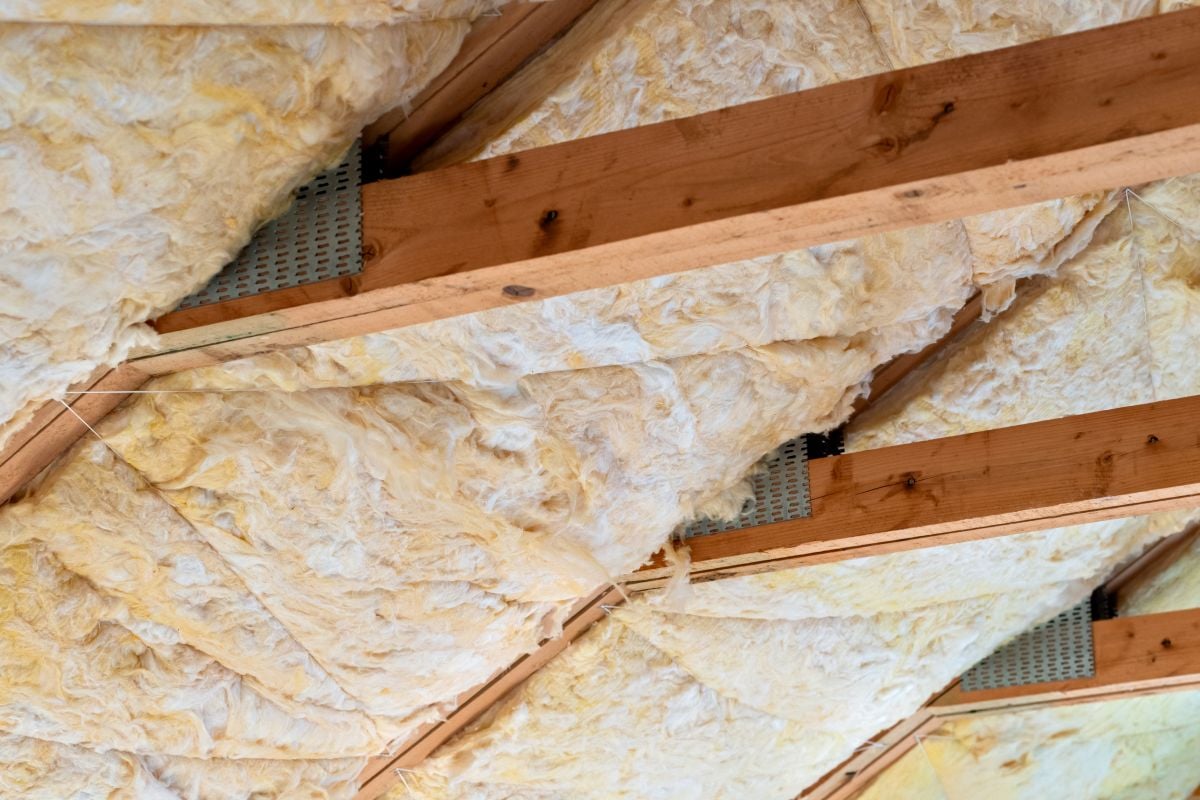
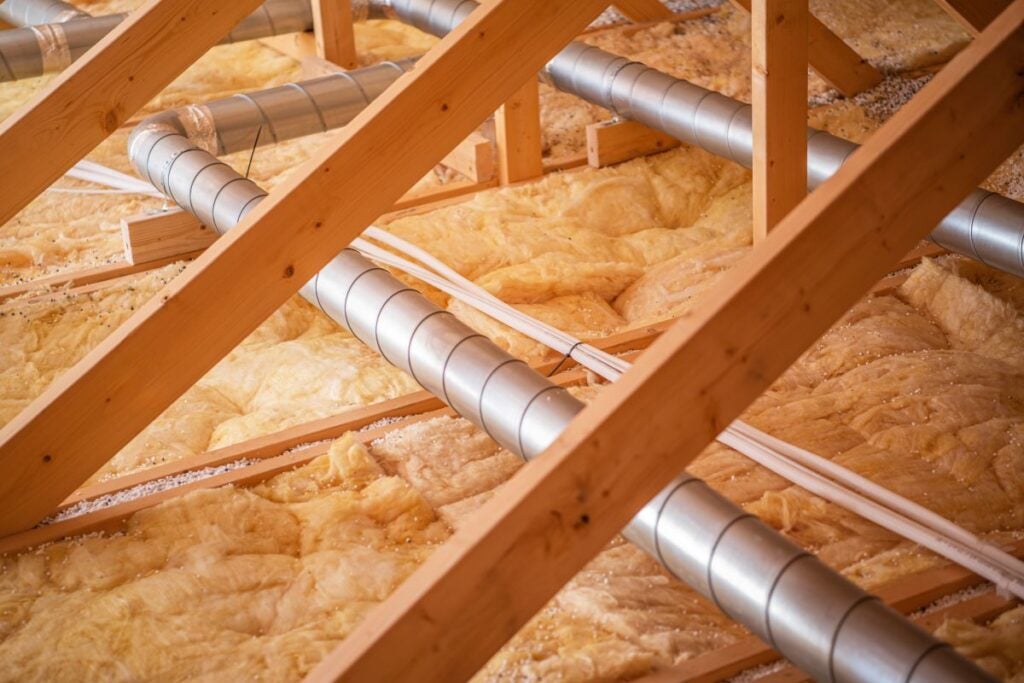
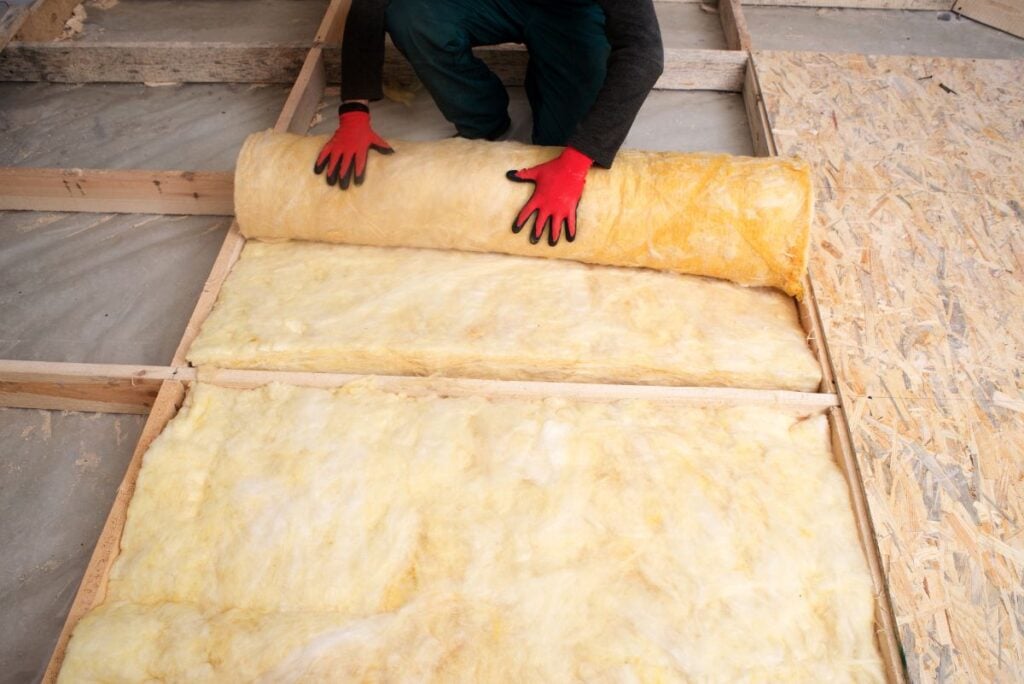
Fiberglass batts are the most common and widely available attic insulation, sold as pre-cut sections that fit standard joist spacing. Made from spun glass fibers, batts deliver R-2.9 to R-3.8 per inch of thickness and typically cost $0.30 to $1.50 per square foot installed in the Pittsburgh area. Batts are the go-to choice for DIY homeowners because they require no special equipment and install with basic hand tools. They work best in attics with uniform, unobstructed joist bays.
- R-value: R-2.9 to R-3.8 per inch (roughly R-30 for standard 10-inch batts).
- Cost: $0.30 to $1.50 per square foot installed.
- Best for: Homes with clean, uniform, accessible joist bays and DIY-friendly installations.
- Drawbacks: Poor air seal, loses R-value when compressed, gaps at edges reduce effectiveness.
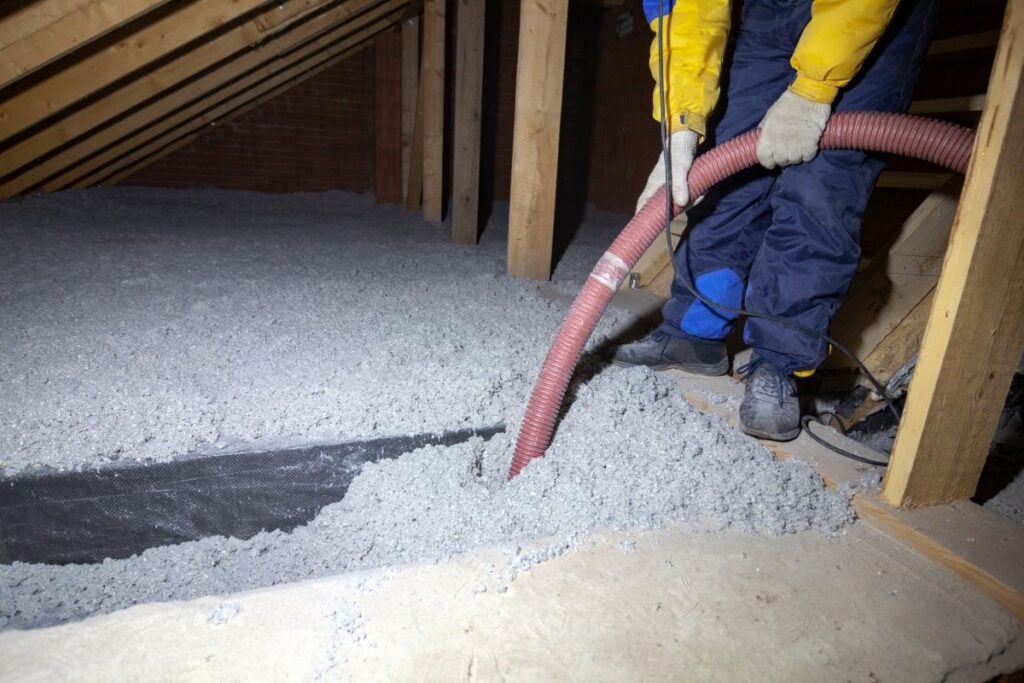
2. Blown-In Cellulose
Blown-in cellulose is made from recycled paper products treated with fire retardant chemicals and installed with a specialized blower that fills the attic evenly. Cellulose delivers R-3.2 to R-3.8 per inch and typically costs $1.00 to $2.00 per square foot installed in the Pittsburgh area. The blown-in application fills irregular spaces, wraps around obstructions, and delivers a better air seal than batts. Cellulose is also one of the most environmentally friendly options thanks to its high recycled content.
- R-value: R-3.2 to R-3.8 per inch.
- Cost: $1.00 to $2.00 per square foot installed.
- Best for: Attics with irregular framing, obstructions, or existing insulation being topped up.
- Drawbacks: Settles 10 to 20 percent over time, moisture sensitive, requires professional equipment.
3. Spray Foam Insulation
Spray foam insulation comes in two varieties: open-cell (lower density, more affordable) and closed-cell (higher density, higher R-value and moisture resistance). Closed-cell spray foam delivers R-6 to R-7 per inch (the highest of any common insulation), while open-cell delivers R-3.5 to R-3.7 per inch. Spray foam typically costs $1.50 to $7.00 per square foot installed in the Pittsburgh area. Spray foam creates an air seal and vapor barrier at the same time, which is why it consistently ranks as the highest-performing attic insulation available.
- R-value: Closed-cell R-6 to R-7 per inch; open-cell R-3.5 to R-3.7 per inch.
- Cost: $1.50 to $7.00 per square foot installed depending on cell type and thickness.
- Best for: Homes prioritizing maximum energy efficiency, air sealing, and moisture control.
- Drawbacks: Highest upfront cost, professional install only, requires evacuating the home during application.
4. Mineral Wool (Rock Wool)
Mineral wool insulation is made from natural rock or industrial slag that has been melted and spun into fibers similar to fiberglass. Mineral wool delivers R-3.0 to R-3.3 per inch and typically costs $1.40 to $2.10 per square foot installed in the Pittsburgh area. It stands out from fiberglass through its superior fire resistance (mineral wool is non-combustible up to 2,000°F), sound absorption properties, and moisture resistance that prevents mold and mildew growth. Mineral wool is less common in residential attics but is gaining popularity for its performance advantages.
- R-value: R-3.0 to R-3.3 per inch.
- Cost: $1.40 to $2.10 per square foot installed.
- Best for: Fire safety priorities, sound-sensitive spaces, and moisture-prone environments.
- Drawbacks: Higher cost than fiberglass, less availability in residential-grade products.
How to Choose the Right Attic Insulation
Choosing among the four options above depends on your priorities, budget, existing insulation, and attic conditions. Weigh these factors before you commit.
- Budget: Fiberglass batts and blown-in cellulose deliver the most R-value per dollar; spray foam offers the best performance but at premium pricing.
- Existing insulation: If topping up existing insulation, blown-in cellulose is often the fastest, most effective option since it fills over existing materials without full removal.
- Air sealing needs: If your attic has significant air leakage around fixtures, plumbing, or ductwork, spray foam addresses both insulation and air sealing in one application.
- Fire and moisture priorities: Mineral wool is the best choice for fire safety, and closed-cell spray foam is best for moisture control.
- DIY vs. professional install: Fiberglass batts are DIY-friendly; blown-in cellulose, spray foam, and mineral wool typically require professional installation.
- Long-term plans: If you plan to stay in the home 10-plus years, higher upfront investment in spray foam or thicker cellulose pays back through energy savings.
Signs Your Attic Needs New Insulation
Not sure if your attic insulation is due for an upgrade? Watch for these warning signs that indicate under-insulation or degraded materials.
- High energy bills: Winter heating or summer cooling costs significantly above neighborhood averages often trace to attic insulation deficiencies.
- Uneven room temperatures: Rooms directly below the attic that are noticeably hotter or colder than the rest of the home.
- Ice dams in winter: Ice buildup along roof edges signals that attic heat is escaping and melting snow on the roof deck.
- Visible insulation gaps: Attic inspection reveals bare spots, uneven coverage, or insulation that has settled well below joist tops.
- Age of the home: Homes built before 1990 in Pittsburgh commonly have insulation levels well below current DOE recommendations.
- Moisture or mold in the attic: Damp insulation loses R-value and requires replacement, often paired with better ventilation.
Frequently Asked Questions
What is the best insulation for attic in Pittsburgh homes?
Closed-cell spray foam delivers the highest R-value per inch and creates the best air seal, making it the top-performing insulation for Pittsburgh’s climate. Blown-in cellulose is the best value option for most homeowners, delivering excellent R-value at a lower cost than spray foam.
How much insulation should my attic have?
The U.S. Department of Energy recommends R-49 to R-60 for attic insulation in Pittsburgh and surrounding areas. That translates to roughly 14 to 18 inches of fiberglass or cellulose insulation, depending on the specific product used.
How much does attic insulation cost in Pittsburgh?
Attic insulation costs in Pittsburgh typically range from $1,500 to $8,000 for a standard 1,500 square foot attic, depending on the material chosen. Fiberglass batts are the least expensive option, while closed-cell spray foam is the most expensive.
Does new attic insulation qualify for a federal tax credit?
The federal Energy Efficient Home Improvement Credit (Section 25C) that covered attic insulation was eliminated by the One Big Beautiful Bill Act for installations placed in service after December 31, 2025. Check with a tax professional about state or local rebate programs that may still apply.
Can I install attic insulation myself?
Fiberglass batts are DIY-friendly for homeowners comfortable working in attic spaces with proper safety equipment (N95 mask, gloves, eye protection). Blown-in cellulose, spray foam, and mineral wool all require professional installation due to equipment needs and safety considerations.
How long does attic insulation last?
Fiberglass batts and mineral wool last 30 to 50 years or more without significant degradation. Blown-in cellulose settles 10 to 20 percent over time and may need topping up every 15 to 20 years. Spray foam maintains its performance for the life of the home when properly installed.
Get the Most From Your Attic and Roof
The right attic insulation works together with proper roof ventilation to maximize energy efficiency, prevent ice dams, and extend the life of your roof deck and shingles. Whether you plan to hire a specialized insulation contractor or take on the work yourself, understanding the four main insulation options and current R-value recommendations puts you in a stronger position to make the right decision for your Pittsburgh home.
McCormick Renovations has served homeowners across Pittsburgh and surrounding areas for more than 30 years, and while insulation installation is outside our scope, our roofing team can advise on how attic ventilation and insulation work together with your roofing system. If you are planning a roof replacement and want to discuss ventilation upgrades that support better insulation performance, reach out to McCormick Renovations for a free consultation.