A TPO roofing installation is one of the most disruptive but highest-payoff capital improvements a commercial property owner can plan, with timelines typically running one to three weeks depending on building size and occupancy considerations. Thermoplastic Polyolefin (TPO) has become the dominant single-ply membrane in the U.S. commercial market because it combines strong energy performance, competitive pricing, and proven longevity in mixed climates like western Pennsylvania. This guide walks commercial property owners through what actually happens during a TPO installation, the decisions that drive scope and cost, and how to keep tenants and operations running smoothly during the work.
- The installation process: Step-by-step walkthrough from inspection through final commissioning.
- Scope decisions: Mechanical fastening vs. fully adhered, membrane thickness, and insulation upgrades.
- Cost and timeline: Realistic ranges for budget planning and operations management.
What Is TPO Roofing and Why Do Commercial Property Owners Choose It?
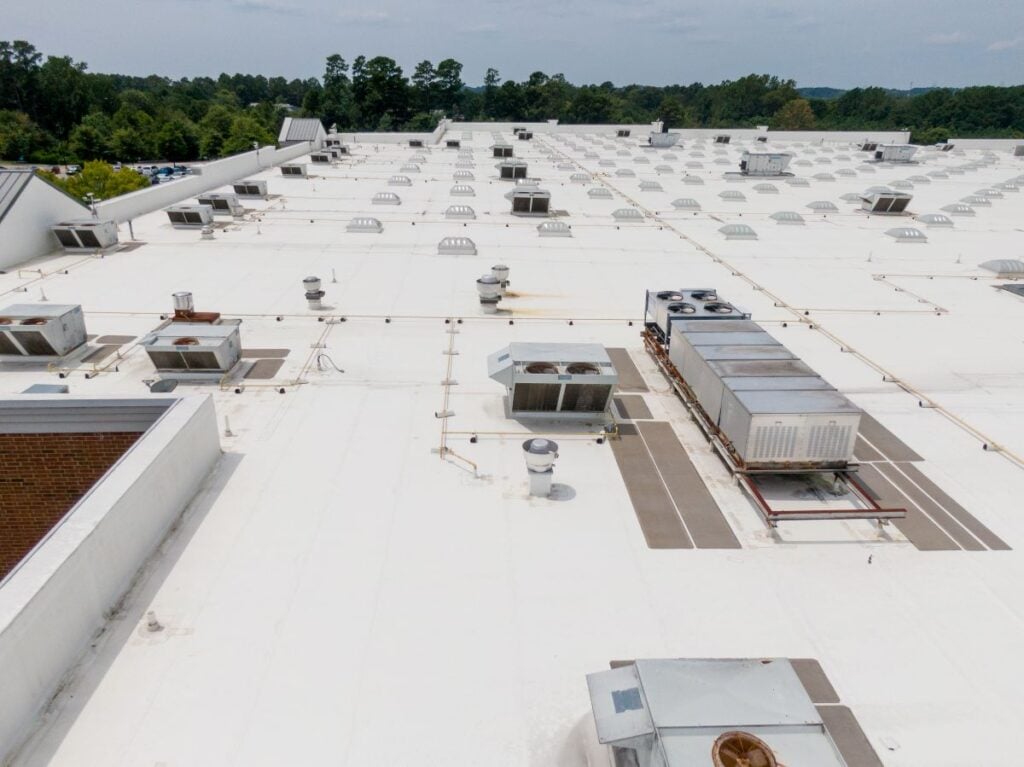
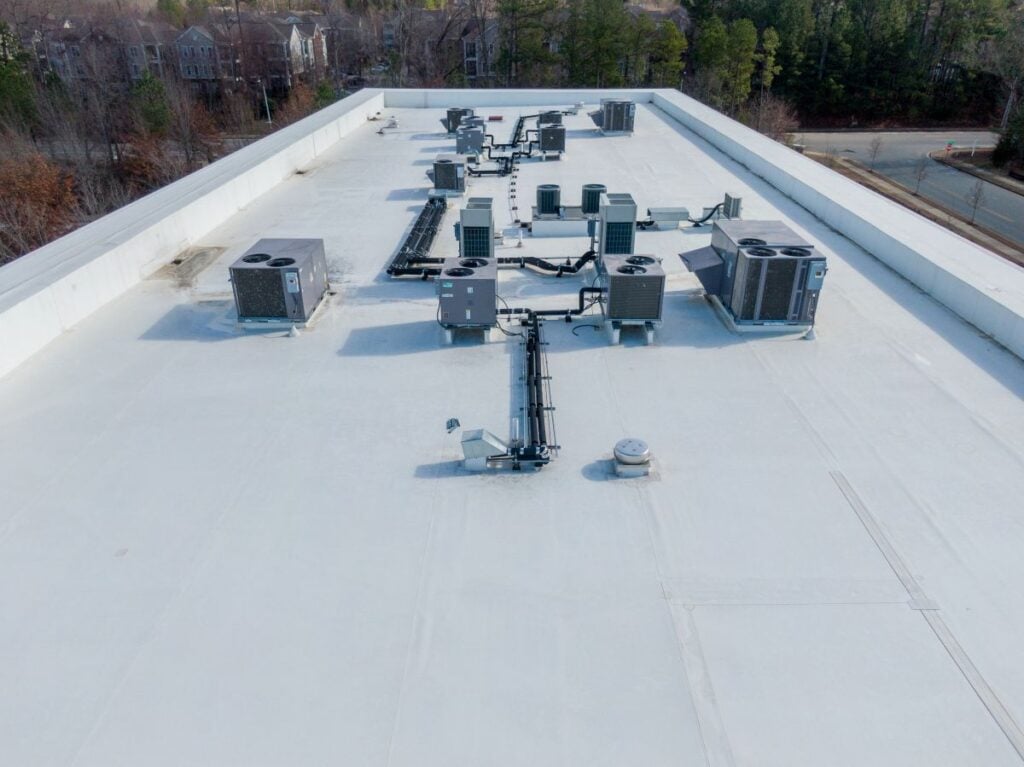
TPO is a single-ply thermoplastic membrane installed in wide rolls and heat-welded at the seams to create a continuous, watertight roof surface. The material has captured the largest share of new commercial low-slope installations because it delivers reflective, ENERGY STAR-rated performance at a competitive price.
How Does TPO Compare to Other Commercial Roof Systems?
TPO sits between EPDM rubber and PVC on cost, lifespan, and energy performance, with specific advantages that make it the default choice on many commercial buildings. Heat-welded TPO seams test three to four times stronger than the adhesive-based seams used on EPDM, which makes the roof more resistant to ponding water and wind uplift at the most failure-prone detail. The white reflective surface also delivers cool-roof performance that black EPDM cannot match, which translates directly into HVAC savings for occupied buildings. Commercial property owners in Pittsburgh and surrounding areas often choose TPO for these combined benefits.
- TPO vs. EPDM: Heat-welded seams, reflective surface, similar lifespan, comparable cost.
- TPO vs. PVC: 25 to 35 percent lower cost with similar weldability and reflectance.
- TPO vs. modified bitumen: Faster install, lower weight, no open-flame torching required.
- TPO vs. metal: Lower upfront cost, easier detail work, similar reflective performance.
What Energy Performance Can Commercial Owners Expect?
Energy performance is one of the strongest reasons commercial owners specify TPO over older flat-roof systems. The U.S. Department of Energy reports that conventional dark roofs can hit 150°F on a sunny summer day, while reflective roofs stay more than 50°F cooler under the same conditions, which directly reduces HVAC cooling loads. White TPO membranes reflect 80 percent or more of incoming solar radiation, which translates to 7 to 15 percent annual cooling cost reductions on most commercial buildings. The savings compound across the membrane’s full service life, often delivering full ROI on the reflective premium within five to seven years.
- Solar reflectance: White TPO reflects 80 percent or more of solar radiation.
- Thermal emittance: Releases absorbed heat readily rather than transferring it inward.
- ENERGY STAR rating: Most white TPO membranes meet ENERGY STAR thresholds for low-slope roofs.
- LEED contribution: TPO can contribute meaningful points toward LEED v4.1 BD+C certification.
6 Steps During a TPO Roofing Installation
The TPO installation process follows a predictable sequence regardless of building size, although the duration and scope of each step vary based on building condition and project specifications. Read through each phase to understand what your crew will be doing and how it affects tenant operations.
1. Pre-Installation Roof Inspection and Survey
The first phase is a detailed roof inspection that documents existing conditions, identifies hidden damage, and establishes a baseline for the new system specification. Qualified contractors perform a walk-through, take core samples to confirm existing insulation R-value and substrate condition, and use infrared imaging to identify wet insulation that needs replacement. The inspection also confirms drain locations, parapet heights, penetration counts, and edge-detail requirements. Commercial property owners in Pittsburgh and surrounding areas should expect this phase to take one to two days for a typical building.
- Walk-through documentation: Photo log of existing conditions, penetrations, and detail areas.
- Core sampling: Confirms existing roof assembly, insulation, and substrate.
- Infrared survey: Identifies wet or saturated insulation that requires replacement.
- Drainage assessment: Confirms drain locations, slope, and any ponding water history.
2. Permit Submission and Material Staging
After the survey, the contractor pulls the building permit, places the membrane and insulation order, and schedules delivery and staging. TPO is delivered in rolls typically 10 or 12 feet wide and 100 feet long, and the rolls need a staging area that protects them from weather, sunlight degradation, and damage. Insulation boards arrive on pallets and stage similarly. Owners should plan parking and access disruptions during staging and confirm any tenant communication requirements with property management.
- Permit timing: Two to four weeks depending on local code department workload.
- Material lead time: Two to six weeks for standard TPO; longer for custom colors or thicknesses.
- Staging area: Truck access, weather-protected location, and security from theft.
- Tenant notification: Property management notice 7 to 14 days before installation begins.
3. Tear-Off or Recover Decision
Most commercial TPO projects involve a full tear-off down to the structural deck, although recover-over-existing installations are possible when the existing roof assembly is sound and meets code. Tear-off is preferred when the existing roof has multiple layers, retained moisture, damaged insulation, or fails structural assessment. Recover saves disposal cost and reduces tenant disruption but locks in existing insulation R-value and any underlying issues.
- Tear-off scope: Complete removal of existing membrane, insulation, and any damaged decking.
- Disposal cost: $0.50 to $2.00 per square foot for tear-off and dumpster fees.
- Recover criteria: Single existing layer, dry insulation, sound substrate, code-compliant assembly.
- Code limits: Most jurisdictions limit commercial roofs to two total layers of roofing material.
4. Insulation and Cover Board Installation
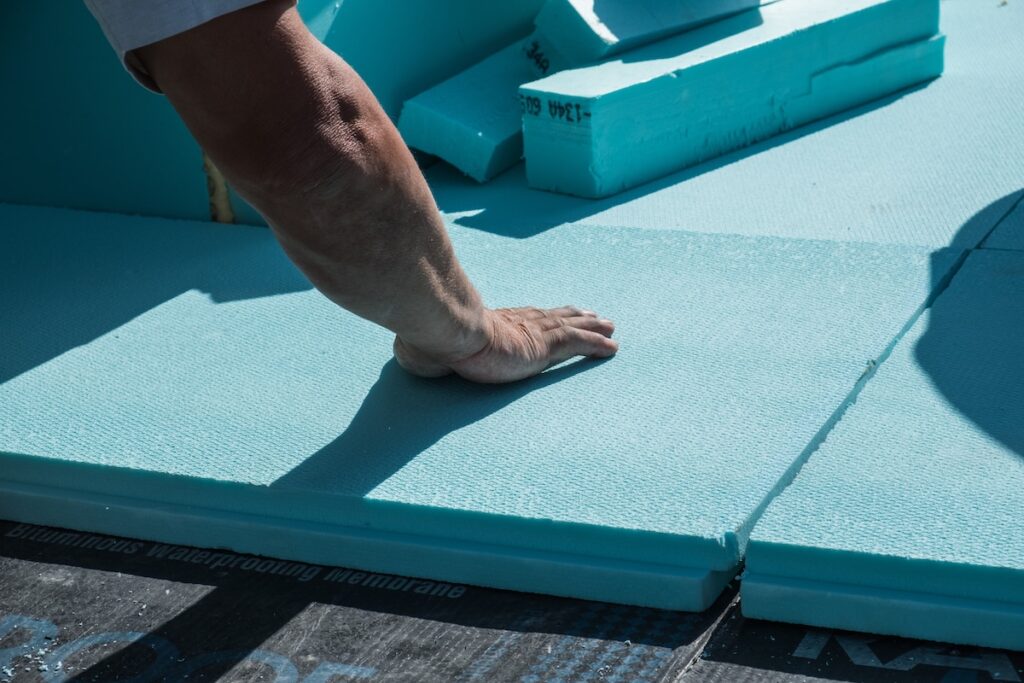
After tear-off, the crew installs new rigid insulation board and a cover board to create a smooth, code-compliant substrate for the TPO membrane. Polyisocyanurate (polyiso) is the dominant insulation choice on commercial roofs, with thickness selected to meet local energy code R-value requirements. A cover board, typically 1/4-inch or 1/2-inch high-density polyiso or gypsum, goes over the insulation to add puncture resistance and provide a stable bonding surface for the membrane.
- Polyiso insulation: R-6 per inch, common thicknesses 2 to 4 inches in Climate Zone 5.
- Cover board: 1/4-inch to 1/2-inch high-density polyiso or gypsum.
- Attachment method: Mechanically fastened or fully adhered based on system specification.
- Code requirement: R-30 or higher continuous insulation on most new commercial low-slope roofs.
5. TPO Membrane Installation
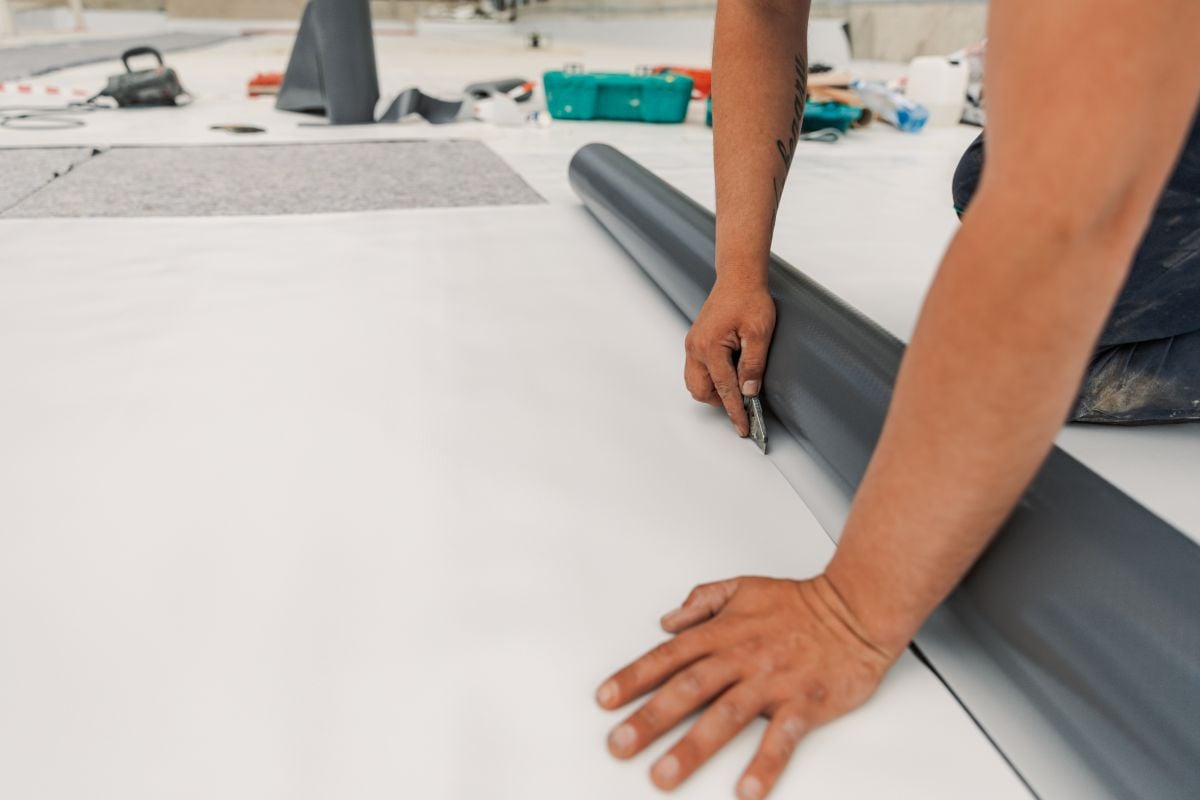
The membrane phase is the most visible part of the installation, with crews rolling out wide TPO sheets, mechanically fastening or adhering the edges, and heat-welding all seams with hot-air welders. Mechanically fastened systems use plate-and-screw fasteners along seams and offer the lowest cost and fastest install, while fully adhered systems use bonding adhesive across the entire surface and deliver better wind uplift resistance and a smoother finished appearance. The seam welds are tested with a probe to confirm complete fusion before moving to the next section.
- Mechanically fastened: Plate-and-screw fasteners along the seam, faster install, lower cost.
- Fully adhered: Bonding adhesive across the surface, better wind performance, premium look.
- Heat-welded seams: 800 to 1,200°F hot air creates a chemical bond, not a mechanical seal.
- Seam testing: Probe test along every seam to confirm full fusion.
6. Flashing, Penetrations, and Detail Work
Flashing and detail work covers every transition where the field membrane meets a different element, including walls, parapets, drains, vents, HVAC curbs, pipe penetrations, and roof edges. Each detail uses pre-formed or field-fabricated TPO flashing welded to the field membrane and to the adjacent surface. This phase typically takes one-third of the total install labor because the work is hand-cut, slow, and unforgiving of mistakes. Commercial buildings in Pittsburgh and surrounding areas with multiple HVAC units, drains, and parapet transitions can take significantly longer than the field membrane alone.
- Penetration boots: Pre-formed TPO boots for pipe penetrations.
- HVAC curbs: Custom flashing welded to curb and field membrane.
- Parapet walls: Membrane carried up the wall and terminated with metal cap and sealant.
- Drain assemblies: Membrane integrated with new or refurbished drain bowls and clamping rings.
How Long Does a TPO Installation Take and What Does It Cost?
Timeline and cost both vary with building size, complexity, and scope, but most commercial property owners can plan around predictable ranges. Pittsburgh and surrounding areas commercial properties typically fall within the ranges below.
What Is the Typical Timeline for a Commercial TPO Project?
A 10,000 square foot commercial TPO installation typically takes 7 to 14 working days from tear-off start to final punch list, while larger buildings scale proportionally. Weather delays in western Pennsylvania extend timelines from November through March, when temperatures below 40°F slow membrane welding and reduce adhesive performance. Tenant operations continue throughout most of the work, but interior areas directly below active work zones may experience noise, vibration, and occasional dust.
- Small commercial (under 5,000 sq ft): 3 to 7 working days.
- Mid-size commercial (5,000 to 25,000 sq ft): 7 to 14 working days.
- Large commercial (25,000 to 100,000 sq ft): 14 to 30 working days.
- Industrial or warehouse: Often phased in sections to maintain operations.
What Is the Installed Cost for Commercial TPO in Pittsburgh?
Installed costs for commercial TPO roofing in Pittsburgh and surrounding areas typically run $5 to $12 per square foot, depending on membrane thickness, attachment method, insulation requirements, and detail complexity. A 10,000 square foot building falls between $50,000 and $120,000, while a 50,000 square foot warehouse runs $250,000 to $600,000. Federal and state energy efficiency incentives and accelerated depreciation can offset a meaningful share of the upfront cost for qualifying commercial properties.
- 45-mil TPO: $5 to $8 per square foot installed, common on budget projects.
- 60-mil TPO: $6 to $10 per square foot installed, the residential and light commercial standard.
- 80-mil TPO: $7 to $12 per square foot installed, recommended for heavy-traffic or harsh-exposure roofs.
- Tax incentives: Section 179D commercial building deduction for qualifying energy efficiency upgrades.
Frequently Asked Questions
How Long Does a TPO Roof Last?
A properly installed TPO roof typically lasts 20 to 30 years, with membrane thickness, attachment method, and maintenance practices all affecting actual service life. Thicker membranes (80-mil) and fully adhered systems consistently land on the higher end of the range, while thinner membranes on mechanically fastened systems land lower.
Can a TPO Roof Be Installed Over an Existing Roof?
In some cases yes, but a full tear-off is usually the better choice because it allows inspection of the deck, replacement of damaged or wet insulation, and elimination of trapped moisture. Local building codes generally limit commercial roofs to two total layers, so many existing buildings are not eligible for recover.
How Often Should a Commercial TPO Roof Be Inspected?
Plan a professional inspection at least twice per year and after any major weather event, including hail, high wind, or heavy snow. Annual preventive maintenance contracts typically extend membrane life by 30 to 50 percent and dramatically reduce the risk of unscheduled repairs.
What Warranty Should I Expect on a Commercial TPO Install?
Most commercial TPO manufacturers offer warranties ranging from 10 to 30 years, with No Dollar Limit (NDL) options available through certified contractors. NDL warranties cover both materials and labor without depreciation and represent the gold standard in commercial roofing.
Will My Building Be Disrupted During Installation?
Tenant operations continue throughout most TPO installations, but noise, vibration, and occasional odors from adhesives or sealants affect interior comfort. Plan tenant communication 7 to 14 days in advance and coordinate access for HVAC work, fire suppression testing, and any roof-mounted equipment service.
Do I Need a Licensed Contractor for Commercial TPO Installation?
Pennsylvania requires home improvement contractors performing work over $500 to be registered with the state Attorney General’s office, and commercial work additionally requires manufacturer-certified installers to maintain the membrane warranty. Hiring a registered, insured, and manufacturer-certified contractor protects your investment and ensures warranty coverage.
Why McCormick Renovations Is the Right Partner for Your Commercial TPO Installation
McCormick Renovations brings hands-on commercial roofing experience, manufacturer-certified installers, and a commitment to clean, code-compliant workmanship to every TPO project we complete in Pittsburgh and surrounding areas. We help commercial property owners evaluate tear-off versus recover, specify the right membrane thickness and attachment method, and coordinate installation timing to minimize disruption to tenants and operations. If you are planning a commercial TPO roof replacement and want a clear, no-pressure assessment backed by real numbers, reach out to McCormick Renovations today for a free estimate. Our team will inspect every detail, explain the tradeoffs, and design a roofing system that protects your property and lowers your operating costs for decades.